

Overview of Hair Loss
Most healthy individuals shed 50‑100 hairs per day as part of the normal hair‑growth cycle; this routine loss is usually balanced by new growth and is not a cause for concern. When shedding exceeds normal limits, it may signal alopecia, a medical term encompassing several distinct patterns. The most prevalent forms are androgenic (pattern) alopecia, which affects millions of men and women worldwide; alopecia areata, an autoimmune disorder that produces abrupt, patchy bald spots; telogen effluvium, a temporary diffuse thinning triggered by stress, illness, or hormonal shifts; and traction alopecia, caused by chronic tension from tight hairstyles. While hair loss is not medically dangerous, it can have profound physical and emotional repercussions. Visible thinning may alter self‑image, reduce confidence, and contribute to anxiety or depression, underscoring the importance of early evaluation and appropriate management to mitigate both cosmetic and psychosocial impacts.
Key Nutritional and Hormonal Factors
 Hair health depends on adequate nutrition and balanced hormones. Deficiencies of vitamin D, iron, zinc, and several B‑complex vitamins (especially B12, biotin/B7, riboflavin/B2, and folate/B9) are consistently linked to increased shedding and diffuse thinning; low vitamin D disrupts the follicular growth cycle, while iron and zinc shortages impair oxygen delivery and keratin synthesis. In women, the androgen dihydrotestosterone (DHT) is the primary hormone driving pattern hair loss; excess DHT miniaturizes follicles, shortens the anagen phase, and precipitates telogen effluvium. Hormonal imbalances such as elevated DHT, low estrogen, or thyroid dysfunction can accelerate these processes, underscoring the need for endocrine evaluation in unexplained thinning. Emerging therapies target these pathways. The most promising recent development is a topical 5 % clascoterone solution, an anti‑androgen that blocks androgen receptors locally without systemic exposure. Phase III trials in men with androgenetic alopecia reported up to 539 % relative increase in target‑area hair count and minimal skin irritation, positioning clascoterone as a potential first‑in‑class treatment pending FDA review. Addressing vitamin and mineral deficiencies, correcting DHT‑driven hormonal excess, and considering novel agents like clascoterone together provide a comprehensive, evidence‑based strategy for restoring hair density.
Immediate Strategies to Stop Hair Fall
 Gentle scalp cleansing and styling: Use a mild, sulfate‑free shampoo and avoid vigorous brushing or tight hairstyles (braids, ponytails) that create traction. This reduces mechanical stress on follicles and prevents further shedding.
Topical minoxidil initiation: Apply FDA‑approved minoxidil (2 % for women, 5 % for men) twice daily to the affected scalp areas. Clinical data show that minoxidil can begin to slow hair loss within 4–8 weeks and promote regrowth by prolonging the anagen phase.
Scalp massage to boost circulation: Perform 2–5 minutes of daily scalp massage with light pressure. Improved micro‑circulation delivers oxygen and nutrients to hair follicles, supporting regeneration.
Stress‑reduction techniques: Incorporate mindfulness, deep‑breathing, or moderate exercise to lower cortisol levels, which can trigger telogen effluvium. Adequate sleep and balanced nutrition (protein, iron, zinc) further mitigate stress‑related shedding.
How to stop hair fall immediately?
Begin with gentle cleansing and avoid tight hairstyles. Start twice‑daily minoxidil to curb shedding within weeks. Add daily scalp massage to enhance blood flow, maintain a balanced diet, and practice stress‑management techniques. Schedule a dermatologist visit for personalized evaluation and possible prescription therapies.
Why is my hair thinning so quickly?
Rapid thinning may stem from genetic predisposition, hormonal changes (thyroid disorders, pregnancy, menopause), acute physical or emotional stress, autoimmune alopecia, infections, or medication side effects. Traction from tight hairstyles also accelerates loss. A thorough dermatologic assessment is essential to identify the specific trigger and tailor treatment.
Female Pattern Hair Loss: Evidence‑Based Treatment Landscape
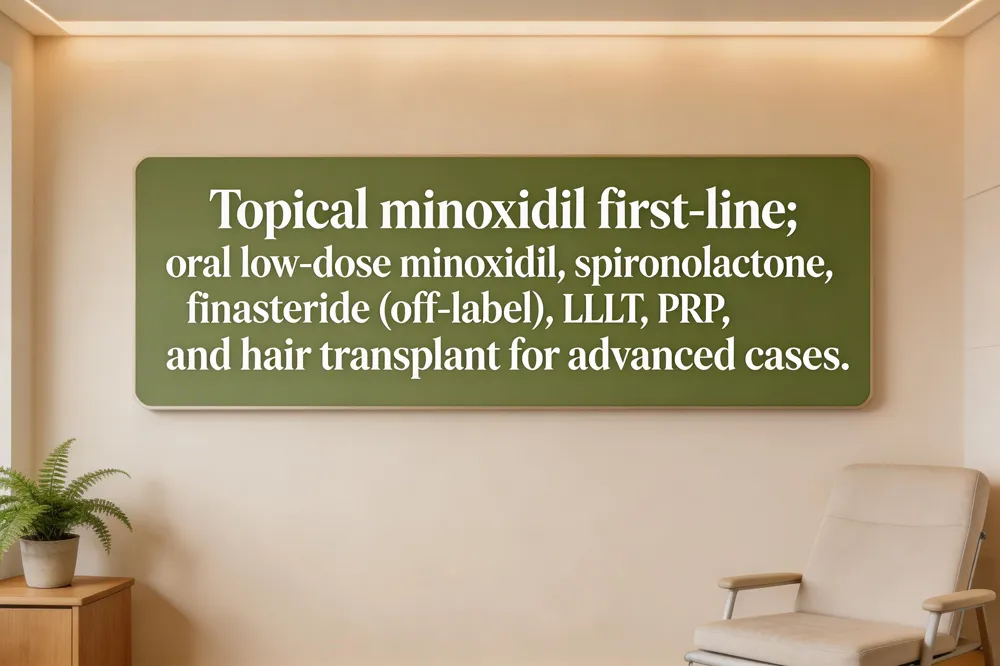 What are the best hair‑loss treatment options for women? The cornerstone of therapy for female‑pattern alopecia is topical minoxidil, an FDA‑approved over‑the‑counter drug (2 % solution or 5 % foam) that prolongs the anagen phase and can stimulate regrowth after 4–8 months of daily use. When minoxidil alone is insufficient, clinicians often turn to off‑label oral anti‑androgens. Low‑dose oral minoxidil (0.5–1 mg daily) provides systemic vasodilation and follicular stimulation, while spironolactone (50–200 mg daily) blocks androgen receptors and is especially useful in women with hormonal imbalances such as polycystic ovary syndrome. In selected post‑menopausal patients, oral finasteride (1 mg daily) may be prescribed off‑label to reduce dihydrotestosterone, though it is contraindicated in pregnancy. Adjunctive Low‑level laser therapy (LLLT) and platelet‑rich plasma (PRP) injections have shown modest improvements in hair density by enhancing follicular metabolism and delivering growth factors, respectively, and are typically reserved for patients who desire non‑surgical augmentation. For advanced thinning where medical therapy cannot restore adequate coverage, Hair transplantation surgically moves hair follicles from denser to balding areas and can provide permanent coverage.
What are the current treatment options for female hair loss? In addition to the modalities above, a comprehensive work‑up—including blood tests for iron, thyroid function, and vitamin D—helps identify reversible contributors such as nutritional deficiencies or endocrine disorders. Treating these underlying causes concurrently with minoxidil or anti‑androgens maximizes outcomes. Low‑dose oral minoxidil, spironolactone, and off‑label finasteride constitute the main oral pharmacologic options, while Low‑level laser therapy (LLLT) and platelet‑rich plasma (PRP) injections serve as adjunctive procedural therapies. Hair‑transplant surgery remains the definitive solution for stable, patterned loss when sufficient donor hair is available.
What home‑remedy treatments are recommended for female hair loss? Gentle, evidence‑based home care can complement medical therapy. Scalp massage (≈4 minutes daily) improves local circulation, and topical agents such as caffeine, rosemary essential oil, or aloe vera gel may reduce inflammation and support follicular health. Red‑light devices (630–800 nm) used 2–3 times weekly for 10–25 minutes provide modest density gains with minimal risk. Nutritional optimization—adequate protein, iron‑rich foods, omega‑3 fatty acids, and vitamin D—addresses common deficiencies that exacerbate shedding. These lifestyle measures should be integrated with a dermatologist‑guided treatment plan to achieve the best long‑term results.
Male Pattern Hair Loss: Proven and Emerging Therapies
 What are the most effective hair‑loss treatments for men?
The gold‑standard, FDA‑approved options are topical minoxidil (5 % foam or solution applied twice daily) and oral finasteride 1 mg daily. Clinical trials show both agents can slow follicular miniaturization and stimulate new growth after 3–6 months of consistent use. Low‑level laser therapy (LLLT) devices—laser caps, helmets, or combs—provide a non‑invasive boost to follicular metabolism and are often added for early‑stage thinning. When medical therapy alone is insufficient, hair‑transplant surgery (follicular unit extraction or transplantation) relocates healthy donor grafts to balding zones, delivering permanent, natural‑looking coverage.
What hair‑loss treatment options are recommended for men?
First‑line therapy remains minoxidil plus finasteride. For adjunctive benefit, platelet‑rich plasma (PRP) injections deliver autologous growth factors that improve scalp vascularity and follicle health, typically administered in a series of monthly sessions. Combination reg—minoxidil + finasteride + Low‑level laser therapy (LLLT) or PRP—has repeatedly shown superior density gains versus monotherapy. Patients with stable, advanced loss may consider FUT or FUE transplantation, which requires adequate donor hair and is usually combined with ongoing medical maintenance to protect existing follicles.
What are the latest hair‑loss therapies for men?
Beyond established drugs, emerging treatments target follicular stem‑cell activation. PP405, a topical formulation under investigation, has demonstrated >20 % increases in hair density for a subset of men in Phase II trials by re‑activating dormant stem cells. Early results are promising, and larger studies are ongoing. Additionally, oral low‑dose minoxidil and newer 5‑α‑reductase inhibitors (e.g., dutasteride) are being explored off‑label for enhanced efficacy, though they are not yet FDA‑approved for alopecia.
What are the newest hair‑loss treatments involving clascoterone?
Clascoterone, a topical androgen‑receptor antagonist originally approved for acne, is in Phase III trials for male pattern alopecia. Two large studies reported statistically significant gains in target‑area hair count (up to 168 % relative increase) with a safety profile limited to mild scalp irritation and negligible systemic hormonal effects. If Phase III confirms these findings, clascoterone could become the first novel mechanism for male pattern hair loss in three decades, offering a locally acting alternative to oral finasteride.
At Dermatology Associates, PC we tailor a personalized plan that may combine these evidence‑based and emerging modalities, matching each patient’s pattern of loss, health status, and aesthetic goals.
Diagnostic Approach, Permanent Solutions, and Dermatology‑Based Options
 A thorough evaluation begins with a comprehensive medical history and scalp examination to identify patterns of thinning, receding hairlines, or patchy loss. When the cause is unclear, clinicians order blood tests (thyroid panel, iron studies, vitamin D), perform a pull test, and may obtain a scalp biopsy to differentiate androgenetic alopecia, telogen effluvium, alopecia areata, or scarring disorders.
What are the main causes of hair loss in men? The most common cause is androgenetic alopecia, driven by genetic sensitivity to dihydrotestosterone (DHT) that miniaturizes follicles. Additional contributors include thyroid disease, iron‑deficiency anemia, autoimmune conditions, medication side effects (e.g., chemotherapy, antihypertensives, antidepressants), acute physical or emotional stress, rapid weight loss, scalp infections such as ringworm, traction from tight hairstyles, and nutritional deficiencies in protein, iron, zinc, or vitamin D.
Are there any permanent hair‑loss treatment options? Hair‑transplant surgery (FUE or FUT) provides a lasting solution by relocating healthy donor follicles, which continue to grow for a lifetime. Pharmacologic therapies (minoxidil, finasteride and procedural options (PRP, low‑level laser therapy) are effective but require ongoing use to maintain benefits.
What dermatology‑based hair‑loss solutions are available? Board‑certified dermatologists prescribe FDA‑approved treatments: topical minoxidil (2 %/5 %) and oral finasteride (men). Procedural modalities include platelet‑rich plasma injections, low‑level laser therapy, and intralesional corticosteroids for inflammatory alopecias. When medical and minimally invasive options are insufficient, the practice coordinates surgical hair‑transplant procedures with qualified surgeons.
Emerging Clinical Trials and Future Directions
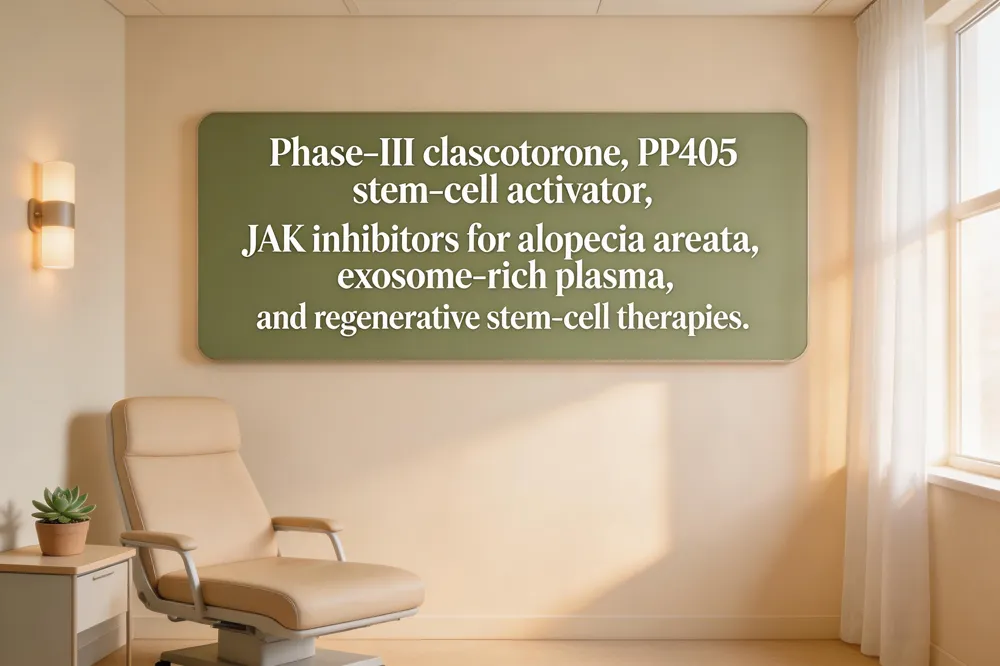 Recent clinical research is expanding the therapeutic landscape for hair loss beyond traditional minoxidil and finasteride.
Phase‑3 trials of clascoterone – Cosmo Pharmaceuticals is completing two pivotal Phase‑3 studies (SCALP 1 and SCALP 2) of a 5 % topical clascoterone solution, a local androgen‑receptor antagonist. In 1,465 men with androgenetic alopecia, the drug produced relative increases in target‑area hair count of 168 % and 539 % over six months, with a safety profile comparable to vehicle and only mild skin irritation. A 12‑month safety follow‑up is slated for 2026, after which an FDA submission is expected.
PP405 follicle‑stem‑cell activator – Early‑stage human trials led by UCLA and its spin‑out Pelage Pharmaceuticals are evaluating PP405, a topical formulation that reactivates dormant hair‑follicle stem cells. Preliminary data show a >20 % increase in hair density for roughly one‑third of treated men, prompting larger confirmatory studies and a planned Phase‑3 program.
JAK inhibitors for alopecia areata – The FDA‑approved oral JAK inhibitors baricitinib, ruxolitinib, and tofacitinib have demonstrated ≥50 % scalp regrowth in severe alopecia areata. Ongoing trials are exploring dosing optimization and long‑term safety, while newer agents such as deucravacitinib are in Phase‑2 evaluation.
Stem‑cell and exosome‑rich plasma therapies – Regenerative approaches are advancing rapidly. Autologous dermal‑sheath‑cup cell transplantation (Shiseido) and exosome‑rich plasma injections have shown safety and modest efficacy in early studies, with phase‑2 trials assessing durability of follicle regeneration.
Collectively, these investigations represent the most promising avenues for expanding treatment options and addressing unmet needs in both patterned and autoimmune hair loss.
Putting It All Together: Your Path to Healthy Hair
A personalized evaluation is the foundation of effective hair‑loss management. A board‑certified dermatologist will take a detailed medical and family history, perform a scalp examination, and order targeted labs (e.g., thyroid, iron, hormone panels) or a biopsy when needed to pinpoint the exact etiology—whether androgenetic alopecia, telogen effluvium, alopecia areata, or traction‑related thinning. Once the cause is identified, combine lifestyle measures (balanced diet rich in protein, iron, and omega‑3s; stress‑reduction techniques; avoidance of tight hairstyles and harsh chemicals) with evidence‑based medical therapies such as topical minoxidil, oral finasteride (for men), or JAK inhibitors (for alopecia areata). Procedural options—low‑level laser therapy, platelet‑rich plasma, or hair transplantation—should be integrated when appropriate. Ongoing follow‑up with a qualified dermatologist ensures adjustments to the regimen and maximizes long‑term success.