Introduction
Understanding the Scope of Skin Cancer
Skin cancer is the most common cancer both in the world and in the United States. A foundational statistic reveals that approximately one in five Americans will develop some form of skin cancer by the age of 70. This prevalence underscores the importance of awareness and proactive skin health management.
The Importance of Early Detection
While the diagnosis rates are high, there is significant optimism. The vast majority of skin cancer cases are highly treatable and curable when they are detected and treated early. Early identification dramatically improves treatment outcomes, reduces the complexity of interventions, and minimizes the risk of long-term complications.
Our Partnership in Your Skin Health
At Dermatology Associates, PC, we are committed to being your partner in every step of your skin health journey. Our team provides expert, compassionate care, from comprehensive prevention guidance and routine screenings to utilizing advanced diagnostic tools and treatment options. We are dedicated to empowering our patients with knowledge and offering personalized care plans.
A Roadmap to Skin Wellness
This article will explore the essential components of effective skin cancer management, focusing on the vital role of early detection, recognizing common warning signs, implementing daily prevention strategies, and the benefits of regular professional dermatological care.
Understanding Skin Cancer and Why Early Detection Saves Lives
What is skin cancer and why is early detection so important?
Skin cancer occurs due to the uncontrolled growth of abnormal skin cells, primarily triggered by damage from ultraviolet (UV) radiation. This DNA damage accumulates over a lifetime of sun exposure and skin cancer and, in some cases, from the dangers of tanning beds.
The disease is categorized into different types of skin cancers, each with distinct characteristics. Basal cell carcinoma (BCC) is the most frequently diagnosed skin cancer. Squamous cell carcinoma (SCC) is the second most common. Melanoma is less common but is the most aggressive form due to its ability to spread to other organs.
Detecting skin cancer at its earliest stage is one of the most effective ways to preserve health. When identified before it spreads, the vast majority of skin cancers are highly treatable. For example, the five-year survival rate for melanoma diagnosed at an early stage is over 99%. For early-stage squamous cell carcinoma, the survival rate is also around 99%.
When detection is delayed, outcomes change significantly. If melanoma spreads to distant organs, the five-year survival rate drops to approximately 30%. This stark contrast underscores how a timely diagnosis can be lifesaving.
Early detection also leads to simpler, more effective treatment. Localized cancers can often be removed with relatively minor outpatient procedures, resulting in less scarring and disfigurement. Advanced cancers require more complex treatments like extensive surgery, chemotherapy, or immunotherapy, which carry greater risks and side effects.
Regular self-examination of your skin and professional screenings by a dermatologist are the cornerstones of early detection. These practices empower you to identify new or changing spots when they are most manageable.
| Skin Cancer Type | Key Characteristic | Why Early Detection is Crucial | Early Stage 5-Year Survival Rate |
|---|---|---|---|
| Basal Cell Carcinoma (BCC) | Most common; slow-growing | Prevents local tissue damage and disfigurement | Nearly 100% curable with removal |
| Squamous Cell Carcinoma (SCC) | Can grow more quickly than BCC | Highly treatable before it can spread or invade deeply | ~99% when detected and treated early |
| Melanoma | Most aggressive; can spread rapidly | Dramatically improves survival; enables less invasive treatment | Over 99% for localized melanoma |
What to Look For: The ABCDEs and Other Warning Signs
The ABCDEs of Melanoma
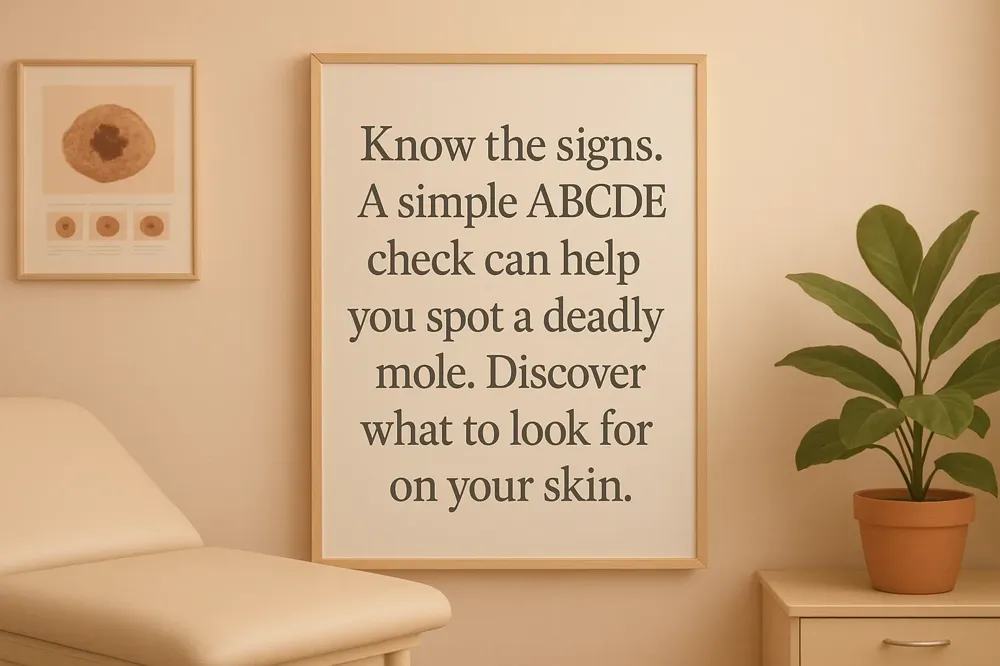
A powerful tool for self-examination is the ABCDE rule for melanoma detection. This mnemonic helps identify features in a mole or spot that may signal melanoma, the most dangerous form of skin cancer.
- A is for Asymmetry: One half of a mole does not match the other half in shape.
- B is for Border: The edges are irregular, ragged, notched, or blurred.
- C is for Color: The color is not uniform and may include different shades of brown, black, or tan; sometimes patches of red, white, or blue appear.
- D is for Diameter: The spot is larger than 6 millimeters (about the size of a pencil eraser), though early melanomas can be smaller.
- E is for Evolving: The mole is changing in size, shape, color, or sensation (like itching or bleeding). Evolution is often considered the most critical sign.
The "Ugly Duckling" Sign
Another crucial concept is the "ugly duckling" sign. This refers to a mole or spot that looks distinctly different from all the other moles on your body. It may be larger, darker, or have a different shape. Finding an outlier that doesn't match your normal pattern can be a key warning sign of melanoma and is part of a thorough skin self-exam.
Signs of Basal Cell and Squamous Cell Carcinoma
Non-melanoma skin cancers, like basal cell carcinoma (BCC) and squamous cell carcinoma (SCC), have their own distinct warning signs. Recognizing these can also lead to early detection of skin cancer when these cancers are most curable.
| Cancer Type | Common Warning Signs | Typical Appearance |
|---|---|---|
| Basal Cell Carcinoma (BCC) | An open sore that doesn't heal, or heals and reopens; a reddish patch or irritated area; a shiny bump or nodule; a pink growth with a raised, rolled edge; a scar-like area that is white, yellow, or waxy. | Often appears pearly, waxy, or translucent. Can be pink, flesh-colored, or brown. Common on sun-exposed areas like the face, ears, and scalp. |
| Squamous Cell Carcinoma (SCC) | A rough, scaly, or crusted patch; a firm red nodule; a sore that bleeds or crusts; a wart-like growth. | May look like a persistent, scaly red patch or a raised, rough lesion. Also common on sun-exposed skin. |
| A non-healing sore that persists for several weeks is a classic sign of skin cancer for both BCC and SCC and should never be ignored. |
Skin Cancer Can Appear Anywhere
A critical point for a thorough self-exam is understanding that skin cancer is not limited to sun-exposed areas. It can develop anywhere on the body, including places that rarely or never see the sun.
- Common hidden sites: The scalp, under the breasts, between the buttocks, and the genital area.
- Areas for special attention: The palms, soles of the feet, under the fingernails and toenails, and inside the mouth. This is especially important for people with darker skin tones, as rarer forms like acral lentiginous melanoma (ALM) more frequently appear on these sun-protected areas.
When to See a Dermatologist
The most important action you can take is to seek professional evaluation for any concerning finding. You should schedule a consultation with a board-certified dermatologist if you notice:
- A new growth, sore, or spot on your skin.
- Any existing mole or lesion that is changing in size, shape, color, or texture.
- A spot that bleeds, itches, crusts, or scabs repeatedly.
- A sore that does not heal within a few weeks.
- Any spot that simply looks unusual or different from your others. Early detection is the most powerful factor for successful treatment across all types of skin cancer.
| Review of Key Warning Signs | For Melanoma (ABCDE) | For BCC & SCC | General Red Flags |
|---|---|---|---|
| Appearance | Asymmetry, irregular Border, varied Color | Pearly bump, open sore, scaly patch | New spot, "ugly duckling" mole |
| Size & Change | Diameter >6mm, Evolving/Enlarging | Sore won't heal, bump grows larger | Any change in size, shape, or color |
| Sensation/Location | Itching, bleeding, tenderness | Bleeding, crusting, wart-like | Spot on palm, sole, or nail bed |
| Action Required | Prompt dermatologist evaluation | Professional skin exam needed | Schedule appointment for any concern |
Your Daily Defense: Effective Prevention Strategies
How to Build Comprehensive Sun Protection
Establishing a daily sun protection habit is the cornerstone of skin cancer prevention. Skin damage is cumulative, stemming from both prolonged exposure and incidental daily activities like walking the dog or driving. The most effective strategy employs multiple methods simultaneously: sunscreen, clothing, shade, and awareness of timing. No single method provides 100% protection, so a layered, comprehensive approach is essential for shielding your skin year-round.
Detailing Sunscreen Use and Application Guidelines
Sunscreen is a critical layer of defense, but it must be used correctly. Select a broad-spectrum product with SPF 30 or higher for daily use; for extended outdoor activities, opt for water-resistant SPF 50+. Apply it generously, using about one ounce (a shot glass full) to cover your entire body, and a teaspoonful for your face and neck. Apply the sunscreen at least 15-30 minutes before going outdoors to allow it to bind to your skin. Reapplication is non-negotiable. Reapply every two hours, and immediately after swimming, sweating, or towel drying. Even on cloudy days, up to 80% of harmful UV rays can penetrate the cloud cover, making daily use vital.
Discussing Sunscreen Types and Debunking Common Myths
Understanding your options can help you choose the right product. Mineral (physical) sunscreens use ingredients like zinc oxide and titanium dioxide to reflect UV rays away from the skin. Chemical sunscreens use ingredients like avobenzone to absorb UV rays and convert them into heat. Both types are rigorously tested and considered safe and effective.
It's crucial to dispel dangerous misinformation. There is no evidence that sunscreen causes skin cancer. Associations from older studies were confounded by the fact that people using sunscreen often spent more time in the sun. Furthermore, sunscreen use does not typically cause vitamin D deficiency. Most people apply less than the recommended amount, and if you are concerned, vitamin D supplements are a safe alternative to seeking unprotected sun exposure.
Beyond Sunscreen: Shade, Clothing, and Accessories
Sunscreen should not be your only defense. Seeking shade, especially during peak UV intensity between 10 a.m. and 4 p.m., is highly effective. Wearing protective clothing provides a consistent barrier that doesn't wear off. Look for long sleeves, pants, and clothing with an Ultraviolet Protection Factor (UPF) label; a UPF 50 fabric blocks 98% of UV rays. Always wear a wide-brimmed hat to shade your face, ears, and neck, and choose wrap-around sunglasses that block 100% of UVA and UVB rays to protect your eyes and the delicate surrounding skin. Be mindful that UV rays can reflect off surfaces like water, sand, cement, and snow, increasing your exposure even in shaded areas.
The Critical Dangers of Indoor Tanning
Indoor tanning is a major, preventable risk factor. Using a tanning bed, booth, or sunlamp exposes you to intense, high levels of carcinogenic UV radiation. It does not provide a protective 'base tan'—a tan is a direct sign of skin injury and DNA damage. Using a tanning bed before age 35 increases the risk of melanoma by 75%. The World Health Organization classifies tanning beds as carcinogenic to humans, and their use is associated with more than 3,000 emergency room visits annually in the U.S. due to burns and injuries.
Why Protection is a Year-Round Commitment for Everyone
Sun protection is not just for summer or for people with fair skin. UV rays can reach you on cool, cloudy days and reflect off surfaces like snow and water, increasing risk. While individuals with lighter skin are at higher risk, anyone can develop skin cancer. People of all skin tones benefit from sun protection to prevent premature aging and reduce cancer risk. This is especially important as melanoma in people with darker skin is often diagnosed at a later, more dangerous stage.
| Prevention Method | Key Guideline | Why It's Important |
|---|---|---|
| Daily Sunscreen | Broad-spectrum SPF 30+, 1 oz for body, reapply every 2 hours | Reduces risk of squamous cell carcinoma by ~40% and melanoma by ~50% |
| Protective Clothing | UPF-rated fabric, long sleeves, pants, wide-brimmed hat | Provides a consistent physical barrier; doesn't wear off like sunscreen |
| Seek Shade | Especially between 10 AM and 4 PM when UV is strongest | Reduces direct sun exposure intensity significantly |
| UV-Blocking Sunglasses | Wrap-around style blocking 100% UVA/UVB rays | Protects eyes and surrounding skin from damage and cancer |
| Avoid Tanning Beds | Never use; a tan is a sign of skin damage | Using before age 35 increases melanoma risk by 75% |
| Year-Round Habit | Protect skin every day, regardless of weather or skin tone | UV rays penetrate clouds and cause cumulative damage over time |
The Two-Part Detection Plan: Self-Exams and Professional Care

Monthly Self-Examinations: A Lifesaving Habit
Regular self-exams are your first line of defense against skin cancer. Perform a monthly skin self-exam as a habit, ideally after a bath or shower in a well-lit room. Use a full-length mirror and a hand mirror to check every area, including your scalp, ears, back, underarms, between toes, soles of your feet, and skin folds. Enlist a partner to help examine hard-to-see spots. Knowing your own skin is the goal; you're looking for anything new, changing, or unusual.
Tracking Changes with Tools and Photos
To monitor your skin effectively, consider using a body mole map or taking dated photos of your moles and spots. Tracking mole changes helps identify subtle evolution, a key warning sign for melanoma. These tools provide a visual record you can share with your dermatologist, which aids in accurate assessment and diagnosis.
Annual Professional Skin Exams for All
A monthly self-check complements, but does not replace, a professional exam. A board-certified dermatologist should conduct a full-body skin exam at least once a year for everyone. This professional skin cancer evaluation is critical for detecting cancers you might miss, including subtle or early-stage lesions. These exams provide a baseline for tracking skin health over time.
Defining High-Risk Groups
Some individuals should be more vigilant and may need professional exams more frequently than once a year. High-risk groups include people with fair skin, light-colored eyes or hair, a personal or family history of skin cancer, a history of many or blistering sunburns, a large number of moles, or a weakened immune system due to medication or medical conditions.
Addressing Critical Health Disparities
It's a dangerous myth that skin cancer only affects lighter skin tones. While overall incidence is lower in people with darker skin, they are often diagnosed at later, more advanced stages, leading to worse outcomes. Detect acral lentiginous melanoma on feet, for example, commonly appears on palms, soles, and under nails in people of color. This disparity underscores the vital importance of professional skin checks for everyone, regardless of skin tone.
The Role of Dermatologists in Prevention and Treatment
Dermatologists do more than diagnose cancer; they help prevent it. During an exam, they can identify and treat pre-cancerous lesions like actinic keratosis—rough, scaly patches caused by sun damage. Treating these lesions reduces the risk of them developing into squamous cell carcinoma. Dermatologists also guide high-risk patients on specialized surveillance plans and advanced treatment options if skin cancer is detected.
| Your Detection Plan at a Glance | Self-Care Responsibility | Professional Care Component |
|---|---|---|
| Frequency | Perform a full-body check once a month. | Schedule an annual professional skin exam by a dermatologist. |
| Key Tools | Well-lit room, full-length and hand mirrors, partner for help, photos/mole map for tracking. | Clinical expertise, dermoscopy for detailed lesion evaluation. |
| High-Risk Adjustment | Be extra vigilant for changes; check skin even more carefully. | Consult your dermatologist about needing exams more than once a year. |
| Crucial for All Skin Tones | Check entire body, including palms, soles, nails, and mucous membranes. | Essential for early detection of skin cancer, especially where disparities in late diagnosis exist. |
Treatment Options and the Path Forward
Is skin cancer treatable and curable?
Yes, skin cancer is highly treatable and often curable, especially when detected early. The vast majority of cases, including basal cell and squamous cell carcinomas, have cure rates exceeding 95% with timely intervention. Even melanoma, the most serious type, has a 99% five-year survival rate when diagnosed at its earliest stage. Effective treatments range from minor surgical procedures to advanced therapies. Early detection of skin cancer through self-exams for skin cancer and professional skin checks is crucial for achieving these successful outcomes.
What are the treatment options for skin cancer?
At a comprehensive dermatology practice, treatment is customized based on the type, stage, location of the cancer, and your overall health. A wide range of options exists to ensure effective treatment while prioritizing skin health and cosmetic outcomes.
For common nonmelanoma skin cancers (basal cell carcinoma and squamous cell carcinoma), primary surgical treatments are often used. These include:
- Excisional surgery: The tumor and a margin of surrounding healthy skin are surgically removed.
- Mohs micrographic surgery: A precise, tissue-sparing technique ideal for sensitive areas like the face, ears, and scalp.
- Curettage and electrodesiccation: The lesion is scraped away (curettage) and the base is treated with an electric needle.
- Cryosurgery (cryotherapy): Freezing abnormal cells with liquid nitrogen.
Several non-surgical or systemic options are also available:
- Topical medications: Creams or gels containing chemotherapy or immune-response modifiers.
- Photodynamic therapy (PDT): A topical medication activated by a special light source to destroy abnormal cells, often used for precancerous lesions and superficial skin cancers.
- Radiation therapy: Uses high-energy rays to kill cancer cells, typically for tumors in areas where surgery is difficult or for patients who cannot undergo surgery.
- Immunotherapy and targeted therapy: Advanced systemic drugs that help the immune system target cancer cells or attack specific genetic mutations within them. These are important options for advanced or metastatic melanoma.
For precancerous actinic keratoses, treatments like cryosurgery, topical medications, or laser surgery are used to prevent progression to squamous cell carcinoma.
| Treatment Type | Common Use For | Procedure Details |
|---|---|---|
| Surgical Options | Basal Cell & Squamous Cell Carcinomas | Physical removal of cancerous tissue. |
| Mohs Surgery | Complex, recurrent cancers, sensitive areas | Layer-by-layer removal with real-time microscopic analysis. |
| Non-Surgical Options | Superficial cancers, precancers, systemic cases | Includes creams, light therapy, and radiation. |
| Systemic Therapies | Advanced or metastatic melanoma | Immunotherapy or targeted drug treatments. |
Our approach is personalized and multidisciplinary, coordinating care between dermatologists, dermatologic surgeons, and oncologists when necessary. This ensures timely access to the full spectrum of evidence-based treatments, from standard procedures to the latest innovations like tumor-infiltrating lymphocyte (TIL) therapy approved for metastatic melanoma.
For individuals with a history of skin cancer, ongoing vigilance is essential. Having had skin cancer significantly increases the risk of future skin cancers for survivors. We emphasize the importance of regular follow-up care, which may include more frequent professional skin exams and continued rigorous sun protection and sunscreen use, to monitor for recurrence and detect any new lesions at their earliest, most treatable stage.
Conclusion
Embracing a Proactive and Hopeful Outlook
Skin cancer is a prevalent yet highly manageable condition when met with vigilance and proactive care. The power to protect your skin health lies in combining daily sun-safe practices with regular self-examination. By integrating broad-spectrum sunscreen, protective clothing, and shade into your routine, you actively shield your skin from damage. Committing to a monthly head-to-toe self-check, using the ABCDE and 'ugly duckling' guidelines, empowers you to notice changes when they are easiest to address.
These personal habits are the foundation, but they are powerfully complemented by professional expertise. We strongly encourage you to schedule your annual professional skin exam at Dermatology Associates, PC. Our dedicated team is here to provide the thorough, expert evaluation that offers peace of mind and ensures any concerns are caught at the earliest, most treatable stage.
At Dermatology Associates, PC, we are committed to partnering with you in your skin health journey, offering compassionate, personalized, and evidence-based care for all your dermatologic needs. Remember, with modern advancements in dermatology, the vast majority of skin cancers, including melanoma, are successfully treated when detected early. Taking these simple, consistent steps today can safeguard your health and well-being for the future.