Understanding HRT’s Role in Wellness
Hormone replacement therapy (HRT) replenishes the estrogen (and progesterone) lost at menopause, providing rapid relief of vasomotor symptoms such as hot flashes, night sweats, sleep disturbances, anxiety, low mood, and vaginal dryness. Systemic HRT also protects bone health, increasing bone mineral density and reducing osteoporosis‑related fracture risk, while low‑dose vaginal estrogen improves genital moisture without systemic side effects. Importantly, estrogen restores skin collagen, elasticity, and hydration, leading to thicker, firmer skin and fewer fine lines. Metabolic benefits include modest reductions in type 2 diabetes risk and improved muscle strength. The benefit‑to‑risk profile is most favorable for women under 60 or within ten years of menopause, especially when using the lowest effective dose, transdermal routes (which lower clot risk), and a regimen tailored to uterine status (combined estrogen‑progestogen versus estrogen‑only). Close coordination among primary care, gynecology, and dermatology ensures regular monitoring—mammograms, blood pressure, lipid panels, and skin assessments—to maximize wellness while minimizing breast‑cancer, clotting, or cardiovascular concerns.
Hormonal Acne: Who to See First?
| Specialist | Primary Role | When to Involve | Key Actions |
|---|---|---|---|
| Dermatologist | Evaluate skin lesions, confirm acne pattern, prescribe topical/ oral therapies | First point of contact for any acne | Skin exam, start retinoids/antibiotics/spironolactone, counsel on skincare |
| Gynecologist / Endocrinologist | Assess systemic hormonal imbalance, order hormone panels, treat underlying PCOS/thyroid | Irregular periods, hirsutism, lab‑confirmed androgen excess | Order labs, prescribe low‑dose OCPs or anti‑androgens, adjust HRT |
| Collaborative Team | Coordinate cutaneous and hormonal treatment | Persistent acne despite monotherapy | Shared records, regular follow‑up, lifestyle education |
 Hormonal acne often appears on the jawline, chin, and lower face and may be accompanied by irregular periods, weight changes, or a known diagnosis of PCOS. Dermatologist’s role – The dermatologist is the first specialist to evaluate the skin lesions, confirm the acne pattern, and prescribe targeted therapies such as topical retinoids, oral antibiotics, oral contraceptives, or spironolactone. They also assess for scarring risk and advise on skincare that supports barrier function and reduces inflammation.
When to involve a gynecologist or endocrinologist – If acne is linked to systemic hormonal imbalance—evidenced by menstrual irregularities, hirsutism, or lab‑confirmed androgen excess—a gynecologist or endocrinologist should be consulted. They can order hormone panels, treat underlying conditions (PCOS, thyroid disorders), and adjust systemic hormone therapy, including low‑dose oral contraceptives or anti‑androgens.
Collaborative treatment strategies – A coordinated approach maximizes clearance and minimizes side‑effects. The dermatologist manages cutaneous therapy while the gynecologist/endocrinologist optimizes hormonal balance, often using the lowest effective dose of estrogen‑containing HRT (transdermal to reduce clot risk) or anti‑androgenic agents. Regular follow‑up, shared medical records, and patient education on lifestyle (diet, stress reduction, sunscreen) further enhance outcomes.
Answer to the key question – You should see a dermatologist first for skin assessment and initial treatment. If you have signs of a broader hormonal disorder, involve a gynecologist or endocrinologist promptly. Collaborative care typically yields faster, more durable clearance of hormonal acne.
Safety First: HRT After Age 70
| Risk | Oral HRT | Transdermal HRT | Monitoring Recommendations |
|---|---|---|---|
| Venous thromboembolism | Higher incidence | Markedly reduced | Blood pressure, lipid panel, CBC annually |
| Ischemic stroke | Increased risk | Lower risk | Annual cardiovascular assessment |
| Breast cancer (combined) | Modest increase | Similar to oral for estrogen‑only | Mammogram every 1–2 years |
| Endometrial cancer (unopposed) | ↑ risk if uterus present | Not applicable (no systemic estrogen) | Annual pelvic exam, consider progestogen if needed |
| General adverse effects | GI upset, liver strain | Minimal systemic side‑effects | Review medication list, assess for skin sensitivity |
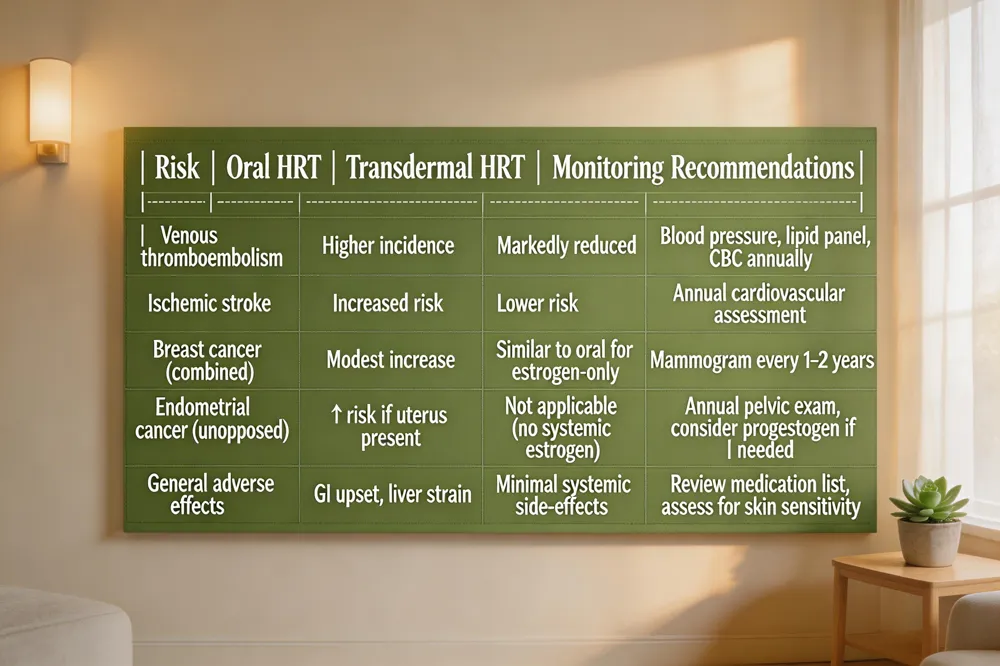 For women over 70, systemic hormone replacement therapy carries a higher incidence of venous thromboembolism and ischemic stroke, especially when taken as oral tablets.
Oral estrogen‑progestin formulations also modestly raise the risk of invasive breast cancer, while unopposed estrogen can increase endometrial cancer risk in women with a uterus.
Transdermal delivery (patches, gels, sprays) markedly reduces clot‑formation risk compared with oral therapy, making the route a critical safety consideration.
Because cardiovascular disease and cancer prevalence rise with age, a thorough assessment of personal and family history of heart disease, stroke, breast, and endometrial cancer is essential before initiating or continuing HRT.
When therapy is deemed appropriate, the lowest effective dose should be used, and patients should be monitored regularly with blood‑pressure checks, lipid panels, and mammograms.
Individualized, risk‑adjusted HRT can still provide symptom relief, but benefits must clearly outweigh the elevated risks in this age group.
Skin Deep: HRT’s Dermatologic Benefits
| Benefit | Mechanism | Typical Clinical Impact |
|---|---|---|
| Increased dermal thickness & firmness | Estrogen‑stimulated fibroblast collagen production | Smoother, less wrinkled skin; up to 30 % thickness gain in 12 mo |
| Enhanced epidermal hydration | Up‑regulation of hyaluronic acid & NMF | Better moisture retention; reduced xerosis |
| Improved wound healing | Accelerated re‑epithelialization & angiogenesis | Faster recovery post‑procedure |
| Hair‑shaft thickening & reduced shedding | Estrogen effects on follicular cycle | Modest increase in hair density |
| Barrier integrity | Strengthened stratum corneum lipids | Lower transepidermal water loss |
 Hormone replacement therapy (HRT) restores estrogen‑driven collagen and elastin synthesis, increasing dermal thickness and firmness while reducing wrinkle depth. By stimulating fibroblasts and hyaluronic‑acid production, HRT improves epidermal hydration, barrier integrity, and overall skin elasticity. Many patients also notice modest improvements in hair‑shaft thickness and reduced shedding, reflecting estrogen’s role in follicular health.
What are the benefits of HRT for skin health? Estrogen‑based HRT restores skin thickness, boosts collagen and elastin, improves hydration, and accelerates wound repair, resulting in smoother, more youthful skin.
Which hormone most influences skin appearance? Estrogen—primary driver of collagen, elastin, and moisture retention.
Is topical estrogen used for skin treatment? Yes; low‑dose estradiol or estriol creams can increase hydration and thickness, though use is off‑label and requires medical supervision.
Will HRT improve skin and hair quality? Generally it improves skin texture, hydration, and may modestly thicken hair, but results vary by individual and formulation.
At what age is hormone replacement therapy most effective for skin health? Initiating HRT before age 60, ideally within ten years of menopause offers the greatest dermatologic benefit while maintaining a favorable risk profile.
Comprehensive Skin Exams: Including the Groin
| Step | Procedure | Privacy / Comfort Tips |
|---|---|---|
| Preparation | Patient changes into front‑opening gown, clinician drapes body | Use disposable sheet for groin, ensure chaperone present if patient prefers |
| Head‑to‑toe inspection | Systematic visual exam from scalp to feet | Gentle retraction of gown, maintain dignity |
| Groin examination | Visualize vulvar, scrotal, perianal skin with proper lighting | Use disposable sheet, ask patient consent, offer self‑exam guide if declined |
| Documentation | Record findings and any refusals | Note reason for refusal, discuss importance, offer alternatives |
| Follow‑up | Schedule next total‑body check, provide self‑examination instructions | Reinforce education, respect cultural boundaries |
 Total‑body skin cancer screening recommends that clinicians inspect every skin surface, including the genital and perianal regions, because melanomas and keratinocyte cancers can arise in hidden sites. During a full‑body exam the patient is asked to change into a front‑opening medical gown; the clinician drapes the rest of the body, uses a disposable sheet for the groin, and may have a chaperone or nurse present for added privacy. The examination proceeds step‑by‑step from head to toe, with gentle retraction of the gown to visualize the vulvar, scrotal, and perianal skin, while maintaining dignity and comfort. If a patient declines the groin inspection, the provider documents the refusal, discusses the importance of complete screening, and offers alternatives such as targeted self‑examination instructions or referral to another dermatologist who can accommodate the patient’s preferences. Open communication ensures early detection of malignancy while respecting personal boundaries.
Answer: Yes, female dermatologists, like all board‑certified dermatologists, are trained to perform a total‑body skin examination that includes the groin and perianal region when appropriate.
Practical Dermatology: 7 Habits to Avoid
| Habit to Avoid | Why It’s Harmful | Better Alternative |
|---|---|---|
| Skipping sunscreen | UV acceler time collagen, promotes photo‑aging | Daily broad‑spectrum SPF 30+ + reapply |
| Over‑exfoliating | Disrupts barrier, leads to irritation | Gentle exfoliation 1‑2 times/week, use hydrating serums |
| Using heavy, occlusive moisturizers on acne‑prone skin | Traps sebum, worsens breakouts | Light, non‑comedogenic moisturizers with ceramides |
| Ignoring hormonal triggers | Missed systemic cause of acne or thinning skin | Discuss hormonal panel with gynecologist/endocrinologist |
| Smoking | Reduces microcirculation, impairs wound healing | Smoking cessation programs, nicotine replacement |
| Chronic stress without management | Elevates cortisol, aggravates inflammation | Mind‑body practices (yoga, meditation) |
| Neglecting regular check‑ups | Delayed detection of skin cancer or therapy side‑effects | Annual dermatology exam, routine labs for HRT monitoring |
 Hormone replacement therapy (HRT) restores declining estrogen (and progesterone when needed) after menopause, directly impacting skin physiology. Estrogen receptors on keratinocytes, fibroblasts, melanocytes, and sebaceous glands mediate increased collagen synthesis, hyaluronic‑acid production, and dermal vascularization. Clinical studies consistently show that systemic HRT can raise epidermal hydration, skin elasticity, and overall thickness, with reported increases of up to 30 % in dermal thickness after 12 months and up to 48 % higher collagen levels compared with non‑users. Topical or low‑dose vaginal estrogen further improves vaginal and genital skin barrier function without systemic risks.
Key dermatologic benefits of HRT include:
- Collagen and Elastin Restoration: Estrogen stimulates type I and III procollagen production, reducing wrinkle depth and enhancing firmness.
- Improved Hydration: Up‑regulation of hyaluronic acid and natural moisturizing factors leads to smoother, better‑moisturized skin within 4–12 weeks.
- Acne Modulation: Balanced estrogen‑to‑testosterone ratios decrease sebum production, often reducing adult female acne by 20‑30 %.
- Wound Healing: Estrogen‑enhanced fibroblast activity and angiogenesis accelerate re‑epithelialization after procedures.
Risk considerations for dermatology patients:
- Thromboembolic Events: Oral estrogen modestly raises clot risk; transdermal routes (patches, gels, sprays) have a markedly lower incidence and are preferred for women with clot concerns.
- Breast Cancer: Combined estrogen‑progestogen HRT adds roughly five extra breast‑cancer cases per 1,000 women over five years; estrogen‑only therapy (post‑hysterectomy) shows little to no increase.
- Skin Side‑effects: Initial acne or oily skin may occur as hormonal levels stabilize; these can be managed with topical retinoids or standard acne therapies.
- Monitoring: Regular mammograms, skin examinations, and blood‑pressure checks are essential, especially for long‑term users.
Practical guidance for clinicians and patients:
- Select Route Wisely: Favor transdermal or low‑dose vaginal formulations for patients at higher clot or stroke risk.
- Use Lowest Effective Dose: Tailor estrogen type and dose to individual symptom severity and health profile.
- Integrate Skincare: Combine HRT with antioxidant‑rich moisturizers, hyaluronic‑acid serums, and daily broad‑spectrum SPF to maximize collagen protection.
- Coordinate Care: Dermatologists should collaborate with primary care or endocrinology providers to monitor systemic effects while addressing skin‑specific outcomes.
- Educate on Lifestyle: Encourage balanced nutrition, regular exercise, smoking cessation, and stress reduction, which synergistically support skin health and overall wellness.
When initiated before age 60 or within 10 years of menopause, HRT offers a favorable benefit‑to‑risk ratio, delivering both systemic relief of vasomotor symptoms and measurable improvements in skin architecture. Ongoing, personalized follow‑up ensures that the dermatologic advantages are sustained while minimizing potential adverse events.
Beyond Hormones: Holistic Wellness with HRT
| Wellness Area | HRT Effect | Supporting Strategies |
|---|---|---|
| Bone density / osteoporosis | Increases calcium retention, reduces bone loss | Calcium + vit DD ,‑weight Dning |
| Muscle strength | Boosts protein synthesis via IGF‑1 | Resistance exercise, adequate protein intake |
| Metabolic health (type 2 diabetes) | Slight reduction in incidence | Balanced diet, regular aerobic activity |
| Cardiovascular risk (clotting) | Oral ↑ risk; transdermal ↓ risk | Prefer transdermal, manage lipids/blood pressure |
| Skin sagging | Improves collagen, minor effect on moderate laxity | Combine HRT with topical antioxidants, SPF, consider cosmetic procedures for severe laxity |
 HRT eases hot flashes and improves bone density, cutting osteoporosis risk by up to 30 %. It helps preserve muscle strength through protein synthesis. Metabolic studies suggest a modest drop in type 2 diabetes incidence. For a natural route, bioidentical or plant‑derived phytoestrogens are options, though evidence is mixed and monitoring needed. Calcium, vitamin D, exercise, diet, and stress‑reduction enhance benefits and lower clot risk. Coordinated care with doctors and dermatologists provides bone scans, mammograms, and checks for safe treatment.
Can HRT reverse skin sagging? HRT restores estrogen, boosting collagen and skin thickness which can soften sagging after months. However, studies show no statistically significant improvement for moderate to severe laxity, so deeper skin loss generally requires additional cosmetic procedures.
What is natural hormone replacement therapy? It uses plant‑derived or bioidentical hormones, phytoestrogen‑rich foods, and lifestyle measures to support the body’s own hormone production instead of synthetic drugs. While some women find relief, evidence is mixed and medical supervision is advised.
Your Path to Balanced Health
Hormone replacement therapy offers relief from hot flashes, night sweats, sleep disruption, mood swings and vaginal dryness while protecting bone density, preserving muscle strength, and enhancing skin hydration, elasticity and collagen synthesis. It can also modestly lower the risk of osteoporosis, type‑2 diabetes and colorectal cancer, and improve overall quality of life. Because benefits and risks vary with age, formulation, dose, health history and personal goals, a tailored plan is essential. At Dermatology Associates, PC our dermatologists work hand‑in‑hand with endocrinologists and primary‑care physicians to select the optimal route—oral, transdermal or vaginal—and the lowest effective dose. Schedule a consultation today to discuss a personalized regimen that supports both skin health and menopausal wellness and long‑term vitality for your confidence and wellbeing.