Why Understanding HRT Myths Matters
Menopausal symptoms such as hot flashes, night sweats, mood swings, insomnia and skin dryness can dramatically affect quality of life. Patient education dispels lingering fears from early‑2000s media reports and clarifies that modern, FDA‑approved HRT—often bioidentical and transdermal—offers effective relief with a favorable safety profile when started within ten years of menopause. Robust clinical evidence shows reduced mortality, dementia, heart disease and bone loss in younger users. In dermatology practice, accurate counseling enables clinicians to integrate HRT into comprehensive skin‑health plans, improving both symptom control and skin aging outcomes.
Understanding the Truth and Safety of HRT
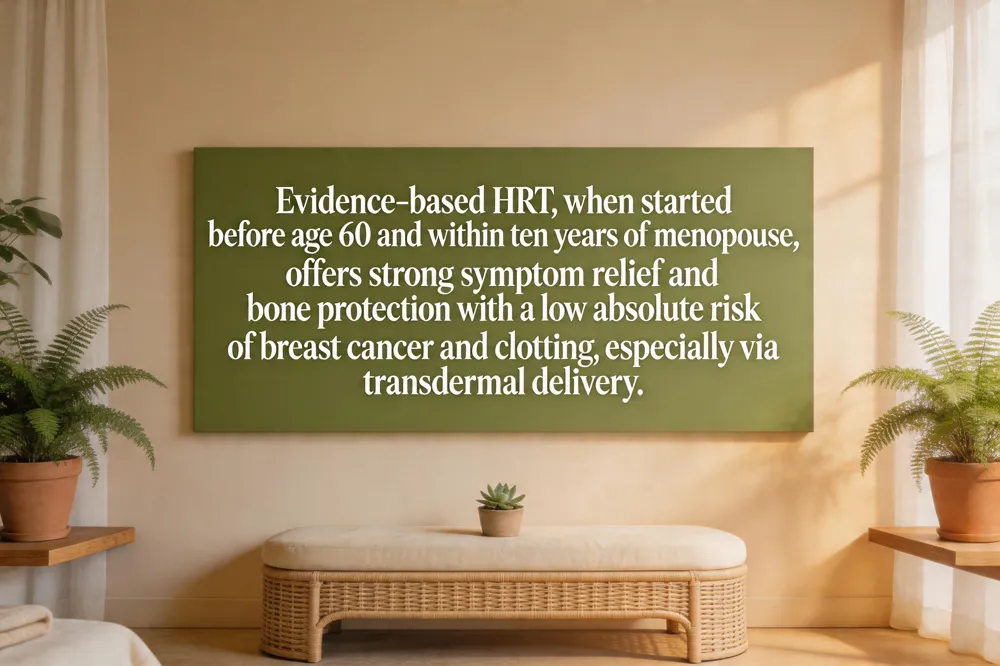 What is the truth about hormone replacement therapy? Hormone replacement therapy (HRT) is an evidence‑based option that safely relieves common menopausal symptoms—hot flashes, night sweats, mood swings, and vaginal dryness. For women under 60 with moderate‑to‑severe symptoms and no high‑risk history, benefits—including bone protection, muscle maintenance, and modest skin‑elasticity improvement—generally outweigh the low absolute risk of serious side effects. Main risks are a modest increase in breast‑cancer incidence (≈5 extra cases per 1,000 women after five years of combined HRT) and a slightly higher clot or stroke risk with oral tablets; transdermal patches, gels, or sprays largely avoid this.
Rethinking hormone replacement therapy: Modern HRT is personalized, using the lowest effective dose—often transdermal—to reduce clotting risk. Initiating therapy within ten years of menopause, preferably before age 60, offers the best balance of relief and safety. For women with contraindications, non‑hormonal options or short‑term, low‑dose regimens are considered after a thorough risk‑benefit discussion. Ongoing monitoring and shared decision‑making allow adjustments as health status changes.
Hormone therapy myths are finally being debunked: The 2002 WHI study involved older women on a single synthetic progestin regimen and does not apply to younger, newly menopausal patients or newer bioidentical products. Current data show that early initiation can lower mortality, reduce dementia risk, and protect heart health and bone density. The FDA’s removal of broad black‑box warnings reflects this updated evidence, emphasizing that benefits outweigh previously exaggerated risks when therapy is tailored and monitored.
Celebrity and Cultural Perspectives on Menopause
 Public figures are shaping menopause dialogue. Michelle Obama confirmed using hormone replacement therapy to ease hot flashes, illustrating how evidence‑based HRT can relieve symptoms and reduce stigma. Jennifer Aniston promotes the Pvolve resistance‑training program, a non‑pharmacologic approach that helps regulate hormones, improve sleep, and preserve muscle mass.
In Japan, cultural practices emphasize dietary phytoestrogens and herbal medicine. Women regularly consume soy‑based foods rich in isoflavones, which act as mild estrogen mimics and may lessen vasomotor symptoms. Traditional kampo formulas and mindfulness‑based stress‑reduction techniques are also common, while physicians remain a resource for those who need HRT.
These examples highlight the importance of personalized, culturally sensitive strategies—whether hormonal, lifestyle‑based, or a combination—to empower women and foster broader menopause awareness.
Skin, Hair, and Collagen Benefits of HRT

Clinical studies report up to a Long‑term hormone replacement therapy (HRT) can increase skin collagen by up to 48% and improved elasticity in women who start HRT within ten years of menopause.
Hair follicles also respond to estrogen; the hormone supports the anagen growth phase and may counteract thinning, though combined progesterone therapies can exert androgenic effects that worsen hair loss in some patients. Individual hormonal balance determines the net hair outcome.
Topical estrogen formulations can deliver skin benefits with minimal systemic absorption, making them a safe option for patients concerned about systemic side effects. Small trials demonstrate gains in skin elasticity and reduced fine lines, making it a targeted option for patients seeking non‑invasive rejuvenation.
Overall, HRT can restore a portion of lost collagen, improve skin health, and modestly benefit hair, but benefits vary by formulation, dose, timing, and personal risk profile. Patient education and personalized treatment planning are essential to maximize the dermatologic benefits of HRT while minimizing potential risks.
Latest Research, Guidelines, and Practical Options
 Latest research on hormone replacement therapy – Large‑scale reviews and the 2025 FDA label update reaffirm that initiating systemic estrogen (± progesterone) within ten years of menopause markedly reduces vasomotor symptoms, bone fractures, cardiovascular events, and cognitive decline. Updated labeling removes the old black‑box warnings for breast cancer and heart disease while retaining caution for endometrial risk with estrogen‑only products. Latest research on menopause PDFs – Peer‑reviewed PDFs are available through NIH’s Women’s Health In Focus (2022), JAMA Health Forum (2023), and open‑access 2026 population‑based studies on BMI change and urogenital atrophy. Search PubMed or NIH RePORTER for full‑text PDFs. Hormone replacement therapy for perimenopause weight loss – HRT is not a primary weight‑loss drug, but restoring estrogen can blunt mid‑section fat gain. A controlled trial showed a 2 kg fat loss with transdermal estradiol + oral progesterone over three months, and combined GLP‑1 agents may amplify this effect. Bioidentical hormones pros and cons – Bioidentical formulas (estradiol, micronized progesterone) are chemically identical to endogenous hormones and can be prescribed in precise FDA‑approved doses, offering a “natural” feel. Compounded versions lack FDA oversight, risking dose variability. Risks such as clotting and cardiovascular events remain comparable to conventional HRT. HRT in perimenopause study – Initiating HRT early (≤10 years post‑menopause) cuts hot‑flash frequency, reduces fatal cardiovascular events by 25‑50 %, lowers osteoporotic fractures, and may halve Alzheimer’s risk. Transdermal delivery further lowers clot risk. Do dermatologists deal with hormones? – Yes. Dermatologists treat hormone‑driven acne, skin thinning, and aging; they often coordinate care with gynecologists/endocrinologists and may prescribe topical or systemic hormone‑modulating agents. Amount of estrogen in birth control vs HRT – Combined oral contraceptives contain 20‑35 µg ethinyl estradiol (≈2‑5 mg estradiol‑equivalent), far higher than standard HRT doses of 0.3‑0.6 mg estradiol (or 50‑100 µg transdermal). The higher potency suppresses ovulation, whereas HRT simply replaces declining estrogen. Hormone therapy for perimenopause near me – In Indiana, Dermatology Associates, PC offers board‑certified physicians trained in hormone management, providing personalized HRT plans (in‑person or virtual) after symptom assessment and lab testing. Rethinking hormone replacement therapy – Modern HRT emphasizes personalized, lowest‑effective dosing (often transdermal), initiation before age 60 or within ten‑years of menopause, shared decision‑making, and ongoing monitoring to balance symptom relief with safety.
Addressing Common Concerns and Clinical Management
 What are the signs that you need hormone replacement therapy? Persistent hot flashes, night sweats that disrupt sleep, fatigue, brain fog, mood swings, joint aches, vaginal dryness, decreased libido, and irregular periods are common signals that estrogen levels have fallen and that a personalized HRT evaluation may be warranted.
Hormone replacement therapy for perimenopause side effects Perimenopausal HRT is well‑tolerated, but mild side effects can occur: breast tenderness, bloating, headaches, nausea, mood shifts, skin irritation, or spotting. Serious risks such as clot formation or an increase in breast‑cancer risk are linked to higher‑dose or long‑term use, and are mitigated by low‑dose, transdermal, or bioidentical formulations with follow‑up.
Is HRT good for your hair? Hair thinning that follows estrogen decline may improve modestly with HRT because estrogen supports the anagen phase, though synthetic progestins or testosterone‑containing regimens can worsen shedding. HRT is a secondary benefit for hair; most patients also use minoxidil or procedural options.
Does HRT help skin aging? Skin aging benefits are well documented: restored estrogen stimulates collagen synthesis, increases dermal thickness, and enhances hydration, reducing fine lines and dryness. HRT complements topical retinoids, antioxidants, and sun protection.
Do dermatologists deal with hormones? Dermatologists routinely manage hormone‑related skin issues—acne, thinning, elasticity loss—and collaborate with gynecologists or endocrinologists to coordinate HRT, ensuring safe, individualized care. Ongoing monitoring of blood pressure, breast health, and symptom response ensures the therapy remains safe and effective.
Empowering Women Through Informed HRT Choices
Personalized care starts with a assessment of each woman’s symptoms, medical history, and risk factors, enabling clinicians to choose the appropriate hormone formulation and delivery route. Evidence‑based decisions use studies showing benefits of initiating HRT within ten years of menopause, especially with transdermal or bioidentical options that lower clot and cancer risks. Integrating skin health, dermatologists can treat estrogen‑related thinning, dryness, and loss of elasticity while coordinating HRT plans. Dermatology Associates, PC provides counseling, monitoring, and skin‑care regimens to support well‑being.