

FaceTite at Dermatology Associates, PC
FaceTite is a minimally invasive treatment that uses radiofrequency-assisted lipolysis (RFAL) to tighten loose skin and reduce small fat deposits in the lower face, jawline, and neck.
Unlike a traditional surgical facelift, FaceTite requires only tiny incisions and local anesthesia, making it a practical option for patients with mild to moderate skin laxity who want noticeable contour improvement without extended downtime.
At Dermatology Associates, PC, FaceTite is integrated into a comprehensive approach to facial rejuvenation, helping patients achieve firmer contours with less recovery time than surgery.
What Is FaceTite and How Does It Work?
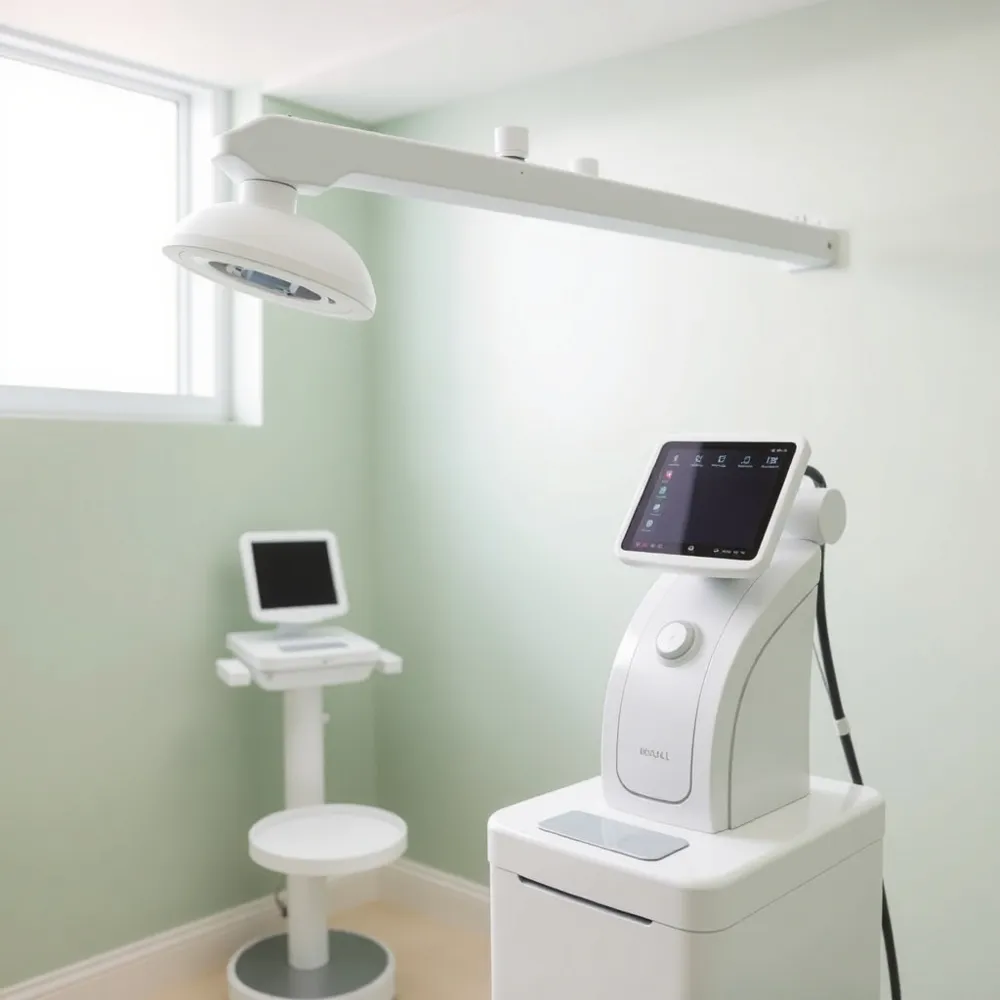 FaceTite is a minimally invasive procedure that uses radiofrequency-assisted lipolysis (RFAL) to tighten loose skin and reduce small fat deposits on the face, jawline, and neck. Unlike traditional facelift surgery, which requires large incisions and general anesthesia, FaceTite delivers controlled RF energy through a thin cannula inserted via tiny entry points. This approach allows for significant skin tightening with minimal downtime and scarring.
During the treatment, the internal cannula emits RF energy while an external electrode glides over the skin surface above it. The energy heats the deep dermis and underlying fat to approximately 69°C (156°F). This heat simultaneously liquefies small pockets of fat — making them easier for the body to absorb — and triggers immediate contraction of existing collagen fibers while stimulating long-term neocollagenesis. This dual mechanism results in firmer, better-contoured skin that continues to improve over several months.
A prospective clinical trial published in PMC evaluated FaceTite in 26 patients with mild to moderate skin laxity. At six months post-treatment, 87% of patients rated their improvement as moderate to very significant. Objective measurements using a 3D imaging system showed a mean reduction in neck angle of 4.3 degrees (p<0.001), confirming substantial tightening of the cervicomental angle.
At Dermatology Associates, PC, FaceTite is performed under local anesthesia by Dr. Sonya F. Campbell Johnson’s experienced team. The procedure typically takes about one hour, with patients returning home immediately afterward. Because RF energy is delivered precisely between the internal cannula and external electrode, treatment remains well-controlled — minimizing risks such as burns or uneven results.
A more recent study (2024) combining RFAL with buccal fat pad excision reported 94% average patient satisfaction at six months follow-up, up from 22% before treatment — a 72% increase. No hematoma, seroma, or fat necrosis occurred in that group of 80 patients. These results highlight FaceTite's safety profile when performed by qualified providers using proper technique.
Ideal Candidates for FaceTite
FaceTite works best for patients in their 30s to 50s who have mild to moderate skin laxity, good skin elasticity, and sufficient bone structure to support the tightened tissue. These factors allow the radiofrequency energy to produce noticeable contouring and collagen stimulation without the need for more invasive surgery.
The procedure is not ideal for those with severe sagging or very thin, fragile skin. Older patients or individuals with advanced laxity may have a higher risk of burns or unsatisfactory results and are often better suited for a surgical facelift or neck lift.
For patients seeking a non-surgical alternative to a facelift, FaceTite offers an effective interim solution that can delay surgery by several years. At Dermatology Associates, PC, we evaluate each patient's skin quality, laxity level, and aesthetic goals during consultation to confirm that FaceTite is the right choice before designing a personalized treatment plan.
FaceTite Before and After Results
Understanding what FaceTite before and after results actually look like helps set realistic expectations. While some immediate tightening is visible on the treatment table due to initial tissue contraction and the reduction of swelling, the full outcome develops gradually over 3 to 6 months as the body produces new collagen and the skin remodels its structural support.
A prospective multicenter clinical trial published in the Journal of Drugs in Dermatology tracked 26 patients treated with a single FaceTite session. At the 6-month follow-up, 87% of patients rated their improvement as "moderate" to "very significant." Physician assessments using the Global Aesthetic Improvement Scale (GAIS) recorded mean scores of 2.11 for the lower face and 2.26 for the neck at 6 months, indicating visible improvement in jawline definition, jowl reduction, and neck tightening.
Three-dimensional imaging from the same study confirmed quantitative changes: the cervicomental angle (the angle under the chin) decreased by an average of 4.3 degrees, translating to a sharper, more sculpted chin-to-neck transition. These measurable improvements align with the patient-reported satisfaction scores and support FaceTite's role as a predictable non-surgical option for mild to moderate skin laxity.
A 2024 study in Aesthetic Plastic Surgery involving 80 patients reported even higher satisfaction: 72 of 80 patients expressed extreme satisfaction, and the average satisfaction rate rose from 22% before treatment to 94% at six months. Submental length reduced by an average of 23 mm, with the majority of reduction occurring in the first month and stabilizing at 6 months. At Dermatology Associates, PC, these outcomes are achieved through careful patient selection and precise radiofrequency delivery tailored to each individual's facial anatomy and skin condition.
Results can last 1 to 3 years or longer when supported by consistent skincare, sun protection, and a stable weight. Because FaceTite stimulates collagen rather than removing excess skin, the improvement is natural and avoids the pulled appearance sometimes associated with surgical lifts. Maintenance treatments or combination approaches such as pairing FaceTite with Morpheus8 can extend the longevity of results.
FaceTite Recovery: What to Expect Day by Day
 FaceTite recovery is generally well tolerated and follows a predictable timeline. Most patients can return to normal activities within a few days, though final results take several months to fully develop.
Day 1 brings swelling, mild tenderness, and some redness around the treatment sites. Rest and keeping the head elevated are the primary recommendations during this initial period. Patients typically take the day off from work and avoid bending or strenuous movement.
Days 2 to 3 are when swelling peaks. Cold compresses and continued head elevation help manage this phase effectively. The skin may feel tight and look puffier than the day before, but this is a normal part of the healing process.
Days 4 to 7 bring noticeable improvement. Swelling begins to subside, and most patients feel comfortable returning to non-strenuous work and light daily activities. Bruising typically starts to fade, and subtle tightening may become visible as the initial fluid retention resolves.
By week 2, bruising fades significantly and initial tightening results become more apparent. Around this point, many patients notice a clearer jawline and firmer skin along the treated areas.
Weeks 3 to 4 see residual swelling resolve and collagen remodeling continue beneath the skin. The improvement is progressive, with skin tightness increasing gradually as new collagen matures. Most patients can resume exercise and strenuous activities after 2 to 3 weeks.
Final contours continue to develop through months 3 to 6 as collagen production reaches its peak. By this stage the jawline and lower face appear more sculpted, with results that can last for several years when combined with good skincare and sun protection.
FaceTite vs Morpheus8: Key Differences
Both FaceTite and Morpheus8 use radiofrequency (RF) energy to tighten skin and stimulate collagen, but they target different depths and address distinct concerns. Understanding how they differ helps patients choose the right approach — or combine both for comprehensive results.
Treatment depth. FaceTite is a subdermal procedure. A small probe is inserted beneath the skin through a tiny incision to deliver RF energy directly to deeper tissue layers, melting fat and contracting the skin from the inside out. Morpheus8 uses a handheld device with tiny microneedles that penetrate the skin's surface and mid-dermis, delivering RF energy to a shallower depth while creating micro-injuries that stimulate collagen and elastin.
Primary result. FaceTite is ideal for skin laxity accompanied by moderate fat reduction — it tightens sagging jowls, defines the jawline, and reduces submental fullness. Morpheus8 primarily improves skin texture, fine lines, acne scars, and pore size, with a milder tightening effect.
Procedure time and downtime. FaceTite takes about 45–90 minutes and is performed under local anesthesia with or without oral sedation; most patients return to normal activities within 1–2 days. Morpheus8 sessions are shorter (20–45 minutes) and involve minimal downtime — typically 24–72 hours of redness and mild swelling.
Combining FaceTite and Morpheus8
For patients with mild to moderate skin laxity who also want to improve surface texture, combining both treatments is a popular strategy. FaceTite handles the deeper contouring — tightening loose skin and reducing fat deposits — while Morpheus8 refines skin quality, reducing fine lines, wrinkles, and uneven texture. Many practices recommend a series of 3–4 Morpheus8 sessions after FaceTite recovery to maximize and maintain results.
At Dermatology Associates, PC, both technologies are part of the advanced RF platform. Patients who want a more sculpted lower face with smoother, younger-looking skin often schedule a consultation to discuss combining FaceTite with Morpheus8 for a tailored, comprehensive plan.
Is FaceTite Worth the Cost?
The cost of FaceTite usually falls between $3,500 and $6,500 for the face and neck, depending on the treatment area and provider expertise. At Dermatology Associates, PC, pricing is transparent and based on the specific areas being treated, whether the lower face, jawline, neck, or a combination. Many patients find the investment worthwhile given the procedure's ability to deliver visible tightening without the higher costs, longer downtime, or visible scarring associated with a surgical facelift.
Clinical data supports the value proposition. A prospective study of 80 patients who underwent neck remodeling with FaceTite combined with buccal fat pad excision reported that 72 out of 80 patients expressed extreme satisfaction, and the average satisfaction rate rose from 22% before treatment to 94% six months after the procedure — a 72% increase published in Aesthetic Plastic Surgery. A separate multicenter trial found that 87% of patients rated their improvement as moderate to very significant at the six-month follow-up, with objective skin tightening demonstrated through 3D imaging.
Results vary from person to person based on age, skin quality, and the degree of skin laxity. Patients with mild to moderate sagging typically see the most satisfying outcome, while those with very loose skin may need more extensive surgery to meet their goals. A thorough consultation at DermAssoc helps align expectations with realistic outcomes and ensures the treatment fits both aesthetic goals and budget.
For the right candidate, FaceTite offers a compelling balance: meaningful, long-lasting contour improvement with minimal interference in daily life. When weighed against the cost, downtime, and risk profile of alternative procedures, many patients conclude that FaceTite is a worthwhile investment in their appearance and confidence.
Potential Risks and How to Minimize Them
FaceTite is a minimally invasive procedure with a strong safety record, but like any medical treatment, it carries some risks. Understanding these beforehand helps you make an informed decision and take the right steps to minimize them.
The most common side effects are temporary swelling, bruising, and tenderness in the treated area. These typically peak within the first few days and resolve on their own within one to two weeks. A 2016 clinical trial published in the Journal of Drugs in Dermatology found that all 26 patients experienced only mild, transient swelling and bruising, with no major complications such as burns, infection, or nerve injury reported source: [the FaceTite clinical trial]. Patients returned to normal activities within 24 to 72 hours.
Rare but more serious risks include burns, contour irregularities, infection, and temporary numbness. A 2024 study of 80 patients who underwent FaceTite for neck remodeling found that 4 patients (5%) experienced hyperesthesia that resolved within six months, and 6 patients (7.5%) had residual skin laxity requiring revision one year later source: [the 2024 prospective study]. No hematoma, skin slough, chronic swelling, or fat necrosis was reported. These outcomes highlight that complication rates are low when the procedure is performed by an experienced, board-certified provider.
Dissatisfaction with FaceTite most often stems from unrealistic expectations rather than a technical failure. Patients who expect results identical to a surgical facelift are frequently disappointed. The procedure improves mild to moderate skin laxity but does not remove excess skin or lift tissues as dramatically as surgery. Choosing a qualified physician who specializes in radiofrequency techniques is the most important step you can take. At Dermatology Associates, PC, board-certified dermatologists conduct a thorough assessment of your skin laxity and fat distribution before recommending FaceTite, ensuring you are a good candidate and clarifying what results are realistically achievable.
To minimize risks, follow pre- and post-treatment instructions carefully. Avoid blood-thinning medications and supplements before the procedure. After treatment, wear the compression garment as directed, keep your head elevated, apply cold compresses, and avoid strenuous activity for the first week. If you notice worsening swelling after 7 to 10 days, increasing pain, or signs of infection, contact your provider promptly. With the right preparation and a skilled provider, FaceTite is a safe and predictable option for facial contouring.
Combining FaceTite with Other Treatments
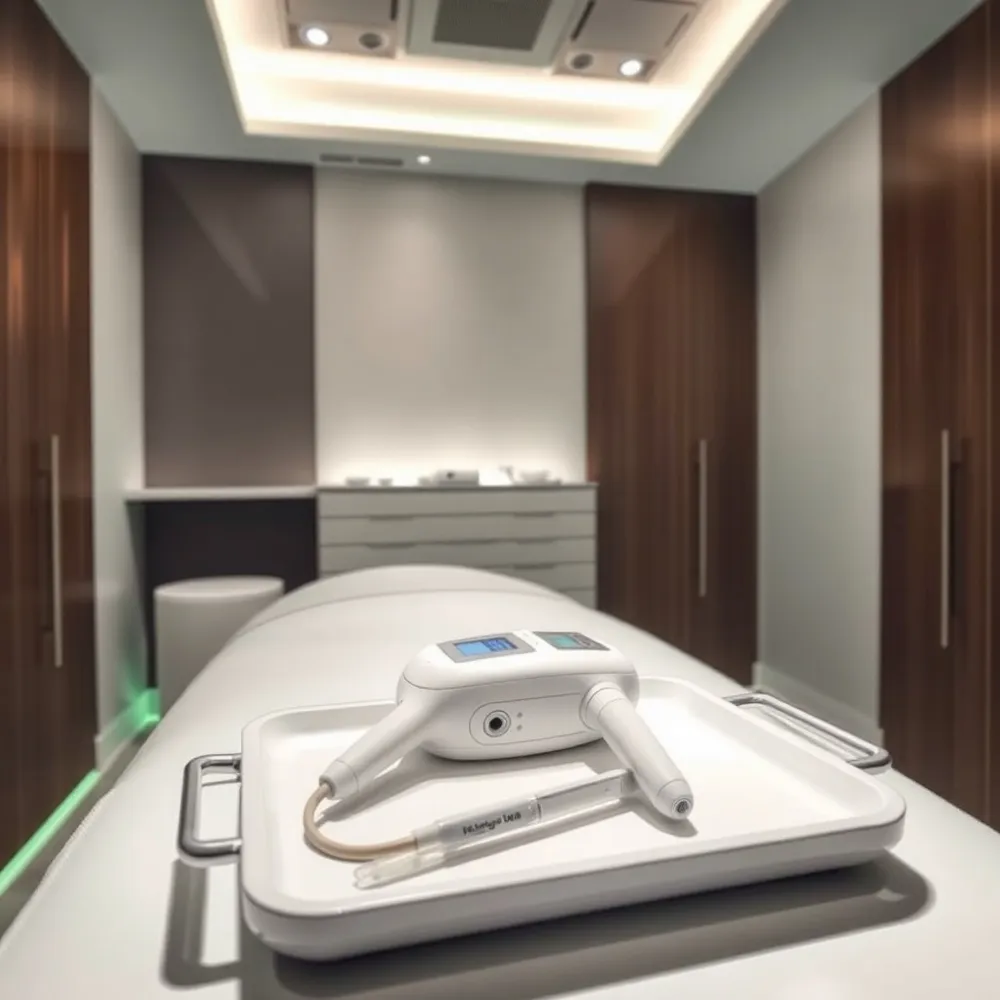 FaceTite pairs well with other procedures for a more complete facial rejuvenation. Many patients combine it with Morpheus8 microneedling to tighten deeper tissues while improving surface texture and firmness. Others add dermal fillers or Botox to restore volume and soften dynamic wrinkles alongside the contouring effects of FaceTite.
Some practices also incorporate radiofrequency-assisted liposuction or Fractora RF to boost fat removal and collagen remodeling in a single session. At Dermatology Associates, PC, your consultation is used to design a customized plan that may layer FaceTite with complementary treatments, addressing everything from skin laxity and fat deposits to fine lines and volume loss for longer-lasting, natural-looking results.
Achieve a Firmer, More Youthful Contour
FaceTite offers a proven non-surgical solution for tightening the lower face and neck, backed by clinical data. A 2024 study in Aesthetic Plastic Surgery of 80 patients who underwent radiofrequency-assisted liposuction with the FaceTite device reported that 72 of 80 patients expressed extreme satisfaction at six months, while the average submental length reduction was 23 mm.
These results are supported by an earlier multicenter clinical trial of 26 patients, which found mean GAIS scores of 1.90 at 3 months and confirmed significant collagen remodeling on histologic analysis with no major complications. At Dermatology Associates, PC, consultations help determine whether your skin quality and degree of laxity match the patient profile that produces these durable outcomes.