A Clear Overview
Laser hair removal has become popular because it offers long‑lasting reduction of unwanted hair, lessens razor burn, and eliminates the need for frequent shaving or waxing. The most reliable results come from board‑certified dermatologists who use FDA‑approved laser systems; these devices are rigorously tested for safety and efficacy and emit non‑ionizing light confined to the treatment area. In a professional clinic, the practitioner first evaluates the patient’s Fitzpatrick skin type, hair color, thickness, and any dietary factors (e.g., high beta‑carotene intake) that could affect laser absorption. Based on this assessment, the dermatologist selects the appropriate wavelength—such as diode, alexandrite, or Nd:YAG—and adjusts fluence, pulse duration, and cooling settings to maximize follicle targeting while protecting surrounding skin. This individualized approach minimizes side effects, accommodates a wide range of skin tones, and achieves the typical 40‑80 % reduction in hair density after a full series of 6‑8 sessions.
Understanding How Laser Hair Removal Works
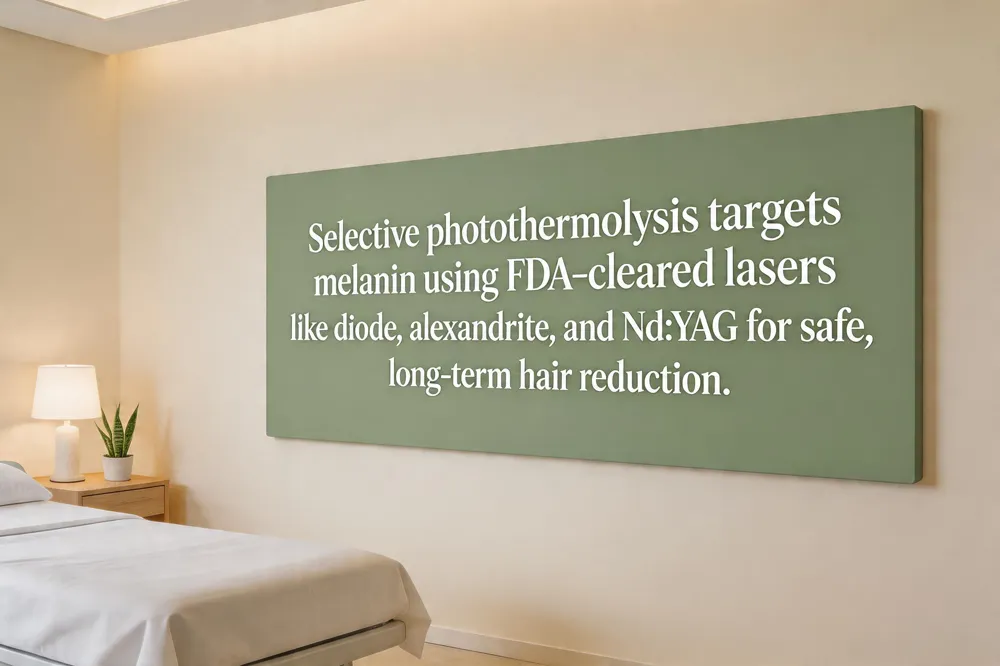 Laser hair removal relies on selective photothermolysis: a focused light wavelength is absorbed by melanin in the hair shaft and follicle, converting light to heat that damages the follicle while sparing surrounding skin. The energy is non‑ionizing, confined to the treatment area, and does not pose a radiation‑cancer risk. Only FDA‑cleared laser systems—such as diode, alexandrite, and Nd:YAG—should be used, and treatments must be performed by board‑certified dermatologists who can match laser wavelength and settings to each patient’s skin type and hair characteristics. Advancements like the Nd:YAG and longer‑pulse diode lasers safely treat darker Fitzpatrick skin tones by using deeper‑penetrating wavelengths that bypass epidermal melanin, reducing burn and pigment‑change risk.
What are the benefits of laser hair removal?
Laser hair removal provides long‑term reduction of unwanted hair, giving smoother skin and eliminating daily shaving, waxing, or plucking. Precise targeting of dark, coarse hairs spares surrounding skin, resulting in minimal irritation and a low risk of ingrown hairs. Sessions are quick—large areas are treated in minutes—and most patients achieve permanent‑looking hair loss after three to seven well‑spaced treatments, across a wide range of body areas and, with appropriate technology, many skin types. The result is increased confidence and a low‑maintenance skin‑care routine.
Treatment Protocols and Expected Results
 Laser hair removal works by targeting melanin in the hair follicle during its active (anagen) growth phase, so several appointments are needed to catch follicles at different stages. Most clinicians recommend 4‑8 sessions for larger areas (e.g., legs, back) and 2‑6 sessions for smaller zones (e.g., upper lip, underarms), spaced 4‑6 weeks apart. After a full series, patients typically see a 40‑80 % permanent in hair density, with regrown hairs becoming finer and lighter. In regions with low hormonal influence—such as the underarms, bikini line, or upper lip—these reductions can last several years and, in some cases, approach a decade when high‑quality lasers and proper maintenance are used. Periodic touch‑up treatments (often once a year) help preserve the benefit. Benefits of laser hair removal include long‑term hair reduction, smoother skin, reduced irritation and ingrown hairs, and the convenience of eliminating daily shaving or waxing. The procedure is quick, safe when performed by a board‑certified dermatologist, and suitable for a broad range of skin tones with the appropriate laser wavelength.
Safety, Side Effects, and Long‑Term Risks
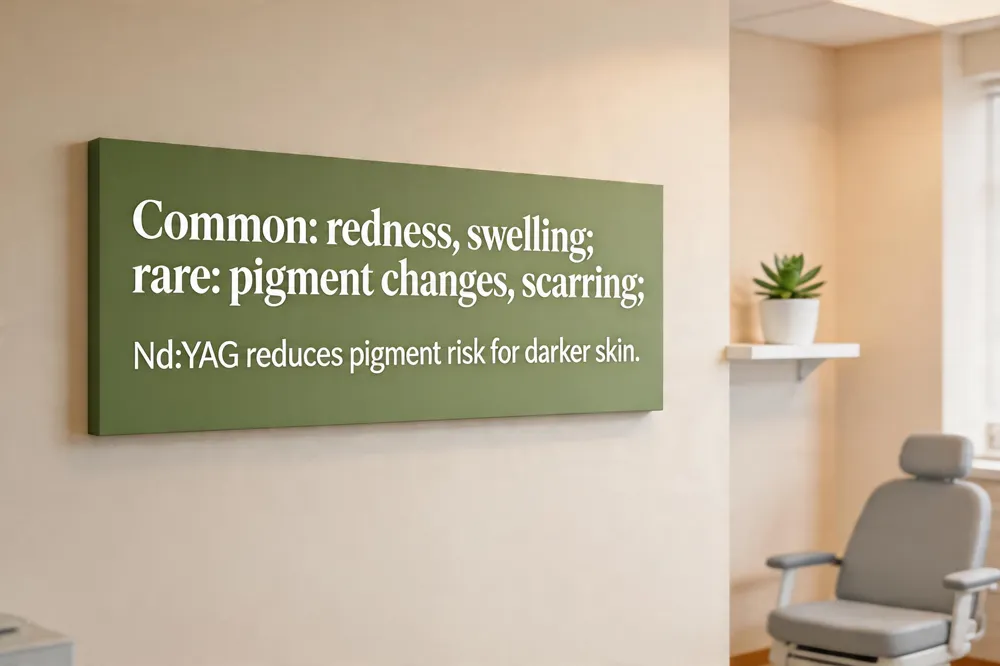 Temporary reactions – Redness, swelling and a warm‑pinprick sensation resolve within hours
Pigment alterations in darker skin – Short‑wavelength lasers may cause hyper‑ or hypopigmentation; longer‑wavelength Nd:YAG lowers this risk to about 2‑3 % in Fitzpatrick IV‑VI patients
Rare complications – Blistering, crusting, permanent scarring or paradoxical hair growth are uncommon and usually due to improper settings
Nd:YAG safety – Nd:YAG’s deeper penetration and lower epidermal melanin absorption make it safe for darker skin, with limited pigment change and virtually no texture loss
Q: Possible side effects?
A: Mild redness, swelling, warmth, occasional pigment change; rare blistering or scarring. Nd:YAG lowers pigment risk
Q: 100 % safe?
A: Safe with a board‑certified dermatologist; irritation common, rare complications.
Q: Long‑term effects?
A: Main issue is persistent pigment alteration; Nd:YAG minimizes this.
Q: Downsides?
A: Irritation, pigment shift, rare blistering/scarring, sessions needed, some areas contraindicated.
Q: Bikini area?
A: Redness, swelling, tingling, crusting or pigment change; rare blistering. Proper cooling and after‑care reduce risk.
Special Considerations for Specific Health Conditions
 Laser hair removal is generally safe for patients with Hashimoto’s thyroiditis, MS, or HSV‑2, but each condition requires a tailored approach. Hashimoto’s itself is not a contraindication; however, high‑dose thyroid medication can increase photosensitivity, so a dermatologist should review your medication and ensure thyroid levels are stable before treatment. Multiple sclerosis does not trigger disease activity, but sensory loss, skin changes, or photosensitizing drugs may necessitate adjusted laser settings and close coordination with your neurologist. For HSV‑2, active lesions must be fully healed; a short antiviral prophylaxis course before and after sessions reduces flare‑up risk. In all cases, a board‑certified dermatologist will assess skin type, medication profile, and any hormonal fluctuations that could affect hair‑growth patterns or healing. Personalized treatment plans, proper pre‑ and post‑care and clear communication with your health‑care team ensure safe, effective laser hair removal across these conditions.
Preparing for Your Sessions
 Before you begin laser hair removal, stop waxing, plucking for at least 4‑6 weeks so the hair follicles remain intact for the laser to target. Shave the treatment area the day before (or 24‑48 hours prior) to remove surface hair while leaving a short shaft for optimal absorption. Sun exposure should be avoided for a minimum of two weeks before and after each session; use a broad‑spectrum SPF 30+ sunscreen daily to reduce the risk of hyper‑ or hypo‑pigmentation. Vegetarian diets rich in beta‑carotene can impart a yellow hue to the skin, potentially affecting laser absorption; a dermatologist can assess any impact. Finally, review all medications and topical products—especially antibiotics, retinoids, hormonal contraceptives, or photosensitizing agents—because they can increase light sensitivity or alter healing. A board‑certified dermatologist will tailor laser settings to your skin and hair type, manage discomfort with numbing or cooling, and guide you through these pre‑ and post‑care steps for the best, long‑lasting results.
Cost, Pricing, and Value
 Laser hair removal pricing in the United States varies by treatment area, session count, and provider. Small zones such as the upper lip or underarms typically run $100‑$300 per session, while larger regions like full legs or a full back cost $400‑$800. Most patients need 6‑8 sessions for lasting reduction, placing the overall investment between $600 and $5,000, depending the the number of zones treated. Many dermatology practices, including Dermatology Associates, PC, offer transparent, itemized billing and bundled packages that lower per‑session costs—often 10‑20 % off the a‑session rate—making the total outlay more predictable. When compared with the cumulative expense of shaving, waxing, or depilatory creams, professional laser treatment proves cost‑effective over several years, especially after the initial series, as maintenance sessions are infrequent. Insurance generally does not cover cosmetic laser hair removal, but financing plans or health‑care‑savings accounts can help spread payments. Patients should request a detailed quote and discuss any available discounts before committing to treatment.
Addressing Concerns, Myths, and Pain Management
 I regret my laser hair removal—what can I do? First, schedule a follow‑up with your board‑certified dermatologist. The clinician can reassess skin response, adjust laser fluence, add topical agents, or schedule extra sessions to improve density reduction or correct pigment changes. For persistent hyperpigmentation, gentle chemical peels or light‑based resurfacing may be recommended. Switching to a different wavelength (e.g., Nd:YAG for darker skin) or combining modalities can also salvage unsatisfactory areas.
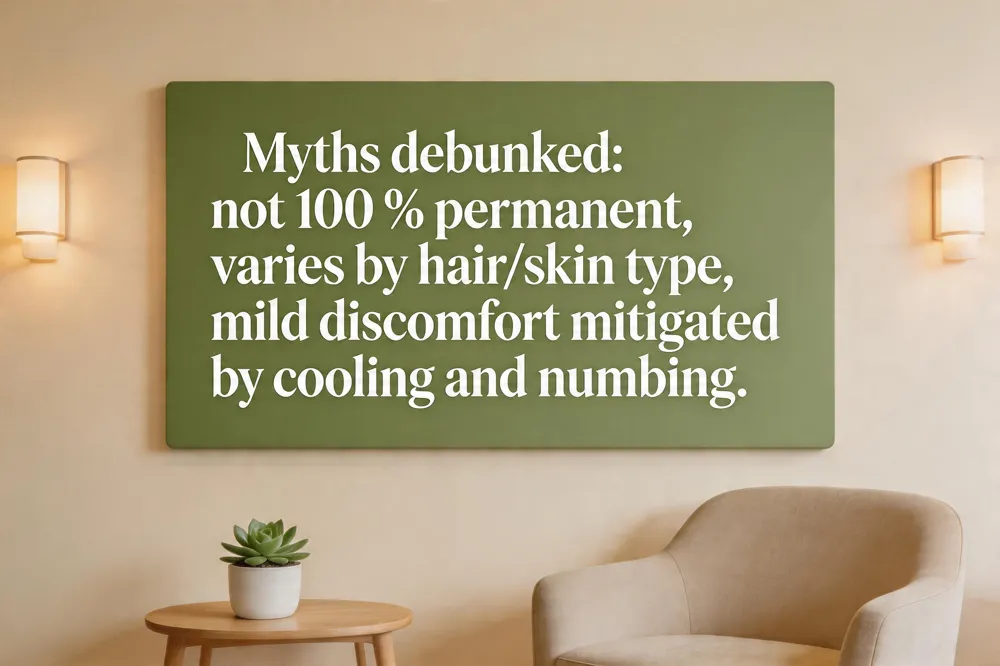
What are common myths and facts about laser hair removal? Myth: It permanently removes all hair. Fact: It yields long‑term reduction; occasional maintenance is typical. Myth: It works equally on all hair and skin types. Fact: Dark, coarse hair on light skin responds best; lighter hair (gray, red, blonde) lacks melanin and is less effective, while darker skin tones require specific lasers and settings. Myth: The procedure is painless. Fact: Most patients feel a mild rubber‑band snap; topical numbing creams and cooling devices further reduce discomfort. Myth: It is unsafe for darker skin. Fact: Modern FDA‑cleared lasers are safe across Fitzpatrick I‑VI when used by trained professionals.
Is laser hair removal painful? The sensation is usually a brief, tolerable snap. Discomfort varies by area; the upper lip is less sensitive than underarms or bikini line. Clinics employ cooling sprays, contact cooling, and optional topical anesthetics to make the experience comparable to, barely less intense than waxing.
Putting It All Together
Laser hair removal is a safe, medically‑regulated procedure when performed by board‑certified dermatologists using FDA‑cleared devices. At Dermatology Associates, PC each clinician conducts a thorough skin‑type and hair‑characteristic assessment, selecting the appropriate wavelength (e.g., Nd:YAG, diode, alexandrite) and settings to maximize efficacy while minimizing pigment‑related risks. Treatment plans are customized to the patient’s unique goals, hair color, thickness, and hormonal factors, typically spanning 4‑8 sessions spaced 4‑6 weeks apart. Because safety protocols—including cooling, protective eyewear, and strict sun‑avoidance guidelines—are rigorously applied, side‑effects are usually limited to mild, temporary redness. We invite you to schedule a personalized consultation, during which we will discuss your specific concerns, outline a tailored protocol, and answer any questions about expected outcomes and after‑care. Taking this step ensures optimal results and peace of mind and lasting confidence for your skin health.