Why Laser Therapies Matter Today
The demand for non‑surgical skin rejuvenation has surged as patients seek effective, minimally invasive alternatives to traditional cosmetic surgery. Modern laser technologies—ablative, non‑ablative, and fractional—address a broad spectrum of concerns, from fine‑, pigmentation, sc sun,acy skinety, vascularTher, while‑ a short downtime and a natural‑lasting outcome, of them apnea cornerstones in comprehensive dermatologic care.
Within a full‑service dermatology practice, laser resurfacing integrates with injectables, chemical peels, and microneedling to deliver layered, customized treatment plans that target both surface texture and deeper dermal remodeling. This multimodal approach maximizes collagen induction, improves skin tone, and sustains results long after the procedure.
Dermatology Associates, PC in Indiana exemplifies this model. The practice offers FDA‑cleared fractional CO₂, Er:YAG, and non‑ablative systems, tailoring each session to the patient’s Fitzpatrick skin type, medical history, and aesthetic goals. Board‑certified dermatologists conduct thorough pre‑procedure assessments, emphasize sun‑protection protocols, and provide detailed post‑care instructions to minimize risks such as pigmentation changes or infection. By combining cutting‑edge laser platforms with evidence‑based aftercare, Dermatology Associates, PC delivers safe, effective rejuvenation that meets the growing consumer expectation for high‑quality, non‑surgical skin improvement.
Understanding Laser Technologies for Facial Rejuvenation
 Ablative vs. non‑ablative laser fundamentals
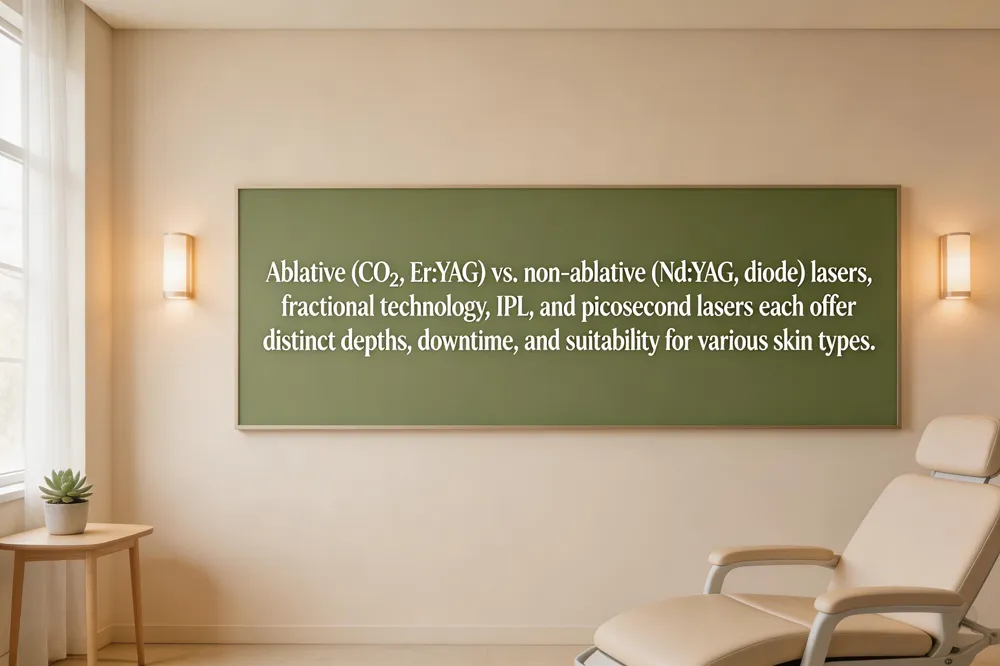
Ablative lasers such as CO₂ and Er:YAG vaporize the epidermis and heat the dermis, prompting robust collagen remodeling. They deliver dramatic texture improvement, the pigment scar and acne scar reduction but require 7‑10 days of crusting and up to a month for full recovery. Non‑ablative lasers (e.g., Nd:YAG, diode) heat deeper dermal layers without breaching the surface, stimulating collagen with minimal downtime (often 1‑3 days) and are preferred for mild to moderate pigment, vascular, and fine‑line concerns.
Fractional laser technology and its benefits
Fractional systems—both ablative and non‑ablative—create microscopic columns of treated tissue surrounded by untouched skin. This pattern accelerates healing, reduces risk of infection or pigmentary changes, and allows customization for diverse Fitzpatrick skin types. Patients typically experience only mild redness and can resume normal activities within a few days, while still achieving collagen‑induced firmness and texture improvement.
Intense Pulsed Light (IPL) and picosecond lasers
Intense Pulsed Light (IPL) uses a broad spectrum of light with interchangeable filters to target melanin and hemoglobin, effectively treating sunspots, rosacea, and superficial vascular lesions with little to no downtime. Picosecond lasers deliver ultra‑short pulses that shatter pigment particles and stimulate collagen with minimal thermal damage, offering rapid recovery and lower risk of post‑inflammatory hyperpigmentation, especially in darker skin tones.
What are the main types of laser treatments for the face?
There are several core laser technologies used for facial rejuvenation and skin‑condition treatment. Ablative lasers such as CO₂ and Er:YAG remove the epidermis and heat the dermis, delivering deep resurfacing with dramatic results but requiring a recovery period. Non‑ablative lasers (e.g., Nd:YAG or diode) target deeper skin layers without breaking the surface, stimulating collagen and improving fine lines, pigmentation, and vascular concerns with minimal downtime. Fractional versions of both ablative and non‑ablative lasers create microscopic columns of treated tissue, combining the efficacy of resurfacing with faster healing and allowing customization for various skin types. Intense Pulsed Light (IPL) and picosecond lasers target pigment and vascular lesions, adding versatility to the practice’s toolkit for comprehensive facial skin care.
Personalized Anti‑Aging Regimens: Turning Back the Clock
 A strategic, board‑certified dermatologist can combine the most effective modalities to achieve a “20‑year‑younger” look while respecting each patient’s skin type and aesthetic goals.
Fractional CO₂/Er:YAG Resurfacing + Injectables – Fractional ablative lasers (CO₂ or Er:YAG) create microscopic columns of treated tissue, stimulating deep collagen remodeling with a recovery window of 7‑10 days. When paired with neuromodulators (Botox® or Daxxify®) for dynamic lines and hyaluronic‑acid fillers (Juvederm®, RHA®) for volume loss, the result is smoother texture, restored contour, and a noticeable lift.
PRP, Exosome Therapy, and Peptide Serums – Microneedling followed by platelet‑rich plasma (PRP) delivers growth factors that accelerate healing after laser work. Emerging exosome treatments and peptide‑rich serums such as SkinCeuticals P‑Tiox further boost elastin and collagen synthesis, enhancing long‑term firmness and radiance.
Adjunctive Non‑Invasive Technologies – LED light therapy (OmniLux) reduces post‑procedure inflammation, while microcurrent facial devices tone underlying musculature, providing subtle lift without downtime. These tools are especially useful for patients with sensitive or darker Fitzpatrick skin, where laser energy must be moderated.
Tailoring to Individual Skin Type and Goals – A thorough pre‑procedure assessment—reviewing medical history, sun exposure, and medication use—guides laser choice (ablative vs. non‑ablative, fractional vs. full‑field) and adjunctive treatments. Ongoing follow‑up allows fine‑tuning of energy settings, filler placement, and skincare protocols, ensuring safe, natural‑looking rejuvenation that can truly make a face appear decades younger.
Safety, Side Effects, and Patient Selection
 Laser resurfacing is a powerful tool for skin rejuvenation, but it carries several drawbacks that patients should weigh before treatment.
Common Drawbacks of Laser Therapy Multiple sessions (2‑6) are often required to achieve optimal texture, tone, and scar improvement, increasing both cost and time commitment. Results vary with skin type, color, and the specific condition, so outcomes are never guaranteed. Temporary reactions such as redness, swelling, mild pain, bruising, or pigment shifts are typical, while rare complications include superficial burns, blisters, infection, or even eye injury if proper protection is omitted.
Typical Post‑Procedure Reactions After ablative or fractional resurfacing patients usually feel a sunburn‑like sensation. Redness, swelling, tightness, and a warm prickling can last several days, followed by crusting, oozing of a thin yellow fluid, and peeling. Itching, stinging, and a brief flare of acne are common. Temporary hyper‑ or hypopigmentation often resolves over weeks to months with diligent SPF‑30+ sunscreen use. Serious side effects—blistering, infection, scarring, or herpes reactivation—are infrequent when protocols is performed by board‑certified specialists and after‑care instructions are followed.
Contra‑Indications and Screening Protocols Patients with recent isotretinoin use, active infections (e.g., herpes simplex), autoimmune disease, keloid scarring, recent radiation, pregnancy, uncontrolled diabetes, or photosensitivity are generally excluded. A thorough medical history, skin examination, sun‑avoidance review, and possibly antiviral prophylaxis are essential before scheduling.
Managing Expectations for Different Skin Types Fitzpatrick I‑III skin tolerates ablative CO₂ or Er:YAG lasers well, while darker tones (IV‑VI) have higher risk of post‑inflammatory hyperpigmentation. For these patients, non‑ablative fractional lasers, Nd:YAG, or picosecond devices are preferred, and lower energy settings are used. Clear communication about the gradual nature of collagen remodeling—visible improvements beginning within weeks and continuing for months—helps set realistic goals across all skin types.
Results, Longevity, and Maintenance
 Typical duration of resurfacing benefits
Laser skin resurfacing typically yields visible improvement that persists for three to five years. Ablative modalities (CO₂, Er:YAG) provide the longest‑lasting outcomes, while non‑ablative and fractional lasers may require multiple treatments but still maintain results for several years when proper after‑care is followed.
Typical duration of resurfacing benefits
Laser skin resurfacing typically yields visible improvement that persists for three to five years. Ablative modalities (CO₂, Er:YAG) provide the longest‑lasting outcomes, while non‑ablative and fractional lasers may require multiple treatments but still maintain results for several years when proper after‑care is followed.
Factors influencing lasting outcomes Durability depends on diligent sun protection (broad‑spectrum SPF 30+), avoidance of excessive UV exposure, and a consistent skincare regimen that supports collagen health (e.g., retinoids, vitamin C). Patient skin type, depth of treatment, and the specific laser technology also affect longevity. Periodic touch‑up sessions or adjunctive therapies such as BBL, IPL, or topical retinoids can extend benefits beyond the five‑year mark.
Cost considerations in Indiana In Indiana, laser resurfacing prices vary by technology and treatment area. Fractional CO₂ laser full‑face sessions range from $1,500 to $2,500, while smaller spot treatments start around $400–$800. Less aggressive options, such as Ultra Glo & Go or CoolPeel, are priced between $425 and $499 per session, with package discounts reducing per‑session costs to $300–$600. Overall, patients can expect a typical cost range of $400–$3,000 per treatment.
Number of sessions needed for optimal rejuvenation Most patients achieve optimal results after 3–4 sessions, spaced 4–6 weeks apart to allow collagen remodeling. Milder concerns may improve after 2 sessions, whereas deeper wrinkles or extensive sun damage often require 4 or more treatments. Maintenance sessions once or twice a year help preserve the rejuvenated appearance.
How long do laser skin resurfacing results typically last? Laser skin resurfacing typically provides noticeable improvement that lasts three to five years on average. Ablative lasers (CO₂, Erbium) tend to give the longest‑lasting results, while non‑ablative devices may require multiple sessions but still offer durability of several years with proper care. The longevity of the outcome is heavily influenced by diligent post‑treatment practices—daily SPF 30+ sunscreen, avoiding excessive sun exposure, and a consistent skincare routine that supports collagen health. Periodic touch‑up treatments or adjunctive therapies (such as BBL or topical retinoids) can further extend the benefits beyond the five‑year mark. Maintaining a healthy lifestyle, staying hydrated, and following your dermatologist’s personalized after‑care plan are key to preserving a smooth, radiant complexion for as long as possible.
What is the typical cost range for laser skin resurfacing in Indiana? In Indiana, laser resurfacing costs vary widely depending on the technology used and the size of the treatment area. For fractional CO₂ laser, one of the most intensive options, a full‑face treatment typically ranges from $1,500 to $2,500 per session, while smaller spot treatments start around $400 to $800. Less aggressive modalities such as the Ultra Glo & Go facial are priced at $425 per session (or $1,399 for a package of four), and CoolPeel treatments run about $499 for a face‑and‑neck area. When multiple sessions are needed, clinics often offer package discounts that bring the per‑session price down to $300‑$600. Overall, patients can expect a typical cost range of roughly $400 to $3,000 per treatment, depending on the provider, technology, and treatment area.
How many laser resurfacing sessions are usually needed for optimal results? Most patients achieve optimal results after 3 to 4 laser‑resurfacing sessions, with each treatment spaced roughly 4–6 weeks apart to allow proper healing and collagen remodeling. For milder concerns—such as fine lines or superficial acne scars—2 sessions may provide noticeable improvement, while deeper wrinkles, extensive sun damage, or deep scars often require 4 or more treatments. The exact number is personalized based on your skin type, the depth of the issue, and the specific laser (ablative vs. non‑ablative) used. Your dermatologist will assess your skin during the initial consultation and design a tailored plan that balances efficacy with safety. Maintenance sessions once or twice a year can help preserve the rejuvenated appearance over time.
Special Topics: CO₂ Laser for Glycation and Cutting‑Edge 2025 Options
 Does CO₂ laser help with glycation‑related skin aging? Yes. CO₂ laser resurfacing creates microscopic columns that vaporize the superficial epidermis and heat the dermis, triggering a wound‑healing cascade that stimulates new collagen synthesis and remodels stiff, AGE‑cross‑linked fibers. This collagen remodeling restores firmness, smooths fine lines, and evens tone—key signs of glycation‑induced skin aging. While the laser does not directly break AGE bonds, the renewed dermal matrix mitigates the texture and sagging effects of glycation. Practices such as Dermatology Associates, PC customize CO₂ settings (often fractional) to match skin type, minimizing downtime (7‑10 days of crusting) and pigment‑related risk, especially in darker tones.
What are the best skin‑rejuvenation treatments available in 2025? The 2025 landscape blends minimally invasive energy‑based devices with biologic adjuncts. Leading options include:
- Fractional ablative and non‑ablative lasers (CO₂, Er:YAG, Fraxel) for deep texture improvement with controlled healing;
- Radiofrequency‑microneedling (e.g., Morpheus8™) and ultrasound‑guided tightening (Ultherapy) for non‑surgical lift;
- Microneedling combined with platelet‑rich plasma (PRP) to accelerate collagen;
- Neuromodulators (Botox®/Dysport®) and long‑lasting hyaluronic‑acid fillers for dynamic line smoothing and volume restoration;
- LED therapy , personalized medical‑grade skincare, and diligent daily SPF 30+ sun protection. Integrated protocols that pair these technologies with targeted biologics deliver the most natural, lasting rejuvenation outcomes.
Post‑Procedure Care and Maximizing Outcomes
 Caring for laser‑treated facial skin is essential to promote healing, prevent complications, and lock in the rejuvenating benefits.
Immediate cleansing and ointment use – In the first 48‑72 hours wash the area gently 2‑5 times daily with a saline solution or a physician‑approved diluted white‑vinegar rinse. Pat dry and apply a thin layer of petroleum jelly or the prescribed barrier ointment to keep the skin moisturized. After the initial crusting phase, switch to a fragrance‑free, non‑comedogenic moisturizer.
Sun protection strategies – Broad‑spectrum SPF 30+ mineral sunscreen (titanium‑dioxide or zinc‑oxide) should be applied every morning and re‑applied every two hours when outdoors. Wear a wide‑brim hat, sunglasses, and limit direct sun exposure for at least two weeks. Even on cloudy days, UV rays can trigger post‑inflammatory hyper‑ or hypopigmentation.
Heat and activity restrictions – Avoid saunas, hot tubs, steam rooms, and vigorous exercise that causes heavy sweating for the first week. Keep the head elevated with an extra pillow while sleeping to reduce facial edema. Cold compresses (ice pack wrapped in a cloth) for 15‑20 minutes several times a day help control swelling and discomfort.
Follow‑up schedule and warning signs – Attend the provider‑scheduled follow‑up visit, usually 1‑2 weeks after treatment, to assess healing and receive any additional topical medications or antibiotics. Contact the dermatologist promptly if you notice increasing redness, blistering, pus, fever, or unexpected pigment changes, as these may signal infection or adverse pigmentary response.
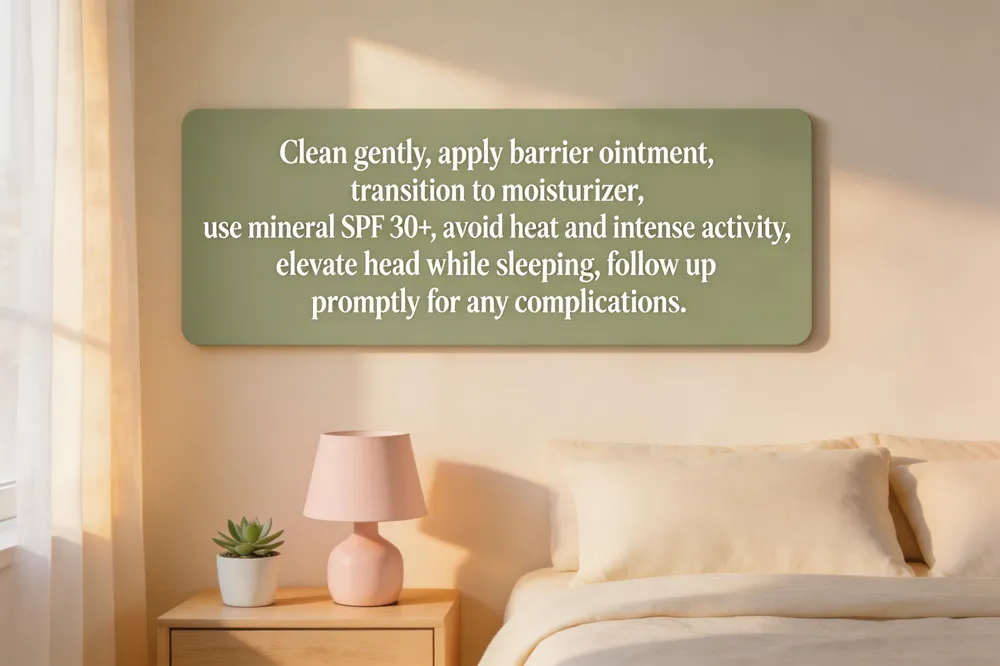
Answer to the key question – After facial laser resurfacing, keep the skin clean with a saline or diluted vinegar rinse, apply a thin barrier ointment, transition to a gentle moisturizer, use a mineral SPF 30+ sunscreen daily, avoid heat and intense activity, elevate the head while sleeping, and follow up with your doctor to monitor for complications. This regimen supports optimal collagen remodeling, minimizes downtime, and helps preserve the long‑term results of the procedure.
Your Path to Radiant, Rejuvenated Skin
Laser resurfacing offers a spectrum of evidence‑based options that can be matched to each patient’s unique skin type, concerns, and downtime preferences. Ablative technologies such as CO₂ and Er:YAG lasers deliver dramatic improvement for deep wrinkles, acne scarring, and extensive sun damage, while non‑ablative and fractional systems—including Clear + Brilliant®, Halo™, Fraxel®, and IPL—provide gentler collagen stimulation for fine lines, pigment irregularities, and mild texture issues with minimal recovery. At Dermatology Associates, PC we begin every treatment plan with a thorough medical history, skin‑type assessment (Fitzpatrick scale), and discussion of goals, allowing us to select the optimal wavelength, energy level, and treatment depth for safe, effective outcomes. Our board‑certified dermatologists and trained clinical staff prioritize patient safety through pre‑procedure protocols (sun avoidance, medication review, antiviral prophylaxis when needed) and meticulous intra‑procedural care (topical anesthesia, cooling devices, and, sedation for extensive areas). Post‑procedure instructions emphasize gentle cleansing, prescribed ointments, and strict broad‑spectrum SPF 30+ use to protect the newly rejuvenated skin and support long‑term collagen remodeling. We educate patients on realistic timelines—initial redness resolves within days, while full collagen‑mediated results emerge over 3‑6 months—and schedule follow‑up visits to monitor healing and plan maintenance sessions. Ready to experience personalized, science‑driven skin rejuvenation? Contact Dermatology Associates, PC today to schedule your comprehensive consultation and begin the journey toward smoother, brighter, and more youthful skin.