Introduction to Laser Vaginal Tightening
Laser vaginal tightening (LVT) is a minimally invasive, nonsurgical procedure that uses fractional CO₂ or Er:YAG laser energy to heat the vaginal mucosa and trigger controlled collagen remodeling and neocollagenesis. The thermal micro‑zones created by the laser stimulate fibroblast activity, increase elastin production, and thicken the epithelial layer, resulting in improved tissue firmness and elasticity. LVT is typically offered to women with mild to moderate vaginal laxity after childbirth, menopause‑related atrophic changes, or low‑grade stress urinary incontinence who seek a non‑hormonal, quick‑recovery option. Ideal candidates are those without active genital infection, pregnancy, recent pelvic surgery, or uncontrolled systemic disease. The procedure is performed in an office setting, lasts 5–15 minutes per session, and usually requires 2–4 treatments spaced 4–6 weeks apart, with most patients returning to daily activities immediately.
Safety Profile Overview
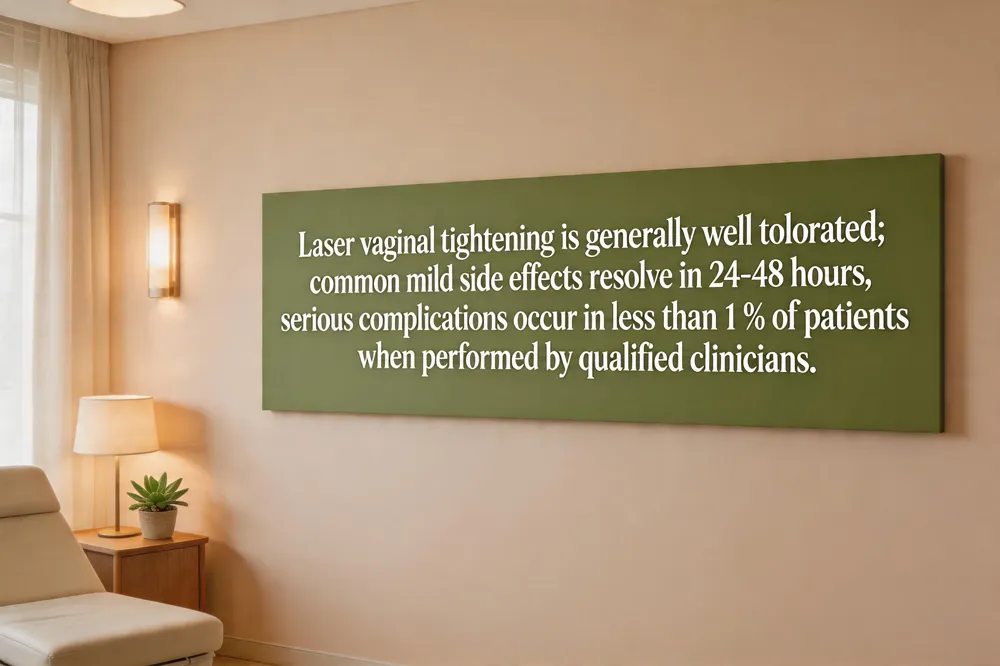 Laser vaginal tightening (LVT) is generally well tolerated, but patients should be informed about the full safety profile.
Common short‑term side effects – The most frequently reported symptoms areTransient ery eryma mild mild edema, a brief warm or soreness sensation. These effects resolve within 24–48 hours for most women and may last up to 3–7 days in a minority.
Serious adverse events and incidence rates – Serious complications such as deep‑tissue infection, scarring, burns, or loss of sensation are rare, occurring in less than 1 % of treated patients when the procedure is performed by a qualified clinician using FDA‑cleared settings.
Contraindications and patient screening – Contraindications include active genital infection, pregnancy, recent hysterectomy or pelvic surgery (within six months), uncontrolled systemic disease (e.g., diabetes), severe pelvic organ prolapse, and certain dermatologic conditions such as lichen sclerosus. Thorough pre‑procedure evaluation is essential.
FDA warning (July 30, 2018) and regulatory status – In July 2018 the FDA issued a warning that energy‑based devices marketed for “vaginal rejuvenation” are not cleared for cosmetic use and may pose serious risks, including burns and chronic pain. The agency notes that only specific gynecologic indications (e.g., treatment of precancerous tissue) are cleared, and off‑label tightening is considered investigational. Patients should receive detailed counseling and give informed consent before proceeding.
Effectiveness and Clinical Outcomes
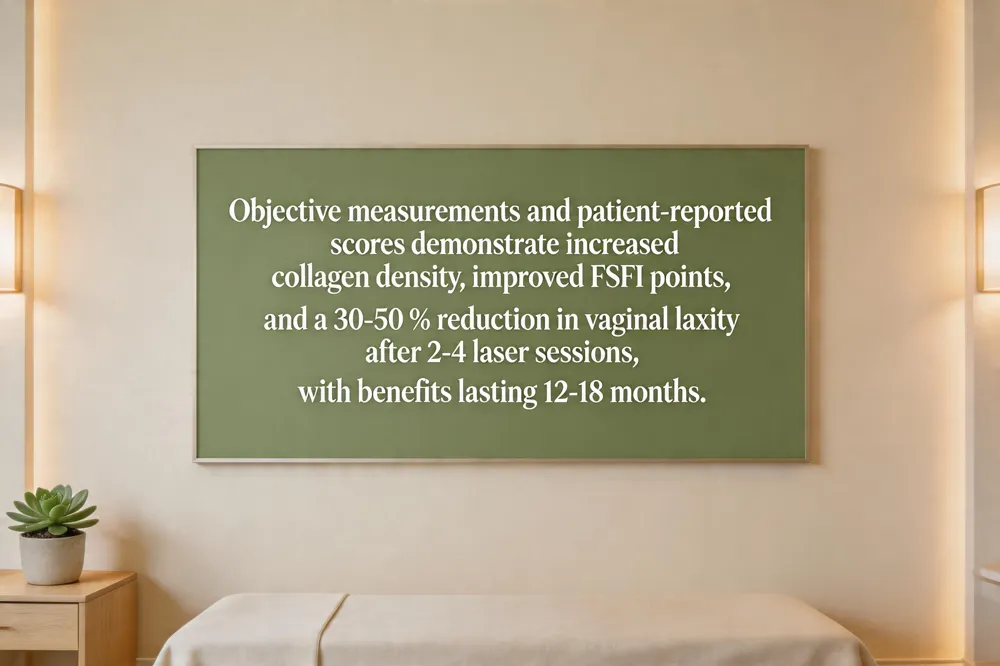 Objective assessments demonstrate measurable tissue tightening after laser vaginal tightening (LVT). Vaginal pressure measurements, elasticity indices, and histologic biopsies consistently show statistically significant increases in collagen density and mucosal stiffness following 2–4 fractional CO₂ or Er:YAG laser sessions. Patient‑reported outcomes corroborate these findings: validated questionnaires such as the Female Sexual Function Index (FSFI) and the International Consultation on Incontinence Questionnaire‑Short Form (ICIQ‑SF) reveal mean FSFI improvements of 2–3 points and a 30–50 % reduction in Vaginal Laxity Scale (VLS) scores within 3–6 months. Stress urinary incontinence also responds favorably; 60–80 % of women report a noticeable reduction in mild leakage after completing the typical 2–4‑session protocol. Longevity of benefit appears reasonable: follow‑up data, though limited, indicate that clinical and subjective improvements can persist for 12–18 months, with occasional maintenance sessions maintaining tissue tone. Collectively, these objective and subjective metrics support LVT as a minimally invasive option for modest vaginal laxity, sexual dysfunction, and mild stress incontinence, while underscoring the need for longer‑term, controlled studies to confirm durability and safety.
Treatment Protocols and Patient Experience
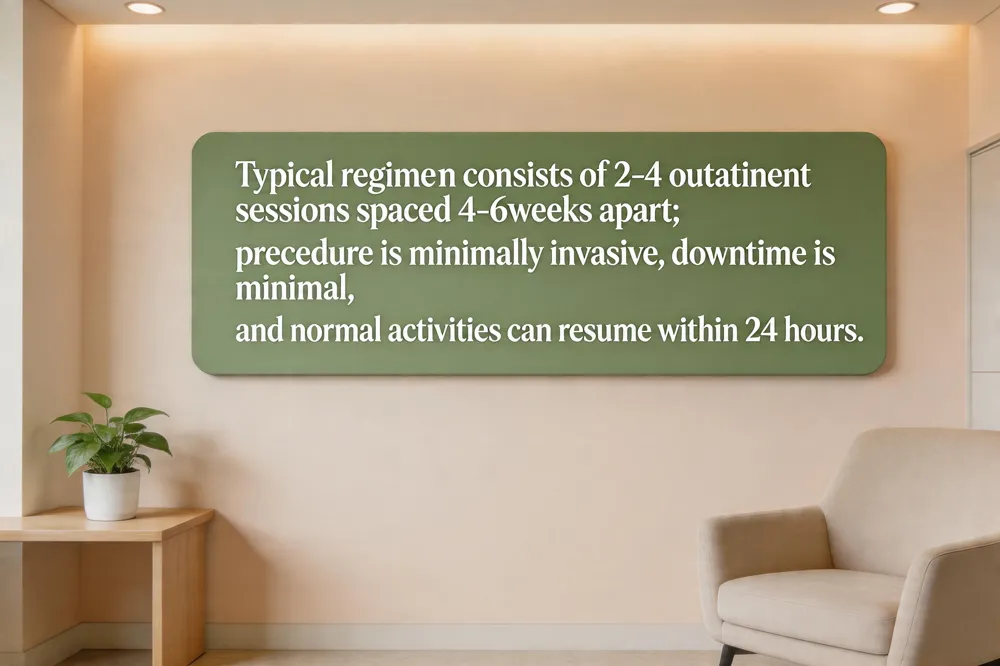 A typical laser vaginal tightening (LVT) regimen consists of 2–4 outpatient sessions spaced 4–6 weeks apart. Each appointment lasts about 5–15 minutes (often 10–30 minutes depending on the device) and is performed without general anesthesia; a topical anesthetic gel may be used for added comfort, but most patients only feel a mild warming sensation. Because the procedure is minimally invasive, patients can resume daily activities within 24 hours, are is are advise intercourse avoid, using use, and exercise intercourse 48–72 hours to reduce irritation. Post‑procedure counseling emphasizes keeping the vaginal area clean, applying a gentle emollient if needed, and attending scheduled follow‑up visits to monitor healing and discuss any maintenance sessions. Education about realistic expectations, potential transient side effects (erythema, edema, warmth), and the importance of avoiding intercourse for at least two days is essential for optimal outcomes and patient satisfaction.
Regulation, FDA Guidance, and Professional Recommendations
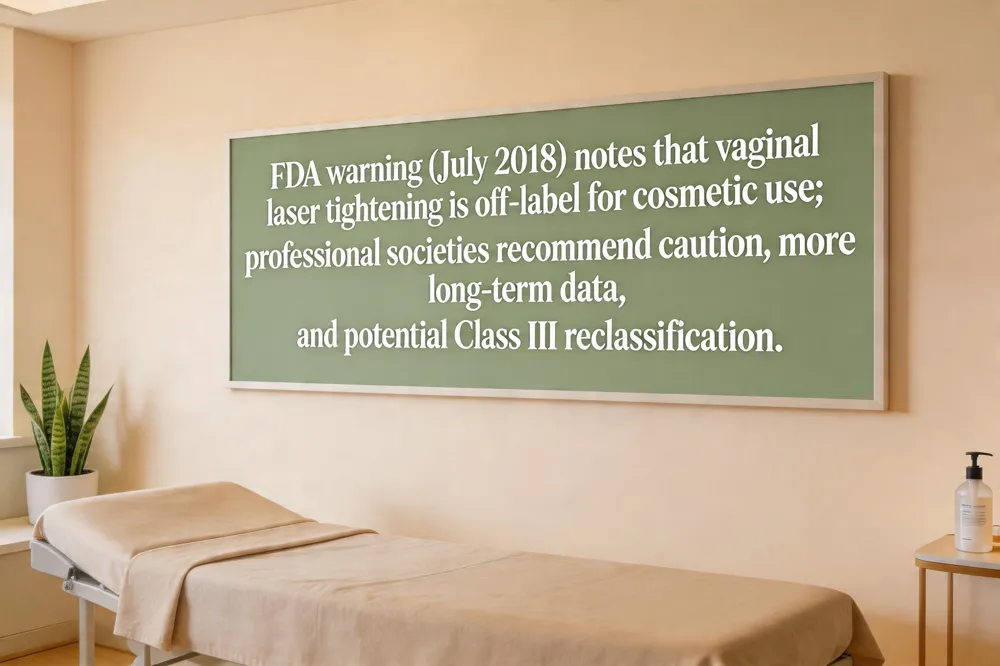 FDA clearance for vaginal laser devices is limited to specific fractional CO₂ and Er:YAG platforms cleared for vaginal tissue remodeling; however, the specific “tightening” indication remains off‑label. In 2018 the FDA issued a FDA warning stating that safety and efficacy for cosmetic rejuvenation have not been established, and that many devices are marketed without adequate evidence. Professional societies echo this caution. ACOG classifies “vaginal rejuvenation” as a marketing term and recommends that patients discuss goals and risks with a qualified gynecologist before proceeding. IUGA and ISAPS advise that LVT be offered only after robust, long‑term data demonstrate safety and efficacy, and they stress that the procedure should not replace evidence‑based treatments such as estrogen therapy or pelvic‑floor physical therapy. Informed consent is therefore essential: clinicians must explain the limited durability of results, the potential for mild transient side effects (erythema, edema, warmth), rare serious complications (<1 % incidence), and alternative therapeutic options. Looking forward, experts are calling for reclassification of these devices as Class III, requiring pre‑market approval, larger randomized controlled trials, and enhanced post‑market surveillance to ensure patient safety and transparent marketing.
Choosing a Qualified Provider at Dermatology Associates, PC
 Clinician expertise is the cornerstone of safe laser vaginal tightening (LVT). Dermatology Associates, PC staff only board‑certified dermatologists and gynecologists who have completed formal training in fractional CO₂ and Er:YAG laser safety and have documented experience in pelvic health. Before any procedure, a comprehensive patient evaluation screens for active genital infection, pregnancy, recent pelvic surgery, uncontrolled systemic disease, and other contraindications identified in multiple Clinical studies. This assessment guides personalized treatment planning: the number of sessions (typically 2‑4), interval spacing (4‑6 weeks), and energy settings are tailored to each woman’s tissue thickness and symptom profile. The practice adopts a multidisciplinary approach, integrating pelvic‑floor physical therapy, hormonal optimization when indicated, and counseling to address both functional and aesthetic concerns. Post‑procedure care includes written instructions to avoid intercourse, tampons, and vigorous activity for 48‑72 hours, and a scheduled follow‑up visit within 1‑2 weeks to monitor healing and symptom improvement. For durability, patients are offered maintenance laser sessions annually or as needed after 12‑18 months, reinforcing collagen remodeling and sustaining the benefits reported in peer‑reviewed trials.
Key Takeaways for Prospective Patients
LVT is a minimally invasive, office‑based procedure using fractional CO₂ or Er:YAG lasers to stimulate collagen remodeling in the vaginal mucosa. When performed by clinicians trained in laser dermatology or urogynecology, short‑term side effects are limited to mild erythema, edema, or transient warmth, usually resolving within 48 hours, and serious complications occur in less than 1 % of cases. Clinical studies report significant but modest improvements in vaginal laxity scores, Female Sexual Function Index values, and mild stress urinary incontinence after 2–4 sessions spaced 4–6 weeks apart. Regulatory bodies note limited long‑term efficacy data and stress the need for informed consent and realistic expectations. Dermatology Associates, PC provides pre‑procedure evaluation, laser delivery by board‑certified specialists, and post‑procedure counseling and follow‑up to optimize safety and outcomes.