Why Digital Privacy Matters for Your Skin Health
Digital health tools—teledermatology platforms, AI‑assisted image analysis, and wearable skin monitors—have exploded, offering faster diagnoses and personalized care. Yet the same technologies create new cyber‑risk vectors: ransomware, phishing attacks, and outdated IT systems have driven costly breaches such as the 2015 Anthem incident exposing 79 million records. When patient images or treatment plans are compromised, trust erodes, and patients may with essential sharing. HIPAA’s Privacy and Security Rules, reinforced by state laws like the CCPA, require encryption, multi‑factor authentication, and clear consent forms to safeguard protected health information. By implementing role‑based access, regular staff training, and transparent privacy notices, dermatology practices can protect data, maintain regulatory compliance, and preserve the trust that underpins effective skin‑health care.
HIPAA Fundamentals and Dermatology Practice Obligations
 Do dermatologists have doctor‑patient confidentiality?
Yes. Dermatologists, like all health‑care providers in the United States, are required by HIPAA and state privacy statutes to keep your medical information confidential. Protected health information (PHI) may be used for treatment, payment, and health‑care operations, but it cannot be disclosed without your written authorization except for lawful exceptions such as emergencies or court orders. The practice’s Notice of Privacy Practices explains these obligations and your rights to access and control your records.
Do dermatologists have to follow HIPAA?
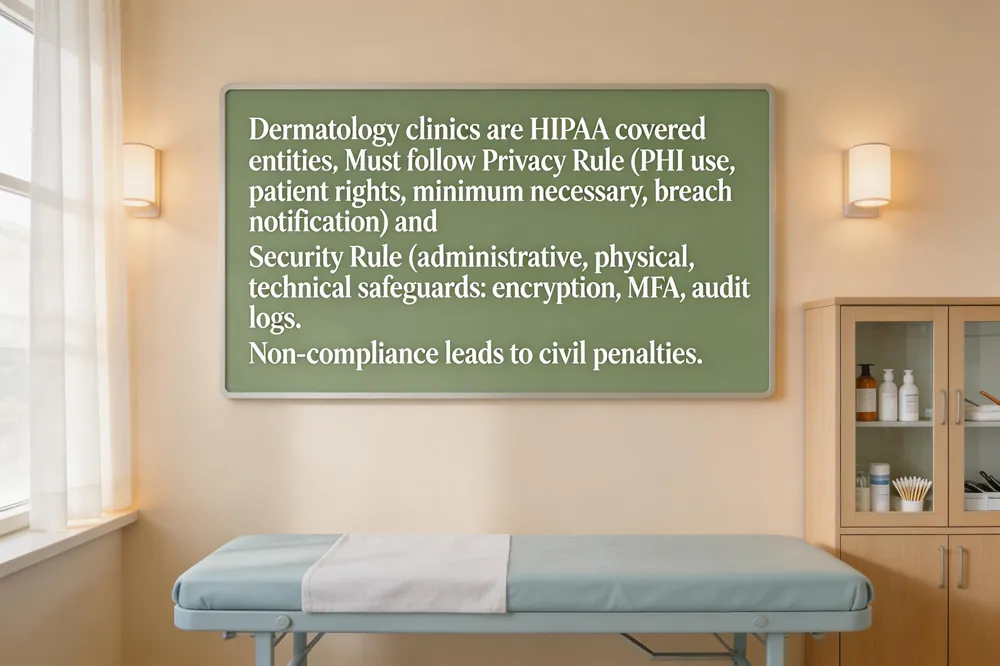
Yes. Dermatology clinics are covered entities under HIPAA and must comply with both the Privacy Rule and the Security Rule. This includes safeguarding paper and electronic PHI, providing required privacy notices, honoring patient rights to access, amend, and restrict records, and conducting regular risk assessments. Breaches must be reported to affected individuals, HHS, and, when required, the media within the statutory timeframe. Non‑compliance can trigger civil penalties and damage patient trust.
The HIPAA Security Rule requires covered entities to implement safeguards to protect
Electronic PHI (ePHI) through administrative, physical, and technical controls. Administrative safeguards involve policies, workforce training, and risk analyses. Physical safeguards secure facilities, workstations, and backups. Technical safeguards include access controls, encryption of data at rest and in transit, audit logs, and multi‑factor authentication, ensuring confidentiality, integrity, and availability of patient data.
HIPAA Privacy Rule fact sheet
The Privacy Rule sets national standards for protecting PHI held by covered entities and business associates. Patients must receive a Notice of Privacy Practices at intake, outlining permissible uses, disclosures, and rights to access, amend, and obtain an accounting of disclosures. The rule enforces a “minimum necessary” standard, requires written authorization for non‑routine uses, and mandates breach notifications within 60 days. Violations can result in civil monetary penalties and corrective actions enforced by HHS OCR.
What are the 5 main HIPAA rules?
- Privacy Rule – protects PHI and grants patient rights.
- Security Rule – mandates safeguards for ePHI.
- Transactions and Code Sets Rule – standardizes electronic health‑care transactions.
- Unique Identifiers Rule – assigns IDs such as NPI.
- Enforcement Rule – outlines penalties and OCR enforcement procedures.
Patient Ownership and Access Rights
 Who legally owns your medical records?
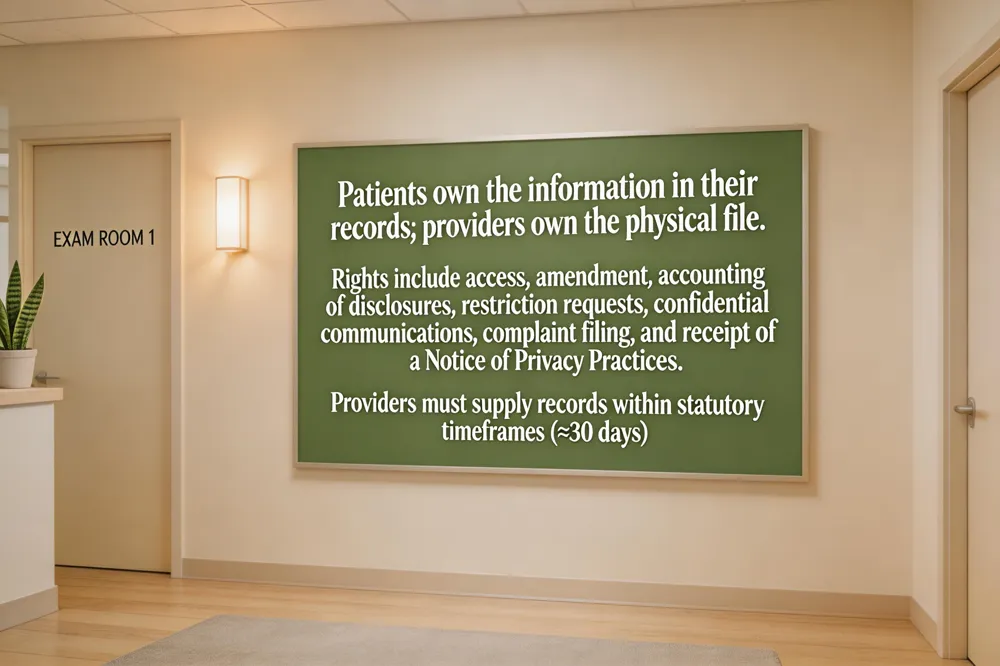
In Indiana, the medical record is legally the property of the provider that created it—Dermatology Associates, PC. The patient owns the information contained in the record and may request a copy, correction, or transmission to another provider. Under HIPAA and Indiana statutes, the practice must supply the records within the statutory time (generally 30 days) while retaining the physical file for continuity of care. The clinic may not sell or destroy the record without the patient’s consent, ensuring a shared‑ownership model that protects both privacy and clinical integrity.
Do I have to disclose medical information to my employer?
No. Employers may request health information only when it is job‑related, such as for reasonable accommodations, medical leave, or workers‑compensation claims. You need only provide enough detail to support the request; a full diagnosis is not required. Any disclosed data must be kept confidential and used solely for the stated purpose.
If I'm 18 can my parents see my medical records?
At age 18 you are an adult and the personal representative of your health information under HIPAA. Parents may view your records only with your written authorization or a court order. Certain confidential services (e.g., mental‑health, substance‑use) may be protected even from parents unless you consent.
Who can access my medical records without my permission?
HIPAA permits access to those who need the information to provide or pay for your care—treatment staff, health plans, and business associates bound by BAAs. Law‑enforcement or courts may obtain records with a valid subpoena or order. All other parties require your written authorization.
What are the 7 patient rights in healthcare?
- Right to obtain a copy of records.
- Right to request amendment of inaccurate information.
- Right to an accounting of disclosures.
- Right to request restrictions on certain uses.
- Right to confidential communications.
- Right to file a complaint.
- Right to receive a clear Notice of Privacy Practices.
HIPAA medical records release laws
Patients may request PHI and must receive it within 30 days (or the shorter state deadline). Providers can charge reasonable, cost‑based fees for copying or transmission but not for access itself. Requests must be verified, and patients can receive records in the format they prefer. Amendments can be requested for inaccurate information.
Data Privacy in the Digital Age
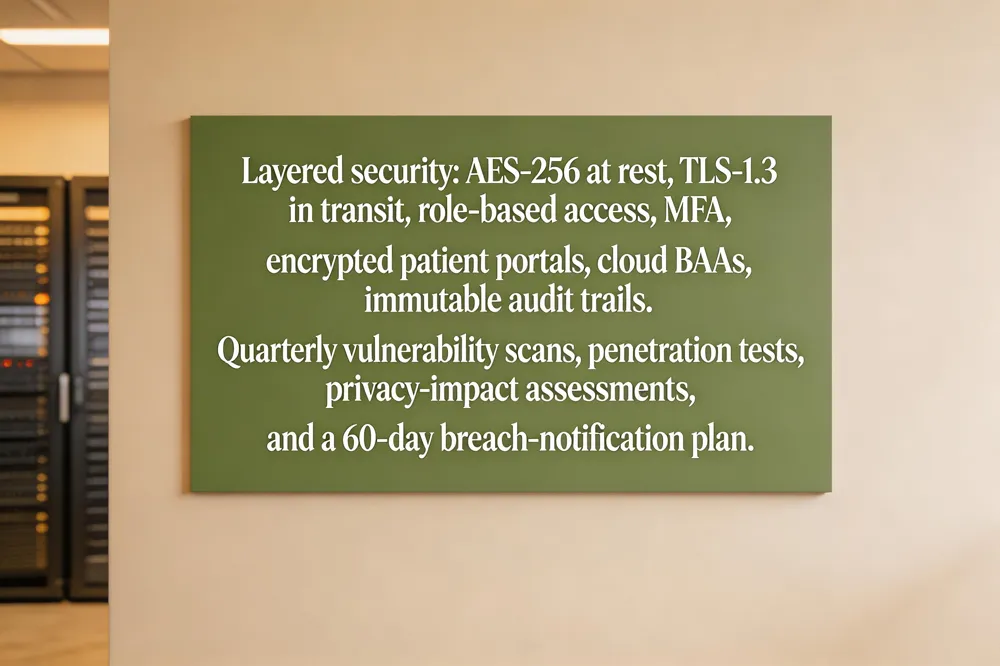 Dermatology Associates, PC protects health data with a layered approach that satisfies HIPAA, state statutes, and emerging best‑practice standards.
Encryption and secure transmission – All electronic PHI (ePHI) is encrypted at rest and in transit using AES‑256 and TLS‑1.3 HTTPS connections. Devices that capture patient images employ automatic lock screens, biometric authentication, and end‑to‑end encryption before upload to a HIPAA‑compliant cloud server. Role‑based access controls restrict staff to the minimum necessary records, and audit logs record every access event for rapid breach detection.
Patient portals and cloud storage – Secure portals provide encrypted, password‑protected access to records, with multi‑factor authentication required for every login. Cloud storage vendors sign Business Associate Agreements and deliver immutable, blockchain‑backed audit trails that verify consent and prevent unauthorized alterations. Regular vulnerability scans, penetration testing, and privacy‑impact assessments are conducted quarterly on all tele‑health and mobile applications.
Breach notification requirements – In the unlikely event of a breach, the practice follows HIPAA’s 60‑day notification rule, informing affected patients, OCR, and, when required, the media. A documented incident‑response plan ensures rapid containment, forensic analysis, and remediation while maintaining patient trust.
By integrating robust encryption, secure portals, and strict breach protocols, Dermatology Associates, PC ensures that patient information remains confidential, integral, and available—meeting both legal obligations and patient expectations in today’s digital health landscape.
Artificial Intelligence, Emerging Technologies and Data Integrity
 The rapid adoption of AI and machine‑learning (ML) tools in dermatology promises faster diagnoses and personalized treatment plans, but it also raises new privacy challenges. To safeguard patient data, AI systems must first de‑identify PHI, removing all 18 HIPAA identifiers, and then store the remaining datasets behind strong role‑based access controls and end‑to‑end encryption. Continuous monitoring—using AI‑driven anomaly detection—helps detect unauthorized access in real time, while blockchain‑based audit trails provide immutable records of who accessed or altered data, reinforcing accountability.
Legal guidelines begin with the HIPAA Privacy and Security Rules, which mandate administrative, physical, and technical safeguards for any electronic PHI (ePHI). The HITECH Act adds breach‑notification duties and encourages encrypted communications, while state statutes such as the CCPA and Indiana Consumer Data Protection Act impose extra consent and notification requirements. All telehealth and digital‑health platforms must be HIPAA‑compliant, and staff must receive regular training on privacy policies and phishing awareness.
Data integrity is the cornerstone of safe care. Accurate, complete, and unaltered records prevent misdiagnoses, medication errors, and unnecessary testing, protecting patient safety and reducing financial and legal risk. Reliable data also supports billing, regulatory compliance, and high‑quality research, fostering patient trust and enabling dermatology practices like Dermatology Associates, PC to deliver consistent, high‑standard care.
State Regulations, Non‑HIPAA Entities and Special Considerations
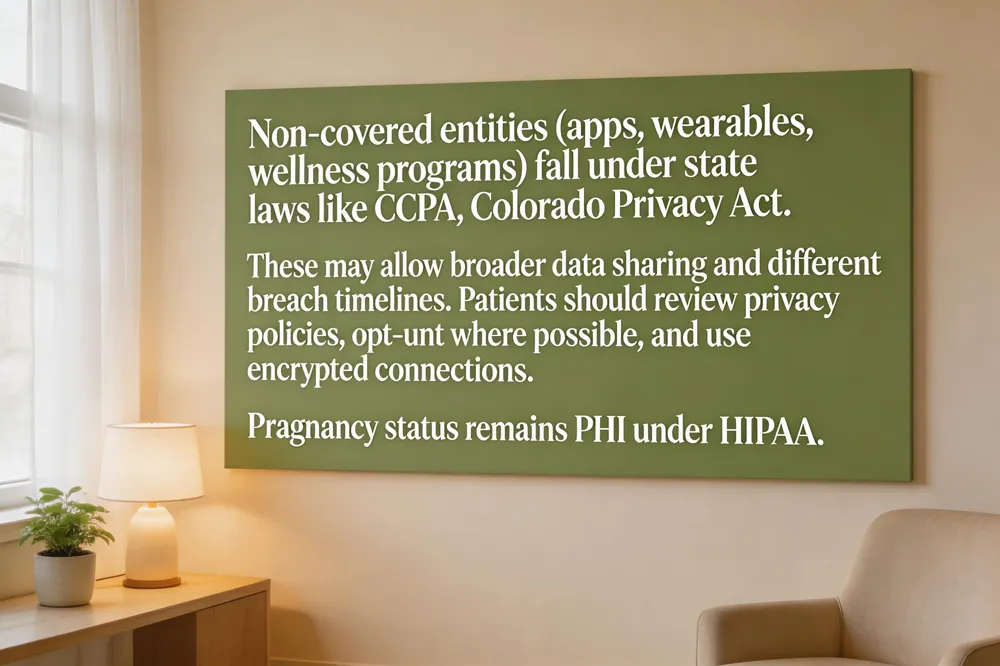 Health information privacy laws in the digital age: HIPAA doesn’t apply – HIPAA’s safeguards cover only “covered entities” (health‑care providers, insurers, and their business associates). Most consumer‑health apps, fitness wearables, employer‑run wellness programs, and many tele‑health platforms are non‑covered entities and therefore fall under state statutes such as the California Consumer Privacy Act (CCPA), the Colorado Privacy Act, and the FTC’s health‑privacy rules. These laws often allow broader data sharing, less granular consent, and more permissive breach‑notification timelines than HIPAA. Patients should scrutinize app privacy policies, opt‑out of unnecessary data collection, and use encrypted connections when transmitting health data. Dermatology practices can guide patients toward HIPAA‑compliant services and educate them on protecting skin‑health information.
Is pregnancy protected under HIPAA? – Yes. Pregnancy status is PHI; any covered entity or its business associate must keep it confidential under HIPAA.
CCPA and other state privacy laws – The CCPA, California’s privacy law, requires businesses to disclose data‑collection practices, allow consumers to opt out of data sales, and provide a clear privacy notice. Similar provisions exist in other states (e.g., Indiana Consumer Data Protection Act, Texas Data Privacy and Security Act). These statutes complement HIPAA but do not replace it for PHI held by covered entities.
Data handling by consumer health apps – Many apps store data on cloud servers without a Business Associate Agreement, making them subject only to state law. Encryption, strong passwords, and two‑factor authentication are essential safeguards.
What 7 habits are off limits for dermatologists? – 1) Skipping sunscreen, 2) Over‑using harsh acne treatments, 3) Popping pimples late at night, 4) Introducing multiple new products simultaneously, 5) Ignoring patch‑test results, 6) Using non‑prescription laser devices without supervision, 7) Neglecting regular skin checks.
Practical Security Measures for Dermatology Clinics
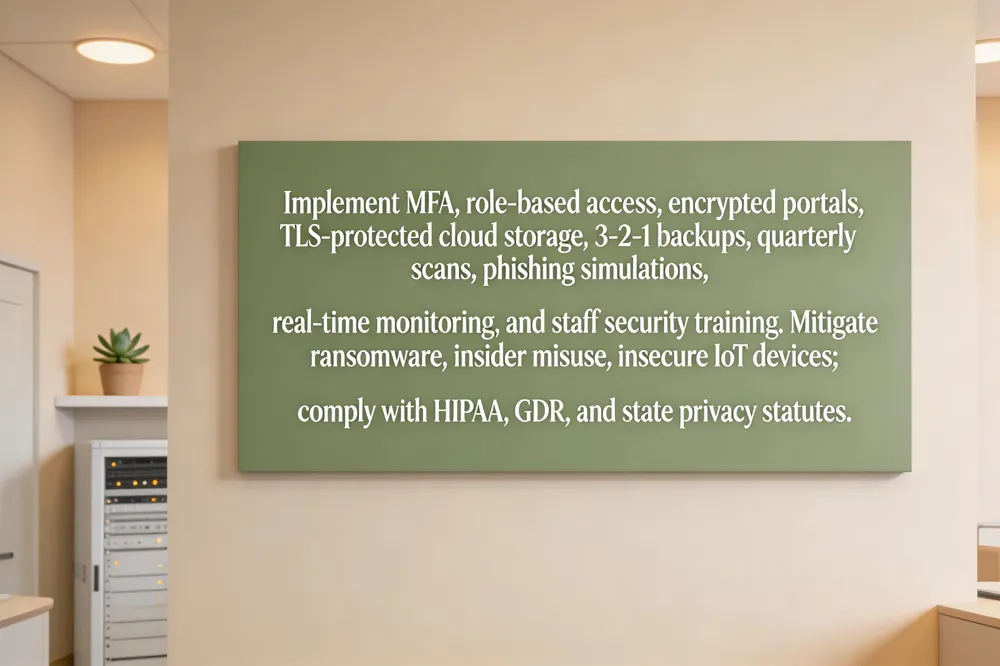 Maintaining patient privacy in the digital age
Dermatology Associates protects PHI by using encrypted patient portals and TLS‑protected cloud storage, ensuring data is unreadable if intercepted. Staff must authenticate with multi‑factor authentication (MFA) and role‑based access controls that limit record visibility to the minimum necessary for treatment. Quarterly vulnerability scans, penetration testing, and privacy‑impact assessments on new mobile or telehealth apps identify risks early. Ongoing security‑awareness training and simulated phishing attacks educate employees on safe PHI handling, reducing human error. Real‑time monitoring tools generate alerts, and a 3‑2‑1 backup strategy (three copies, two different media, one off‑site) guarantees rapid recovery and minimal downtime after a breach.
Maintaining patient privacy in the digital age
Dermatology Associates protects PHI by using encrypted patient portals and TLS‑protected cloud storage, ensuring data is unreadable if intercepted. Staff must authenticate with multi‑factor authentication (MFA) and role‑based access controls that limit record visibility to the minimum necessary for treatment. Quarterly vulnerability scans, penetration testing, and privacy‑impact assessments on new mobile or telehealth apps identify risks early. Ongoing security‑awareness training and simulated phishing attacks educate employees on safe PHI handling, reducing human error. Real‑time monitoring tools generate alerts, and a 3‑2‑1 backup strategy (three copies, two different media, one off‑site) guarantees rapid recovery and minimal downtime after a breach.
Security and privacy in digital healthcare systems: challenges and mitigation strategies Digital health platforms face ransomware, insider misuse, insecure IoT devices, and unauthorized access. To safeguard skin‑health records, practices must encrypt data at rest and in transit, enforce MFA, and apply continuous network monitoring, timely patching, and secure protocols (HTTPS, VPN). Compliance with HIPAA, GDPR, and state laws (e.g., CCPA) reinforces a privacy‑first culture. Combining technical safeguards with regular staff education mitigates breach risk while supporting innovative, personalized care.
What are the 7 patient rights in healthcare?
- Right to access copies of medical records. 2. Right to request amendments to inaccurate information. 3. Right to an accounting of disclosures. 4. Right to request restrictions on uses/disclosures. 5. Right to receive confidential communications. 6. Right to file a complaint about privacy violations. 7. Right to receive a clear Notice of Privacy Practices.
Do dermatologists have doctor‑patient confidentiality? Yes. Dermatologists are bound by HIPAA and state privacy statutes to keep PHI confidential. Information may be used for treatment, payment, and health‑care operations only, and any disclosure outside the practice requires written patient authorization or a lawful exception. The practice’s privacy notice outlines these obligations and patients’ rights to access and control their records, ensuring trust and compassionate, patient‑centered care.
Our Ongoing Commitment to Your Privacy
At Dermatology Associates, PC we treat privacy as a living program, not a static checklist. Every quarter we conduct comprehensive risk assessments, update encryption protocols, and patch legacy systems to close emerging vulnerabilities. Staff receive quarterly refresher training on phishing detection, secure handling of digital images, and the latest HIPAA‑compatible tools, ensuring that human error remains a minimal threat. Patients are empowered through clear, multilingual notices of privacy practices, easy‑to‑use portals for accessing and correcting their records, and regular webinars that explain how AI‑driven diagnostics and tele‑dermatology protect data with end‑to‑end encryption. Looking ahead, we are integrating blockchain‑based consent logs and AI‑powered anomaly monitoring to meet future regulatory frameworks such as the GDPR‑aligned European Health Data Space and evolving state statutes. Our proactive, technology‑first approach guarantees that patient information stays confidential, accurate, and readily accessible today and tomorrow for everyone.