Welcome to Your Psoriasis Care Journey
Psoriasis is a chronic inflammatory skin disease affecting about 2‑3 % of the global population. It produces red, scaly plaques that can cause itching, pain, and psychosocial distress, and it often co‑exists with comorbidities such as cardiovascular disease and psoriatic arthritis. Because severity varies by body surface area, lesion location, and impact on quality of life, a one‑size‑fits‑all regimen is rarely effective. A personalized treatment plan blends evidence‑based medical therapies—topical agents for mild disease, phototherapy for moderate cases, and systemic or biologic drugs for severe disease—with lifestyle modifications that address known triggers. Weight management, smoking cessation, reduced alcohol intake, anti‑inflammatory nutrition, regular exercise, and stress‑reduction techniques lower systemic inflammation and can enhance medication response, leading to fewer flares, better overall health, and improved wellbeing.
Topical Therapies for Scalp Psoriasis
Topical Therapies for Scalp Psoriasis
| Treatment Type | Example(s) | Potency / Notes | Typical Use |
|---|---|---|---|
| High‑potency corticosteroid | Betamethasone dipropionate, Clobetasol propionate | 2‑3 weeks, then taper | Rapid inflammation & scaling control |
| Vitamin D analogue | Calcipotriol, Calcitriol | Often combined with steroid | Normalizes keratinocyte proliferation |
| Combination steroid + Vitamin D | Calcipotriol + Betamethasone | Improves efficacy, reduces irritation | |
| Coal‑tar preparation | Coal‑tar shampoo, ointment | Antiproliferative, anti‑inflammatory | Useful for moderate plaques |
| Non‑steroidal calcineurin inhibitor | Tacrolimus, Pimecrolimus | Safe for sensitive areas (hairline, ears) | |
| Retinoid | Tazarotene | Long‑term maintenance, reduces scaling | |
| Medicated shampoo (pre‑treatment) | Coal‑tar, Salicylic acid, Ketoconazole | Softens plaques, removes scales | First step before topical agents |
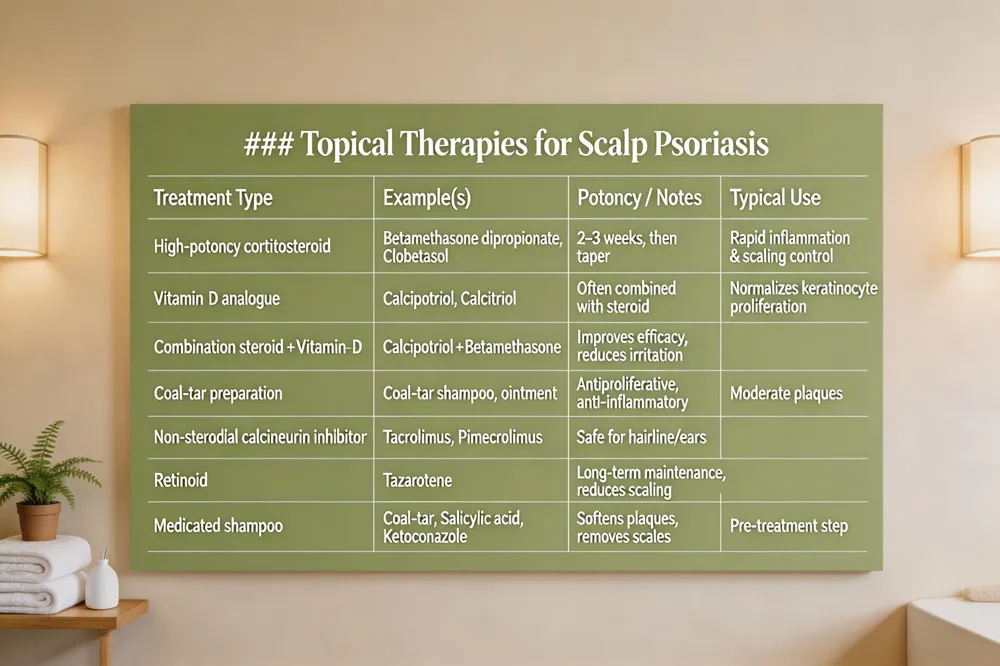 Effective ointments for scalp psoriasis include medium‑ to high‑potency corticosteroids such as betamethasone dipropionate or clobetasol propionate, applied directly to the affected scalp. Vitamin D analogues (e.g., calcipotriol) – often combined with a steroid – normalize keratinocyte proliferation and reduce scaling. Combination products that pair a steroid with a vitamin D analogue or a coal‑tar preparation enhance efficacy while limiting irritation. Non‑steroidal options such as the calcineurin inhibitor tacrolimus or the retinoid tazarotene are useful for sensitive areas or long‑term maintenance.
A step‑by‑step treatment strategy starts with a gentle medicated shampoo (coal‑tar, salicylic acid, or ketoconazole) to soften plaques. After washing, apply a high‑potency corticosteroid for a short course, then transition to a Vitamin D analogue for maintenance. For the hairline, ears, or other delicate zones, use a calcineurin inhibitor to avoid steroid‑related irritation. If disease remains moderate‑to‑severe or widespread, systemic options—including oral methotrexate and cyclosporine or biologic agents targeting IL‑17, IL‑23, or TNF‑α—should be considered under dermatologist supervision. Regular follow‑up enables adjustment of therapy, monitoring of comorbidities, and reinforcement of trigger avoidance, ensuring sustained control and improved quality of life.
Dietary Approaches to Manage Psoriasis
Anti‑Inflammatory Diet Principles & Sample 5‑Day Meal Plan
| Food Category | Recommended Items | Why Beneficial |
|---|---|---|
| Omega‑3 fatty acids | Salmon, Mackerel, Sardines, Flaxseed, Chia | Reduces prostaglandin‑mediated inflammation |
| Healthy fats | Extra‑virgin olive oil, Avocado, Nuts (almonds, walnuts) | Improves skin barrier, anti‑oxidant effects |
| Colorful fruits & vegetables | Berries, Leafy greens, Bell peppers, Turmeric, Ginger | Rich in polyphenols & anti‑oxidants |
| Whole grains & legumes | Quinoa, Brown rice, Lentils, Barley | Low glycemic index, fiber for gut health |
| Low‑fat dairy or dairy‑free alternatives | Greek‑yogurt (plain), Almond milk | Limits saturated fat which can exacerbate inflammation |
| Foods to limit/avoid | Red/processed meats, High‑fat dairy, Refined carbs, Sugary drinks, Saturated/trans fats, Excess alcohol, Nightshade (if sensitive) | May increase systemic inflammation and trigger flares |
Sample 5‑Day Meal Plan (breakfast, lunch, dinner, snack shown for each day) – see article text for detailed menu.
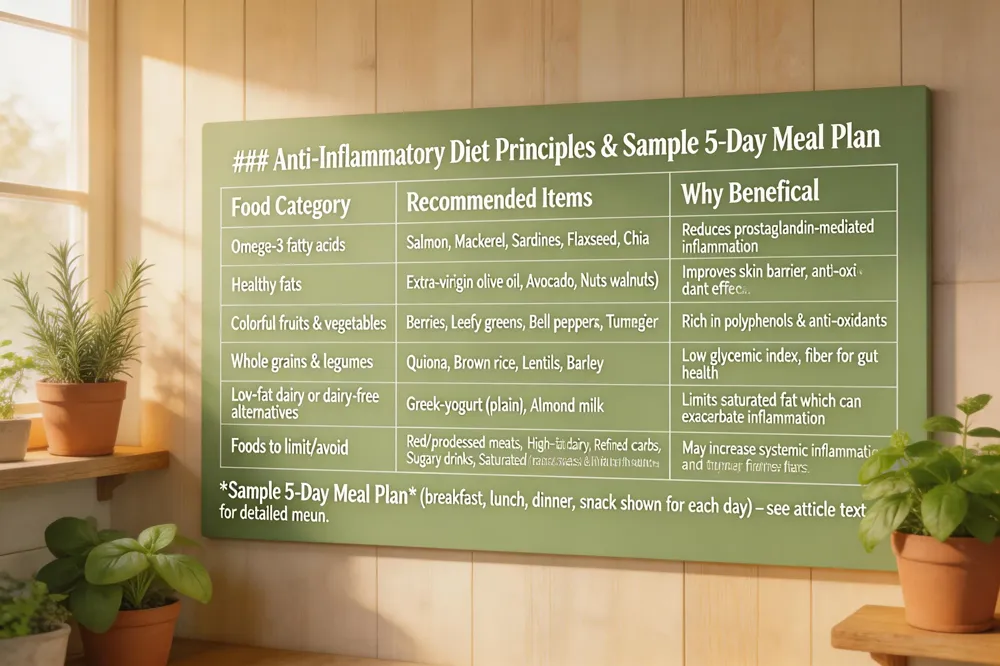 Anti‑inflammatory diet principles
Focus on foods that lower systemic inflammation: omega‑3‑rich fatty fish (salmon, mackerel, sardines), flaxseed and chia, extra‑virgin olive oil, leafy greens, colorful fruits, whole grains, nuts, seeds, and spices such as turmeric or ginger. Limit alcohol, high‑fat dairy, refined carbs, sugary drinks, red and processed meats, and saturated or trans fats. These choices help reduce adipokine production and may lessen plaque severity, including scalp involvement.
Anti‑inflammatory diet principles
Focus on foods that lower systemic inflammation: omega‑3‑rich fatty fish (salmon, mackerel, sardines), flaxseed and chia, extra‑virgin olive oil, leafy greens, colorful fruits, whole grains, nuts, seeds, and spices such as turmeric or ginger. Limit alcohol, high‑fat dairy, refined carbs, sugary drinks, red and processed meats, and saturated or trans fats. These choices help reduce adipokine production and may lessen plaque severity, including scalp involvement.
Sample five‑day meal plan
- Day 1: Breakfast – oatmeal topped with berries and walnuts; Lunch – spinach‑salmon salad with olive‑oil vinaigrette; Dinner – quinoa‑vegetable bowl with pumpkin seeds; Snacks – carrot sticks with hummus.
- Day 2: Breakfast – Greek‑yogurt‑free chia pudding with kiwi; Lunch – lentil soup and mixed‑green side; Dinner – grilled mackerel, roasted broccoli, brown rice; Snacks – a handful of almonds.
- Day 3: Breakfast – scrambled eggs with kale and tomatoes; Lunch – whole‑grain wrap with turkey, avocado, and arugula; Dinner – stir‑fried tofu, bell peppers, and soba noodles; Snacks – apple slices.
- Day 4: Breakfast – smoothie with spinach, frozen berries, flaxseed, and almond milk; Lunch – quinoa salad with chickpeas, cucumber, and lemon‑olive oil dressing; Dinner – baked cod, asparagus, sweet‑potato mash; Snacks – mixed nuts.
- Day 5: Breakfast – whole‑grain toast with avocado and poached egg; Lunch – roasted vegetable and barley soup; Dinner – grilled shrimp, zucchini, and couscous; Snacks – orange wedges.
Food triggers to avoid Red/processed meats, high‑fat dairy, refined sugars, white flour, fried foods, excessive alcohol, and for some, nightshade vegetables (tomatoes, potatoes, peppers) can aggravate psoriasis and should be limited.
Is there a specific diet chart that can help manage scalp psoriasis? No single “cure” diet exists, but an anti‑inflammatory eating plan—like the five‑day chart above—often reduces systemic inflammation and can lessen scalp scaling and itching. Consult a dermatologist or registered dietitian for personalized guidance.
Which foods are best and which are worst for people with psoriasis? Best foods: fatty fish, leafy greens, colorful fruits, whole grains, nuts, seeds, olive oil, turmeric, and ginger. Worst foods: red/processed meats, high‑fat dairy, refined carbs, sugary drinks, saturated/trans fats, alcohol, and nightshade vegetables for susceptible individuals. Maintaining this balance supports skin health alongside medical therapy.
Assessing Severity: The Rule of 10 and the Five P’s
Rule of 10 (Severity Triage)
| Metric | Threshold | Clinical Meaning |
|---|---|---|
| Body Surface Area (BSA) | > 10 % | Extensive skin involvement |
| PASI (Psoriasis Area and Severity Index) | > 10 | Moderate‑to‑severe disease activity |
| DLQI (Dermatology Life Quality Index) | > 10 | Significant impact on quality of life |
The Five P’s – Clinical Presentations
| Psoriasis Type | Key Features | Typical Triggers |
|---|---|---|
| Plaque | Raised, erythematous plaques with silvery scale | Most common |
| Pustular | Sterile pustules on erythema | May be triggered by infection or medication |
| Inverse | Smooth, red patches in skin folds | Moisture, friction |
| Guttate | Drop‑shaped scaly lesions, often post‑streptococcal infection | Streptococcal throat infection |
| Erythrodermic | Generalized fiery redness, can cover > 90 % BSA | Severe systemic inflammation |
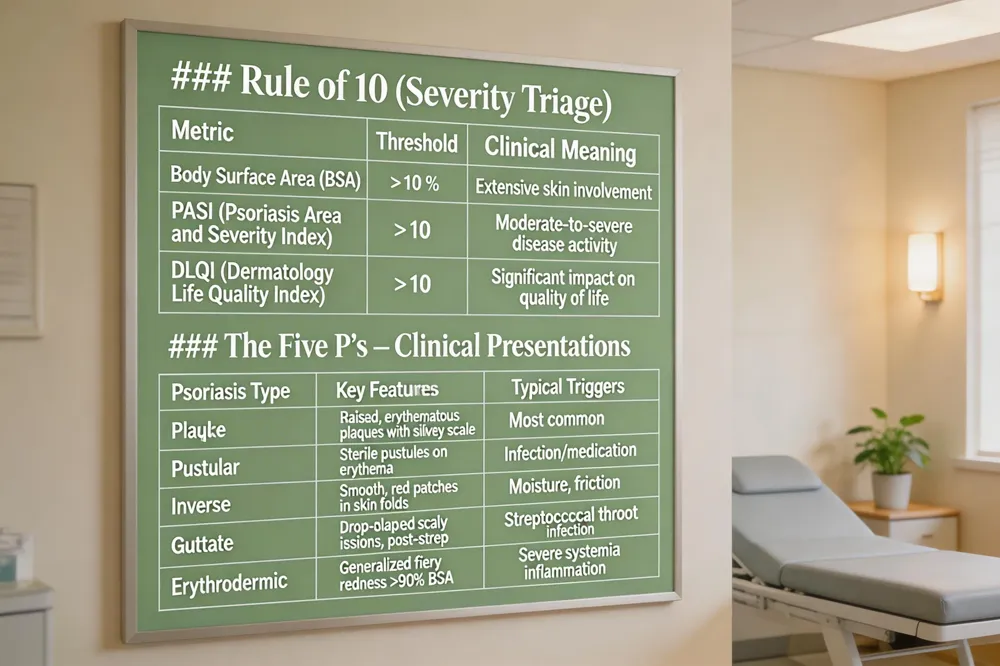 The Rule of 10 is a quick triage tool used by clinicians to identify severe psoriasis. It flags severity when any of three thresholds is met: (1) >10 % of body surface area (BSA) involved, (2) Psoriasis Area and Severity Index (PASI) > 10, or (3) Dermatology Life Quality Index (DLQI) > 10. These metrics capture lesion extent, clinical severity, and patient‑reported impact, guiding the shift from topical to systemic or biologic therapy.
The five P’s describe psoriasis’s major clinical presentations. [Plaque psoriasis](https://www.ama-assn.org/public-health/prevention-wellness/what-doctors-wish-patients-knew-about-managing-psoriasis)**—raised, erythematous plaques with silvery scales—is most common. [Pustular psoriasis](https://www.ama-assn.org/public-health/prevention-wellness/what-doctors-wish-patients-knew-about-managing-psoriasis)** features sterile, pus‑filled vesicles. [Inverse psoriasis](https://www.ama-assn.org/public-health/prevention-wellness/what-doctors-wish-patients-knew-about-managing-psoriasis)** appears as smooth, red patches in skin folds (e.g., armpits, groin). [Guttate psoriasis](https://www.ama-assn.org/public-health/prevention-wellness/what-doctors-wish-patients-knew-about-managing-psoriasis)** presents as drop‑shaped, scaly lesions, often after streptococcal infection. [Erythrodermic psoriasis](https://www.ama-assn.org/public-health/prevention-wellness/what-doctors-wish-patients-knew-about-managing-psoriasis)** involves extensive, fiery redness that can cover most of the body. Recognizing these patterns and applying the Rule of 10 helps clinicians tailor treatment intensity, from topical agents for mild disease to phototherapy, systemic drugs, or biologics for moderate‑to‑severe cases.
Systemic and Biologic Options When Topicals Aren’t Enough
Systemic & Biologic Therapeutic Options
| Class | Representative Agents | Mechanism of Action | Typical Indication |
|---|---|---|---|
| Conventional systemic | Methotrexate, Cyclosporine, Oral retinoids (Acitretin) | Immunosuppression / modulation of keratinocyte differentiation | Moderate‑to‑severe disease, psoriatic arthritis |
| PDE‑4 inhibitor | Apremilast | Increases cAMP → reduces inflammatory cytokines | Oral option for patients unsuitable for biologics |
| Biologic – TNF‑α inhibitor | Etanercept, Infliximab, Adalimumab | Blocks TNF‑α mediated inflammation | Severe disease, joint involvement |
| Biologic – IL‑12/23 inhibitor | Ustekinumab | Inhibits IL‑12 & IL‑23 signaling | Moderate‑to‑severe disease |
| Biologic – IL‑23 inhibitor | Guselkumab, Risankizumab, Tildrakizumab | Targets IL‑23 p19 subunit | Long‑term control, less frequent dosing |
| Biologic – IL‑17 inhibitor | Secukinumab, Ixekizumab, Brodalumab | Blocks IL‑17A (or receptor) | Rapid skin clearance, good for scalp involvement |
| Phototherapy (adjunct) | Narrow‑band UVB, PUVA | Reduces keratinocyte proliferation & immune activity | Extensive plaques, when systemic contraindicated |
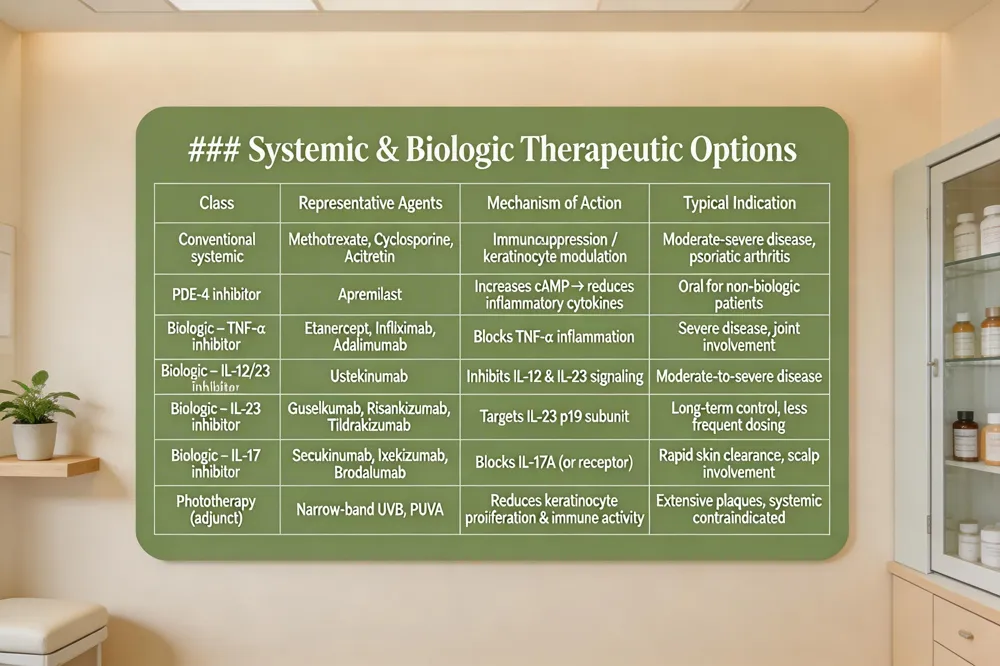 When plaques become extensive, resistant to creams, or involve joints, clinicians move beyond topical agents. In such cases phototherapy may be tried, but moderate‑to‑severe disease usually requires oral systemic drugs (methotrexate, cyclosporine, oral retinoids, apremilast) or injectable biologics that block TNF‑α, IL‑12/23, IL‑17 or IL‑23 pathways. These therapies reduce the underlying immune activation that drives flare‑ups.
What treatments can calm down psoriasis flare‑ups?
Topical corticosteroids, vitamin D analogues, and calcineurin‑inhibitor creams are first‑line for rapid reduction of inflammation, scaling and itching. Moisturising emollients restore barrier function. For larger or refractory areas, narrow‑band UVB phototherapy is useful. Persistent or severe flares are managed with systemic agents—methotrexate, oral retinoids, or biologics—to control immune activity.
What creams are commonly used to treat psoriasis?
Corticosteroid creams (mild to super‑potent) are most common. Vitamin D analogues (calcipotriene, calcitriol) normalize keratinocyte growth, often combined with steroids. Non‑steroidal options include retinoid creams (tazarotene), coal‑tar, and calcineurin‑inhibitor ointments (tacrolimus, pimecrolimus). Over‑the‑counter moisturizers with salicylic acid, lactic acid, ceramides, or niacinamide provide adjunctive relief.
What does a dermatologist do for a patient with psoriasis?
The dermatologist confirms diagnosis via exam and sometimes biopsy, assesses severity and joint involvement, then creates a personalized plan that may combine topical agents, phototherapy, systemic drugs, or biologics. They educate on skin‑care, trigger avoidance, and lifestyle changes , monitor response, adjust therapy, and screen for comorbidities such as psoriatic arthritis and cardiovascular risk.
Can psoriasis be cured permanently?
No permanent cure exists; psoriasis is chronic and immune‑mediated. Treatment aims for long‑term remission by controlling inflammation and skin‑cell turnover. Ongoing management—including medication, lifestyle modifications, and regular follow‑up—maintains clear skin and quality of life, while research seeks more durable solutions.
Special Site Management: Facial and Body Psoriasis
Special Site Management – Face & Body
| Area | First‑line Treatment | Alternative / Adjunct | Key Considerations |
|---|---|---|---|
| Facial (central) | Low‑potency steroid (Hydrocortisone 1 %) – short course | Calcineurin inhibitor (Tacrolimus 0.1 %) or Vitamin D analogue (Calcipotriene) | Thin skin → avoid potent steroids long‑term |
| Periorbital / delicate zones | Calcineurin inhibitor or Vitamin D analogue | Low‑potency steroid only if needed | Minimize steroid‑induced atrophy |
| Body (trunk, limbs) | High‑potency steroid for flare, then Vitamin D analogue for maintenance | Coal‑tar shampoo/soap, retinoid cream (Tazarotene) | Use occlusive moisturizers after bathing |
| Scalp | Medicated shampoo → high‑potency steroid (short course) → Vitamin D analogue | Coal‑tar scalp, calcineurin inhibitor for hairline | Keep hair short or part to improve application |
| General skin care | Gentle, fragrance‑free cleanser; lukewarm water; 5‑10 min showers | Immediate post‑bath occlusive ointment (e.g., petrolatum) | Prevent barrier disruption, lock in moisture |
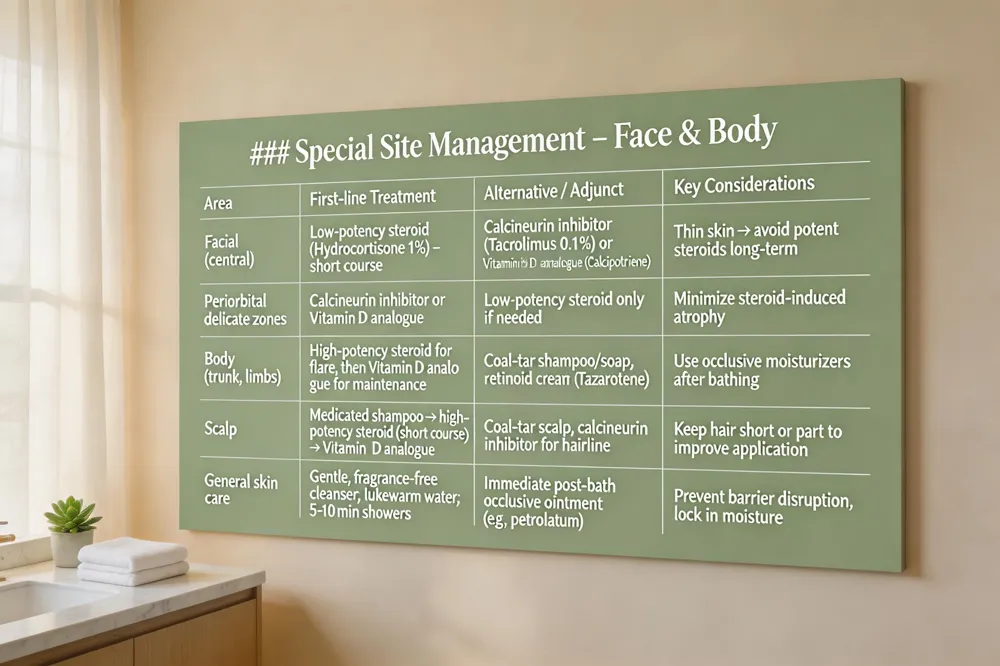 Facial psoriasis requires a gentle, fragrance‑free skin‑care routine to protect the thin skin of the face and avoid steroid‑induced thinning. Start with lukewarm water and a mild, non‑irritating cleanser; pat the skin dry and apply a thick, fragrance‑free moisturizer while still damp. For flare‑ups, low‑potency topical corticosteroids (e.g., hydrocortisone) can be used once daily and tapered as lesions improve. In delicate areas such as around the eyes, calcineurin inhibitors (tacrolimus, pimecrolimus) or vitamin D analogues (calcipotriene) are preferred.
Showering daily is beneficial for removing scales and reducing itch, but keep baths to 5–10 minutes, use lukewarm water, and avoid harsh scrubbing or loofahs. Immediately after bathing, lock in moisture with an occlusive ointment or cream.
Integrate these steps into a broader lifestyle plan: maintain a healthy weight through a low‑calorie, anti‑inflammatory diet; engage in regular low‑impact exercise; practice stress‑reduction techniques (mindfulness, yoga); and avoid smoking and excess alcohol, which are known psoriasis triggers. Consistent dermatologist follow‑up ensures therapy is tailored to disease severity and comorbidities.
Lifestyle Modifications and Risk Reduction
Lifestyle Modifications for Psoriasis Risk Reduction
| Modification | Practical Tips | Expected Impact |
|---|---|---|
| Anti‑inflammatory diet | Emphasize omega‑3s, fruits, veggies, whole grains; limit red meat, refined carbs, alcohol | Lowers systemic inflammation, may reduce plaque severity |
| Weight management | Regular aerobic + strength training, aim for BMI < 25 kg/m² | Reduces adipokine‑driven inflammation |
| Smoking cessation | Gradual nicotine replacement, counseling, support groups | Improves treatment response, reduces flare frequency |
| Alcohol moderation | ≤ 1 drink/day for women, ≤ 2 drinks/day for men | Decreases trigger load |
| Stress reduction | Mindfulness, yoga, meditation, adequate sleep (7‑9 h) | Stabilizes immune regulation |
| Skin barrier care | Daily moisturization with ceramide‑rich creams, avoid harsh soaps | Prevents Koebnerization, maintains hydration |
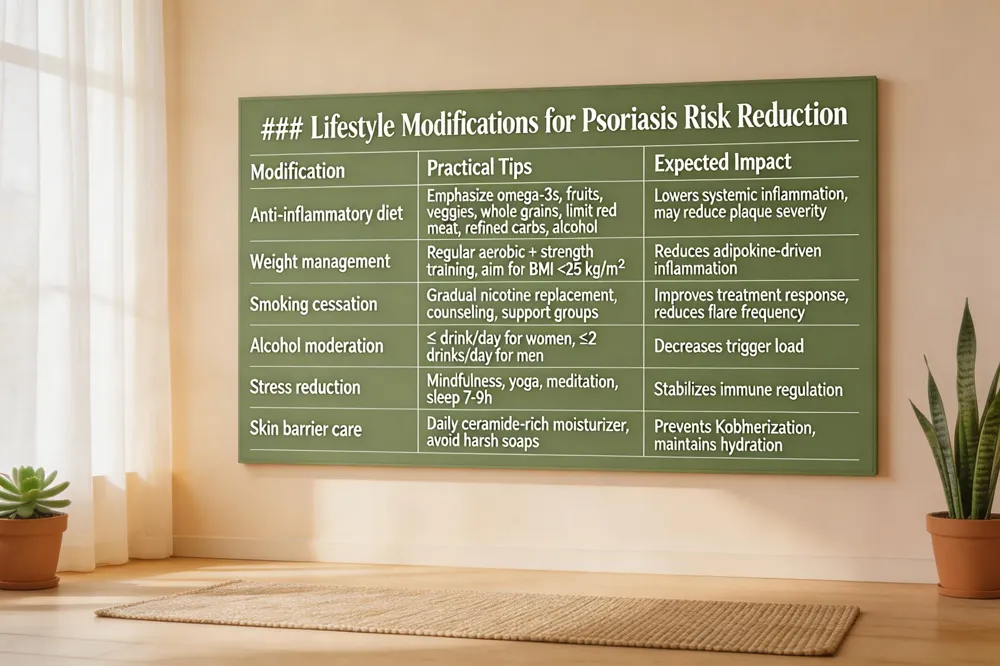 What lifestyle changes can help improve psoriasis?
Adopting a healthier lifestyle can markedly lessen psoriasis flare‑ups. An anti‑inflammatory diet rich in fruits, vegetables, whole grains, lean proteins, and omega‑3 fatty acids—while limiting refined carbs, added sugars, saturated/trans fats, and excess dairy—reduces systemic inflammation. Weight management through regular aerobic and strength‑training exercise lowers adipokine production, further dampening inflammatory pathways. Smoking cessation and moderate alcohol intake remove two potent triggers that can worsen lesions and impair medication response. Stress‑reduction techniques (mindfulness, yoga, meditation) and adequate sleep (7‑9 hours) support immune regulation and barrier repair.
What lifestyle changes can help improve psoriasis?
Adopting a healthier lifestyle can markedly lessen psoriasis flare‑ups. An anti‑inflammatory diet rich in fruits, vegetables, whole grains, lean proteins, and omega‑3 fatty acids—while limiting refined carbs, added sugars, saturated/trans fats, and excess dairy—reduces systemic inflammation. Weight management through regular aerobic and strength‑training exercise lowers adipokine production, further dampening inflammatory pathways. Smoking cessation and moderate alcohol intake remove two potent triggers that can worsen lesions and impair medication response. Stress‑reduction techniques (mindfulness, yoga, meditation) and adequate sleep (7‑9 hours) support immune regulation and barrier repair.
How can I reduce my risk of developing psoriasis? Genetic predisposition cannot be altered, but minimizing known triggers lowers disease risk. Maintain a healthy weight with balanced nutrition and regular activity to curb chronic inflammation. Avoid smoking and excessive alcohol, both of which heighten immune activation. Manage stress via mindfulness, yoga, or regular exercise to prevent cortisol‑driven immune dysregulation. Protect the skin barrier by daily moisturization and gentle cleansing, reducing trauma that can initiate Koebnerization. Together, these evidence‑based habits promote skin health and may decrease the likelihood of psoriasis onset.
Patient Success and Ongoing Care at Dermatology Associates, PC
Patient Success & Ongoing Care Framework
| Care Component | Description |
|---|---|
| Personalized treatment plan | Combines topicals, phototherapy, systemic agents, biologics based on severity, lesion location, comorbidities |
| Comorbidity monitoring | Regular labs (CBC, LFTs, lipids), BP checks, joint exams for psoriatic arthritis |
| Education & support | Written/ verbal skin‑care instructions, diet & exercise guidance, smoking/alcohol counseling, access to National Psoriasis Foundation resources |
| Outcome tracking | PASI, DLQI scores at each visit; adherence checks; shared decision‑making |
| Follow‑up schedule | Typically every 3‑6 months for stable disease; sooner if therapy changes or flares occur |
 Dermatology Associates, PC creates personalized treatment plans that integrate prescription therapies—topicals, Phototherapy, systemic agents, and biologics—with evidence‑based lifestyle modifications. Each plan is tailored to disease severity, lesion location, prior treatment response, and patient preferences, ensuring optimal skin clearance while minimizing side‑effects. The clinic routinely monitors comorbidities common in psoriasis, such as obesity, hypertension, dyslipidemia, diabetes, and psoriatic arthritis, through regular labs, blood‑pressure checks, lipid panels, and joint examinations; early detection guides adjustments in medication dosing and referral to primary‑care or rheumatology partners. Education and support are central to long‑term success: patients receive written and verbal instructions on gentle skin‑care routines, weight‑loss strategies, stress‑management techniques, and smoking or alcohol cessation; they also gain access to the National Psoriasis Foundation resources, support groups, and counseling services. Continuous follow‑up visits allow clinicians to track PASI scores, DLQI quality‑of‑life measures, and adherence, fostering shared decision‑making and sustained disease control.
Your Path to Clearer Skin Starts Here
Effective psoriasis management combines evidence‑based medical therapy with targeted lifestyle changes. Dermatologists at Dermatology Associates, PC prescribe topical agents, phototherapy, systemic or biologic medications as needed, while also counseling patients on weight control, anti‑inflammatory nutrition, regular exercise, stress reduction, and smoking or alcohol cessation. This integrated approach has been shown to improve PASI scores, quality‑of‑life indices, and medication response, especially in overweight individuals. We invite you to schedule a personalized appointment to assess your disease severity, discuss trigger identification, and develop a tailored treatment plan that aligns with your goals and comorbidities. Our team is committed to ongoing monitoring, education, and support, ensuring you receive the latest therapies and lifestyle guidance for lasting skin health and overall well‑being. Our clinicians also provide resources for mental health, sleep hygiene, and regular follow‑up to track progress.