Understanding Your Options
Skin cancer surgery primarily falls into two categories: Mohs micrographic surgery and traditional excision. Mohs surgery removes cancer layer‑by‑layer, examining 100 % of the margin under a microscope in real time, achieving cure rates of 98‑99 % for primary basal cell and squamous cell carcinomas and preserving maximal healthy tissue—critical for cosmetically sensitive sites such as the face, ears, and hands. Traditional excision removes the tumor with a predetermined radial margin (typically 4‑6 mm for low‑risk basal cell carcinoma and 6‑10 mm for squamous cell carcinoma) and relies on postoperative pathology, yielding cure rates of 90‑95 % but often sacrificing more normal skin and resulting in larger scars. Choosing the optimal approach requires personalized care: the surgeon must consider tumor type, size, location, recurrence risk, patient age, comorbidities, and cosmetic priorities. Tailoring treatment to these factors ensures the highest likelihood of cure while minimizing functional and aesthetic impact.
Mohs Surgery vs. Wide Local Excision
 Technique comparison
Mohs micrographic surgery removes the tumor in 1–2 mm layers, examining each layer under a microscope in real time. This stepwise approach allows the surgeon to stop once clear margins are confirmed. Traditional excision removes the lesion with a predetermined peripheral margin—typically 4 mm for basal cell carcinoma, 5 mm for squamous cell carcinoma, and up to 1 cm for melanoma—followed by postoperative pathology.
Technique comparison
Mohs micrographic surgery removes the tumor in 1–2 mm layers, examining each layer under a microscope in real time. This stepwise approach allows the surgeon to stop once clear margins are confirmed. Traditional excision removes the lesion with a predetermined peripheral margin—typically 4 mm for basal cell carcinoma, 5 mm for squamous cell carcinoma, and up to 1 cm for melanoma—followed by postoperative pathology.
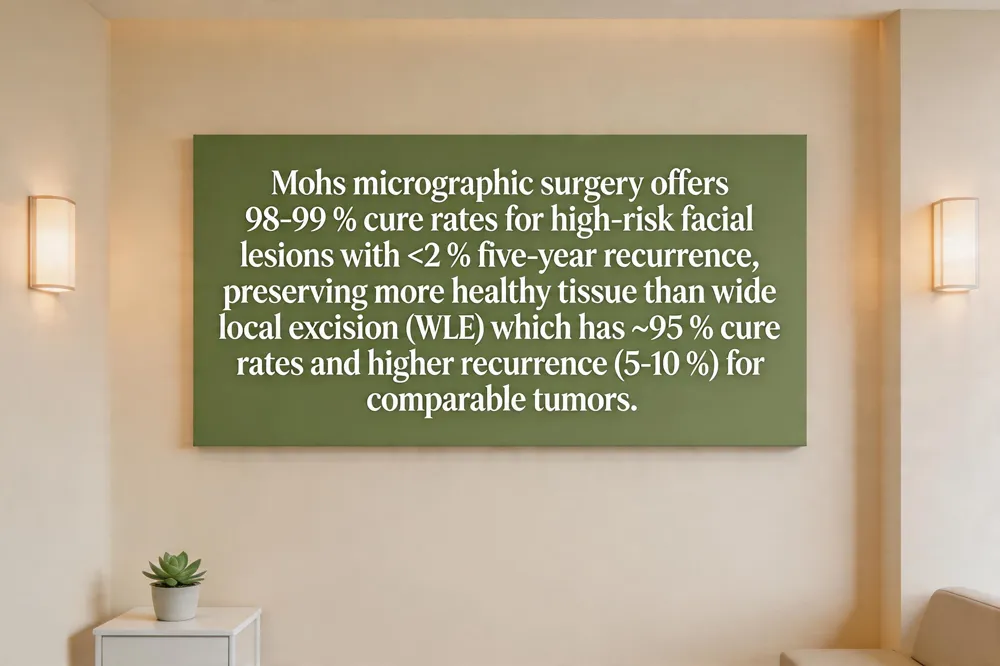
Cure rates Mohs achieves cure rates of 98‑99 % for high‑risk facial lesions and primary basal/squamous cell carcinomas, with recurrence <2 % at five years. WLE provides cure rates around 95 % for comparable tumors, with a slightly higher recurrence of 5‑10 % for high‑risk sites.
When to choose each Mohs is preferred for tumors in cosmetically or functionally critical areas (face, eyelids, ears, nose, lips, hands, feet, genitalia), large or infiltrative lesions, recurrent cancers, or when maximal tissue preservation is essential. WLE is appropriate for small, well‑defined, low‑risk tumors on trunk or extremities where a modest margin suffices and a quicker outpatient procedure is desired.
Mohs vs wide excision Mohs micrographic surgery and wide local excision are both effective but differ in tissue removal and margin evaluation. Mohs spares more healthy tissue and yields higher cure rates, making it ideal for high‑risk or cosmetically sensitive sites. Wide excision is faster, less resource‑intensive, and suitable for low‑risk lesions.
What qualifies for Mohs surgery? Indications include basal cell carcinoma, squamous cell carcinoma, melanoma‑in‑situ (e.g., lentigo maligna), and other high‑risk cutaneous malignancies located on the face, eyelids, ears, nose, lips, genitalia, hands, feet, or nail units. Additional criteria are large size, rapid growth, recurrent disease, ill‑defined borders, aggressive histology, immunosuppression, or prior radiation to the area. In these cases, Mohs offers 97‑99 % cure rates while preserving appearance and function.
Potential Drawbacks and Cost Considerations
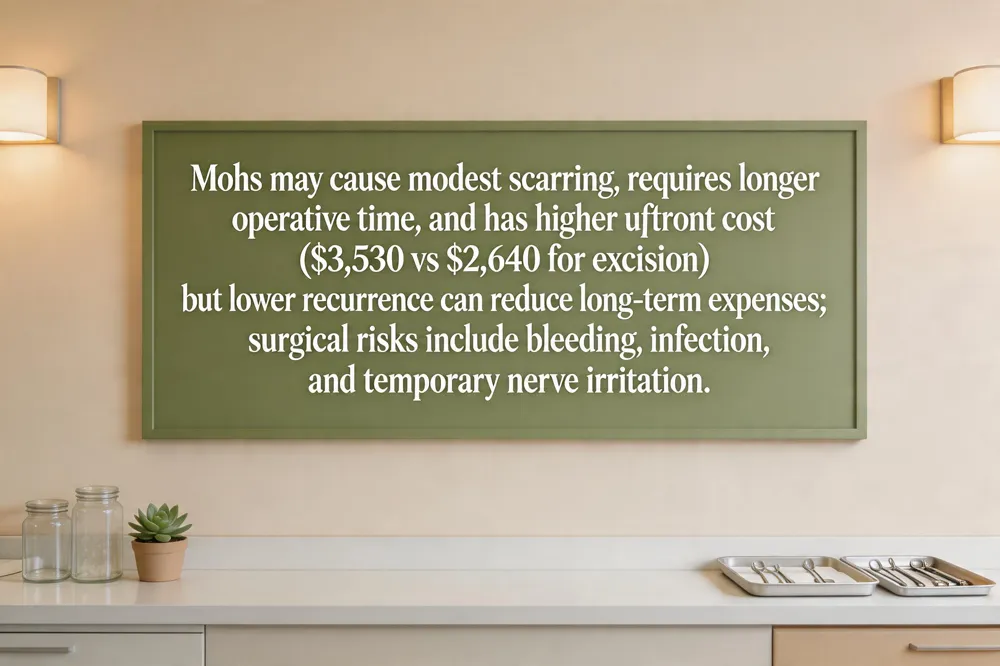 Mohs surgery, while offering the highest cure rates for basal cell and squamous cell carcinomas, carries several drawbacks. Scarring can occur, especially on visible sites such as the face, though the scars are typically smaller than those from wide excision due to tissue preservation. Procedure duration is longer; the stage‑by‑stage removal and intra‑operative microscopic analysis often take several hours in a single outpatient visit, which may be more time‑intensive than standard excision. Risks include the usual surgical complications—bleeding, infection, delayed wound healing, and occasional temporary numbness when nerves are near the tumor site.
What are the negatives of Mohs surgery? The main negatives are a modest scar, longer operative time, and a small risk of infection or nerve irritation, plus higher upfront costs.
Cost of Mohs surgery vs excision Traditional excision averages about $2,640, whereas Mohs with reconstruction averages $3,530, reflecting longer operating time and specialized pathology. However, Mohs’ lower recurrence may reduce long‑term expenses.
Success rate of Mohs surgery Mohs achieves up to 99% cure for primary tumors and roughly 95% for recurrent lesions, because it evaluates 100% of margins during the procedure, making it the gold standard for cosmetically sensitive areas.
Mohs Surgery for Specific Cancer Types
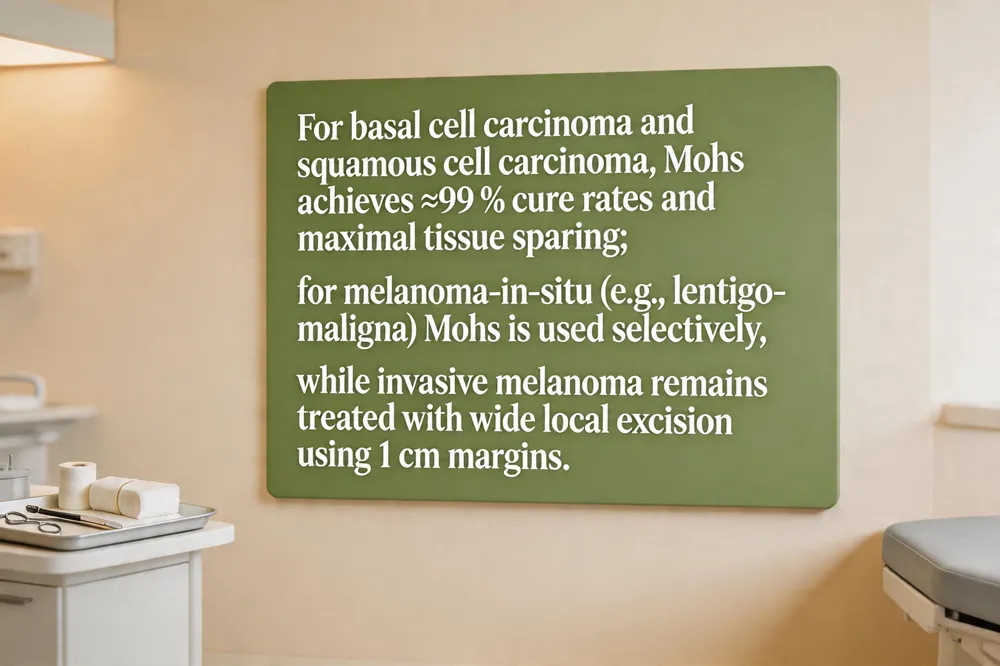 Mohs micrographic surgery removes skin cancer layer‑by‑layer with immediate microscopic examination, offering the highest cure rates (≈99 % for primary basal cell carcinoma (BCC) and squamous cell carcinoma (SCC)) and maximal tissue preservation. For melanoma, Mohs is reserved for select in‑situ lesions such as lentigo‑maligna; it uses 1‑2 mm margins and provides real‑time pathology, but wide local excision (WLE) with guideline‑based 1 cm margins remains the standard for invasive melanoma due to extensive outcome data. In BCC, Mohs achieves near‑perfect clearance while sparing healthy skin, making it the preferred option for facial, ear, hand, or other cosmetically critical sites; traditional excision employs a 4‑mm margin and may leave larger scars. For SCC, Mohs offers comparable cure rates to excision (≈99 % vs ≈95 %) but excels in high‑risk or recurrent tumors and in functionally sensitive areas, thanks to its 1‑2 mm staged removal and 100 % margin assessment. On the face, Mohs is the gold‑standard, delivering ≈99 % cure rates, minimal scarring, and immediate reconstruction in a single outpatient visit. Dermatologists assess tumor type, size, location, and patient priorities to select the most appropriate surgical approach.
Patient Preparation and Recovery
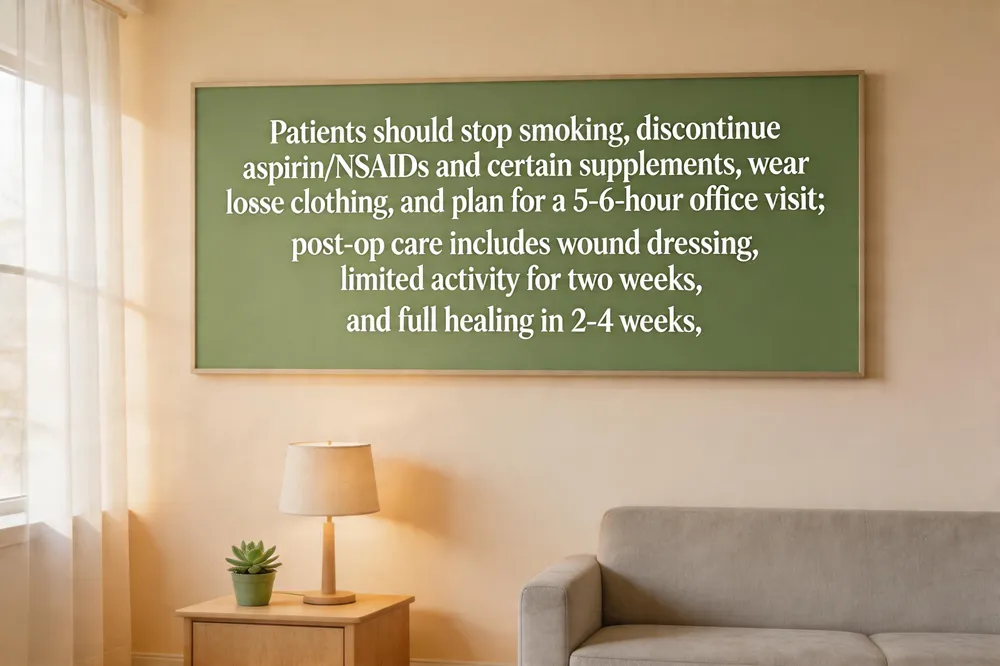 Before surgery, wear warm, loose clothing, shower and avoid makeup on the site, and bring a snack or reading material. Stop smoking at least two weeks prior and discontinue aspirin, ibuprofen, herbal supplements (garlic, ginkgo, fish oil) and alcohol a week before to reduce bleeding. Eat a normal breakfast on the day of surgery, arrange transportation, and be prepared for a 5‑6‑hour office visit while the surgeon removes tissue layer‑by‑layer and examines it under a microscope.
Post‑operative care: Most patients go home the same day. Keep the wound clean, dry, and covered with a sterile dressing, changing it as directed. Take prescribed antibiotics or analgesics, avoid strenuous activity, heavy lifting, or bending for about two weeks, and attend follow‑up visits for stitch removal or wound assessment.
Recovery timeline: Light activities resume quickly; full skin healing typically occurs in 2‑4 weeks. Use silicone gels or moisturizers and broad‑spectrum sunscreen to minimize scarring.
What I wish I knew before Mohs surgery? I wish I had known the extent of preparation required—loose clothing, a clean‑shaven surgical site, and a long office stay—along with the importance of stopping smoking and certain medications weeks in advance.
Mohs surgery recovery – Outpatient procedure, same‑day discharge, wound care, limited activity for two weeks, stitches removed at follow‑up, complete healing in 2‑4 weeks.
Life expectancy after Mohs surgery – The procedure does not affect overall survival; patients’ life expectancy aligns with age and health status, with a high cure rate and preserved quality of life.
Alternatives, Insurance and Practical Considerations
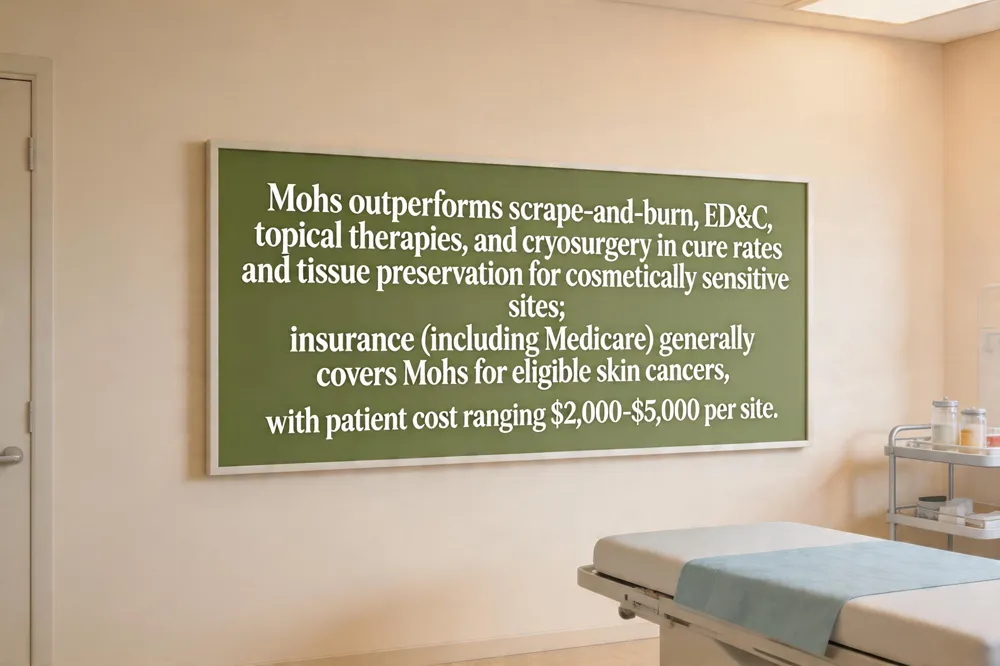 Mohs surgery vs. scrape‑and‑burn: Mohs surgery removes skin cancer layer by layer while examining each layer under a microscope in real time, achieving Mohs surgery has a cure rate of 97‑99% for basal cell and squamous cell carcinomas and The procedure spares the maximum amount of healthy tissue. Scrape‑and‑burn (electrodesiccation and curettage) is quicker and less costly but offers lower cure rates and less precise margin control, making Mohs the preferred choice for Mohs surgery is especially indicated for skin cancers located on cosmetically and functionally sensitive areas such as the face, neck, scalp, ears, fingers, and toes. New alternatives to Mohs include ED&C, topical immunotherapy (imiquimod), photodynamic therapy, cryosurgery, and radiation for non‑surgical candidates; selection hinges on tumor size, depth, location, and patient health. Traditional excision removes the visible tumor with a predetermined margin of normal skin (usually 4‑6 mm for basal cell carcinoma and 6‑10 mm for squamous cell carcinoma) and sends the specimen for pathology after the procedure. Mohs surgery cost typically ranges $2,000–$5,000 per site; In the United States, most insurance plans—including Medicare and many private insurers—cover Mohs surgery for eligible skin cancers, with patient responsibility limited to deductibles or copays. Our dermatology department treats skin cancer comprehensively—diagnosing, staging, and managing basal‑cell, squamous‑cell, and melanoma lesions with surgery, topical agents, and referral pathways such as the NHS “2‑week rule” for urgent evaluation.
Making an Informed Decision
Choosing between Mohs micrographic surgery and traditional excision hinges on tumor type, location, risk factors, and cosmetic priorities. Mohs offers a 99 % cure rate for primary basal cell and squamous cell carcinomas, evaluates 100 % of margins in real time, and preserves maximal healthy tissue—making it ideal for high‑risk, recurrent, or lesions in cosmetically/ functionally critical sites such as the face, ears, scalp, hands, and feet. Traditional excision, with predefined 4‑10 mm margins, is appropriate for low‑risk, well‑defined tumors on less visible body areas, is quicker, and may be less costly.
Next steps for patients: 1) Obtain a skin‑cancer biopsy to confirm diagnosis and histologic subtype. 2) Discuss tumor characteristics (size, depth, location, prior recurrences) with a board‑certified dermatologist. 3) Review insurance coverage and any pre‑authorization requirements. 4) Schedule a consultation to weigh cure‑rate benefits, tissue‑preservation goals, and procedural logistics, then select the surgical approach that aligns with clinical needs and personal preferences.