Understanding Perimenopause Nutrition
During perimenopause fluctuating estrogen and progesterone affect skin elasticity, hydration, and collagen turnover, often causing dryness, fine lines, and occasional breakouts. Supporting skin requires protein (20‑30 g per meal) for collagen synthesis, omega‑3 fatty acids from fatty fish, flaxseed or walnuts to reduce inflammation, and antioxidant‑rich berries, leafy greens, and vitamin C to protect against oxidative stress. Bone and metabolic health hinge on calcium‑rich foods (dairy, fortified plant milks, leafy greens) paired with vitamin D (sun‑safe exposure, fatty fish, fortified products) for absorption, and magnesium‑rich nuts, seeds, and whole grains to improve sleep and insulin sensitivity. Lifestyle allies include regular 12‑hour intermittent fasting or 16/8 windows, adequate hydration (2‑3 L/day), consistent moderate exercise, limiting alcohol, caffeine, added sugars, and processed foods, all of which stabilize blood glucose, lower cortisol, and enhance overall hormone balance.
Indian Perimenopause Nutrition Plan
 A balanced Indian perimenopause diet should center on whole‑plant foods and phyto‑estrogens, such as soy, lentils, chickpeas, and other legumes which supply fiber and mild estrogenic activity to help stabilize blood‑sugar and reduce hot‑flash frequency. Calcium‑rich Indian dairy (low‑fat milk, curd, paneer) and fortified plant milks, together with leafy greens and almonds, support bone health as estrogen declines. Include omega‑3 sources like flaxseeds, chia seeds, and walnuts to curb inflammation, improve mood, and protect skin integrity. Choose complex carbohydrates from millets, oats, barley, and whole‑grain breads rather than refined flour, providing steady glucose levels and satiety. Limit spicy, salty, and fried foods that can trigger vasomotor symptoms and gastrointestinal discomfort. Snack modestly on roasted nuts, seeds, or dried fruit, stay well‑hydrated with at least eight glasses of water daily, and keep caffeine and alcohol intake moderate. Pair this nutrient‑dense plan with regular light‑to‑moderate exercise to preserve lean muscle mass, enhance metabolism, and promote overall skin health during the perimenopausal transition.
Natural Hormone Balancing Strategies
 A nutrient‑dense whole‑food diet forms the foundation of natural hormone balance in perimenopause. Prioritize leafy greens (spinach, kale, broccoli) for magnesium, vitamin C, and anti‑inflammatory phytonutrients, and pair them with healthy fats—extra‑virgin olive oil, avocado, nuts, and fatty fish—to support steroid‑hormone synthesis. Include phyto‑estrogen foods such as flaxseed, soy, and lentils to modestly modulate estrogen fluctuations.
Regular aerobic activity (150 min/week) and strength training 2–3 times weekly improve insulin sensitivity, preserve lean muscle mass, and promote adrenal hormone production that offsets erratic estrogen and progesterone levels.
Aim for 7–9 hours of restorative sleep nightly; consistent sleep regulates melatonin, growth hormone, and cortisol, all of which influence menstrual‑cycle hormones.
Stress‑reduction practices—mindfulness, yoga, deep‑breathing, or meditation—lower cortisol and reduce its disruptive impact on other endocrine pathways.
Under clinician supervision, herbal adaptogens such as black cohosh, maca root, or chasteberry may be added to alleviate hot flashes, mood swings, and menstrual irregularities without exogenous hormones.
Hydration, limited caffeine/alcohol, and adequate vitamin D (2,000‑4,000 IU daily) and omega‑3 intake further support overall endocrine health during this transitional phase.
Free Printable Diet Resources
 Finding reliable, printable nutrition guides can simplify the transition through perimenopause. Reputable medical societies such as the American Society for Reproductive Medicine and the Endocrine Society publish free PDFs that outline Mediterranean‑style meal plans, high‑protein breakfast ideas, and anti‑inflammatory food lists. These resources emphasize lean‑animal and plant‑based proteins (20‑30 g per meal), fiber‑rich vegetables, whole grains, omega‑3 fatty acids, calcium‑rich dairy or fortified alternatives, and phytoestrogen‑rich soy, flaxseed, and legumes—all nutrients shown to support bone health, hormone balance, and skin elasticity. To locate printable guides, search terms like “free perimenopause diet plan PDF” or “hormone balancing diet plan PDF” on official health organization websites, university dietetics pages, or trusted menopause‑focused portals. Reddit threads often point to Mediterranean‑style PDFs that stress whole foods, limited added sugars, and regular hydration. Once downloaded, these PDFs can be customized to personal preferences, used as meal‑planning templates, and shared with dermatologists or dietitians to ensure skin‑focused symptom relief.
Hydration and Hormone‑Friendly Drinks
 Staying well‑hydrated is the cornerstone of hormonal balance; plain water supports cellular metabolism, helps flush excess estrogen, and reduces cortisol spikes that can aggravate skin dryness. Herbal teas add phyto‑estrogens and antioxidants—green tea, spearmint, and peppermint supply catechins and flavonoids that modestly mimic estrogen and lower inflammation, while rooibos offers calcium and magnesium for bone health. Protein‑rich smoothies combine low‑sugar berries, leafy greens, a tablespoon of flaxseed or chia (omega‑3s), and a scoop of whey or plant‑based protein powder, delivering 20‑30 g protein per serving to stabilize blood‑sugar, leptin, and thyroid hormones. Warm adaptogenic beverages—such as a turmeric latte made with fortified oat milk, or a cacao‑spice drink blended with maca root and chaste‑tree berry—provide adaptogens that modulate the hypothalamic‑pituitary‑adrenal axis, easing night sweats and mood swings. For optimal results, choose drinks with minimal added sugars, consume them regularly throughout the day, and pair them with a balanced nutrient‑dense diet and personalized dermatologic care.
Essential Vitamins and Minerals
 A well‑balanced perimenopausal diet supplies the micronutrients that support hormone harmony, bone strength, skin resilience, and mood stability. Vitamin D works with calcium to preserve bone density as estrogen falls, and its role in skin cell turnover helps maintain elasticity and moisture. B‑complex (especially B6 and B12) provides the amino‑acid precursors for neurotransmitters such as serotonin and dopamine, smoothing mood swings and supporting cognitive function. Magnesium, calcium, zinc, iodine, and selenium each play distinct roles: magnesium promotes sleep and reduces night‑time cramps; calcium and vitamin D together protect skeletal health; zinc and selenium aid thyroid hormone production and antioxidant defenses; iodine ensures adequate thyroid hormone synthesis, influencing metabolism and energy. Omega‑3 fatty acids (EPA/DHA from fatty fish and ALA from flaxseed, walnuts, chia) reduce systemic inflammation, improve skin barrier function, and may lessen hot‑flash frequency.
Vitamins to balance hormones for females – Key nutrients—vitamin D, B‑complex, magnesium, calcium, zinc, iodine, selenium, and omega‑3s—regulate estrogen and progesterone synthesis, stabilize blood‑sugar, and support neurotransmitter production, collectively easing perimenopausal symptoms and enhancing skin health.
Vitamins and diet for perimenopause – Prioritize calcium‑rich foods with vitamin D, magnesium‑dense nuts and seeds, omega‑3‑rich fish or plant sources, and phytoestrogen‑laden soy and flaxseed to mitigate hot flashes, protect bone density, and sustain skin elasticity.
Supplements and Hormone Support
 A hormone‑balancing supplement regimen should be built on three pillars. First, foundational nutrients such as magnesium, vitamin D and zinc support the hypothalamic‑pituitary‑adrenal axis, thyroid function and estrogen synthesis; dairy‑rich foods (pumpkin seeds, almonds, leafy greens) and modest supplementation (vitamin D 2,000‑4,000 IU daily when sun exposure is limited) are often needed during perimenopause. Second, anti‑inflammatory omega‑3 fatty acids (EPA/DHA from fatty fish, ALA from flaxseed, walnuts) and, where appropriate, low‑dose DHEA can reduce systemic inflammation and ameliorate mood swings, hot flashes and skin changes linked to hormonal fluctuation. Third, adaptogenic herbs such as ashwagandha or licorice root may blunt cortisol spikes, improve sleep and aid stress‑related hormone dysregulation. Safety is paramount: supplements vary in potency and interact with medications, so a dermatologist or primary clinician should review any plan before initiation.
Hormone balancing supplements – Targeted nutrients (magnesium, vitamin D, zinc) modulate stress, thyroid and sex‑hormone pathways, while omega‑3s and DHEA address inflammation and symptom severity. Adaptogens lower cortisol, fostering better sleep and skin repair. Professional guidance ensures efficacy and safety.
Foods that balance hormones in males – Emphasize monounsaturated fats (avocado, olive oil), omega‑3‑rich fish, zinc‑dense nuts/seeds, cruciferous vegetables (broccoli, cauliflower) for estrogen metabolism, and lean proteins (chicken, turkey, eggs) to supply cholesterol for testosterone synthesis.
How to balance your hormones as a woman – Adopt a nutrient‑dense diet rich in healthy fats, fiber and cruciferous vegetables, combine with regular moderate exercise, prioritize 7‑9 hours of sleep, and manage stress via mindfulness. When diet and lifestyle are insufficient, consider clinician‑guided supplements (vitamin D, magnesium, omega‑3) and seek medical evaluation for persistent symptoms.
Hormone‑Balancing Foods for Women
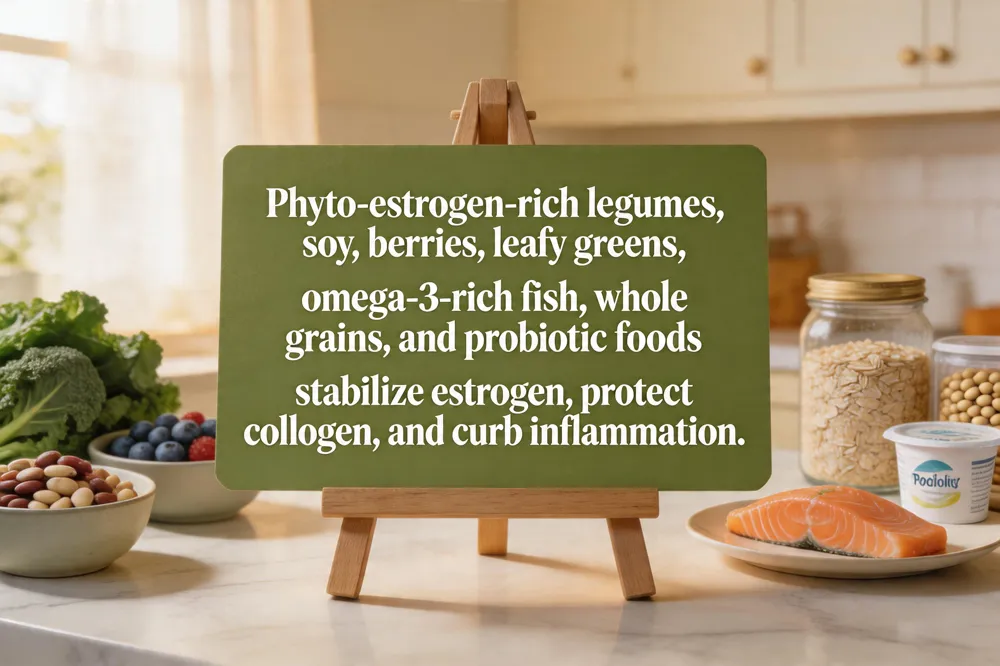 Perimenopause and menopause cause hormonal swings that diet can moderate. Phytoestrogen‑rich legumes and soy (lentils, chickpeas, edamame, tofu, tempeh) supply isoflavones that weakly bind estrogen receptors, easing hot flashes and supporting skin moisture. Antioxidant‑dense berries (blueberries, strawberries, raspberries) and leafy greens (spinach, kale, Swiss chard) provide vitamin C, polyphenols and carotenoids that protect collagen and reduce oxidative stress. Omega‑3 sources and healthy fats—fatty fish (salmon, sardines), walnuts, chia, flaxseed, olive oil, avocado—lower inflammation, aid mood stability and hormone synthesis. Fiber‑rich whole grains, beans, fruits, vegetables, plus probiotic foods (yogurt, kefir, kimchi, sauerkraut) nurture a gut microbiome, regulating estrogen metabolism and insulin. Foods to avoid that disrupt hormones include processed sugars, refined carbs, excess caffeine, alcohol, trans‑fat‑rich processed foods, and large portions of red meat, all raising cortisol and inflammation. Answers: Hormone‑balancing foods for females focus on nutrient‑dense plant and animal sources that stabilize blood‑sugar and supply micronutrients. Hormone‑disrupting foods are saturated meats, sugary drinks, and heavily processed items. During menopause, prioritize phytoestrogens, omega‑3s, antioxidants, protein and healthy fats while limiting hot‑flash triggers.
Cultural Approaches to Menopause
Mediterranean diet for perimenopause
The Mediterranean pattern—rich in extra‑virgin olive oil, fresh fruits and vegetables, whole‑grain breads, nuts, legumes, and fatty fish—has been linked to fewer and milder vasomotor symptoms. Antioxidant‑dense foods (berries, leafy greens) and omega‑3‑rich fish support skin health, lower inflammation, and help stabilize blood sugar and weight, reducing mood swings and fatigue. Regular activity, hydration, and a balanced macronutrient profile further improve quality of life.
What do Japanese do for menopause?
Japanese women often rely on soy‑based phytoestrogens (tofu, miso, edamame) to ease hot flashes and mood changes. Calcium‑rich choices such as small‑boned fish, seaweed, and fortified dairy protect bone health. Daily low‑impact exercise, ample water intake, and antioxidant‑rich green tea are staples that support cardiovascular health, reduce inflammation, and promote overall well‑being.
Cross‑cultural evidence for symptom relief
Both Mediterranean and Japanese dietary habits emphasize whole, plant‑forward foods, healthy fats, and modest protein—components that consistently improve hormone balance, bone density, and skin integrity across diverse populations. Incorporating these patterns, with personalized guidance, offers a pragmatic, evidence‑based strategy for managing perimenopausal symptoms.
Weight Management and Belly Fat Strategies
 What to eat in perimenopause to lose weight
Prioritize meals rich in lean protein (poultry, fish, tofu, legumes) and high‑fiber vegetables and whole‑grain carbs. Include colorful non‑starchy vegetables, leafy greens, and fruit‑based fiber sources. Healthy fats from olive oil, avocado, nuts, and omega‑3‑rich fish reduce inflammation. Add calcium‑ and vitamin‑D‑rich foods (low‑fat dairy or fortified plant milks) and phytoestrogen sources (soy, flaxseed, lentils) to support hormone balance. Limit ultra‑processed snacks, added sugars, refined grains, alcohol, caffeine, and spicy foods. Eat smaller, balanced meals throughout the day and stay well‑hydrated.
What to eat in perimenopause to lose weight
Prioritize meals rich in lean protein (poultry, fish, tofu, legumes) and high‑fiber vegetables and whole‑grain carbs. Include colorful non‑starchy vegetables, leafy greens, and fruit‑based fiber sources. Healthy fats from olive oil, avocado, nuts, and omega‑3‑rich fish reduce inflammation. Add calcium‑ and vitamin‑D‑rich foods (low‑fat dairy or fortified plant milks) and phytoestrogen sources (soy, flaxseed, lentils) to support hormone balance. Limit ultra‑processed snacks, added sugars, refined grains, alcohol, caffeine, and spicy foods. Eat smaller, balanced meals throughout the day and stay well‑hydrated.
Best diet for perimenopause weight gain Emphasize whole, minimally processed foods: vegetables, fruits, legumes, lean proteins, and nuts, from olive oil. Aim for ~200 fewer calories than in your 30s, with protein ~1 g/kg body weight to preserve muscle. Reduce refined grains, added sugars, and sugary drinks that spike insulin and promote abdominal fat. Pair nutrition with 150 min/week aerobic activity and twice‑weekly strength training for optimal calorie burn and lean‑mass maintenance.
Perimenopause foods to avoid Cut ultra‑processed snacks, foods sugars, refined carbs, and high‑sodium items. Avoid trans‑fat‑rich fried foods and baked goods. Limit spicy sauces that can trigger flushing, and reduce alcohol intake, which worsens hot flashes and adds empty calories. Stay clear of excess caffeine that disrupts sleep and cortisol balance.
Best diet for perimenopause belly fat Adopt an anti‑inflammatory, plant‑forward diet with leafy greens, berries, legumes, and whole‑grain breads. Include lean protein such as omega‑3‑rich fish, low‑fat dairy, and poultry. Choose healthy fats from nuts, seeds, avocado, and olive oil; avoid trans fats, refined sugars, and excess processed foods. Limit alcohol to ≤1 drink/day, stay hydrated, and combine with regular aerobic plus strength‑training exercise.
Putting It All Together for Radiant Skin and Hormonal Wellness
Combining targeted nutrition, daily habits, and expert care creates a synergistic approach that supports both skin vitality and hormonal balance during perimenopause. A diet rich in lean protein, omega‑3 fats, soluble fiber, phytoestrogens, calcium and vitamin D supplies the building blocks for collagen, bone health and hormone synthesis, while anti‑inflammatory foods calm skin redness and hot flashes. Lifestyle pillars—regular aerobic and strength exercise, adequate sleep, stress‑reduction techniques, and consistent hydration—enhance insulin sensitivity, lower cortisol and promote a healthy gut‑brain axis. Partnering with a dermatologist allows individualized assessment of skin changes, enabling tailored topical or systemic interventions that complement nutritional strategies. Over time, this integrated plan reduces premature aging, maintains elasticity, supports weight management, and lowers the risk of osteoporosis, cardiovascular disease and mood disorders, and overall wellbeing throughout the years for life.