Understanding Testosterone Therapy in Women
Testosterone, produced by the ovaries, adrenal glands and peripheral tissues, contributes to libido, mood, cognition, bone density and muscle strength in women. Levels decline gradually after age 30 and more sharply after menopause or oophorectomy, often manifesting as reduced sexual desire, fatigue, mood swings, loss of muscle tone, thinning bone and decreased skin elasticity. When these symptoms persist despite estrogen therapy, clinicians may consider testosterone supplementation. The most indications are hypoactive sexual desire disorder, persistent low libido, and documented androgen deficiency after ovarian removal. Delivery methods for women are limited to transdermal gels or creams, patches and subcutaneous pellets, all of which allow titration to keep serum testosterone within the range (≈20‑50 ng/dL). Oral testosterone is avoided because of first‑pass liver metabolism. Because products are not FDA‑approved for women, use is off‑label and requires evaluation (total and free testosterone, lipid panel, liver function, contraindications) and monitoring every 3‑6 months. Adverse effects are mild and dose‑dependent: acne, oily skin, slight hirsutism, voice deepening, menstrual irregularities and rare clitoral enlargement. Serious risks—cardiovascular events, liver dysfunction, blood clots, or potential stimulation of hormone‑sensitive cancers—are linked to supraphysiologic dosing and must be guarded against with follow‑up.
Transgender Considerations: When Women Take Testosterone to Masculinize
 Low‑dose testosterone](https://www.healthline.com/health/low-dose-testosterone-for-females) is the cornerstone of gender‑affirming therapy for trans‑men. Typical regimens start with 50 mg weekly intramuscular injections or an equivalent transdermalgel and are titrated to reach physiologic male serum levels (≈300–1000 ng/dL).
Physiologic changes – Testosterone suppresses ovarian estrogen production, leading to cessation of menses and gradual breast atrophy. Within months, patients develop voice deepening, increased facial and body hair, clitoral enlargement, redistribution of body fat to an android pattern, and gains in muscle mass and bone density. Blood chemistry shifts may include higher LDL, lower HDL, elevated hemoglobin/hematocrit, and a modest rise in cardiovascular risk if not monitored.
Dermatologic manifestations and monitoring – Sebaceous gland activity rises, producing oilier skin, larger pores, and acne that often peaks in the first year. Scalp hair may thin in a male‑pattern distribution. Regular dermatologic evaluation, topical or oral acne therapy, and scalp‑hair counseling are essential.
Q1: What happens when a woman takes testosterone to become a man? The therapy suppresses ovarian function, stops periods, reduces breast tissue, and induces male secondary characteristics (voice deepening, hirsutism, clitoral enlargement, abdominal fat, increased muscle, bone density). Skin becomes oilier and acne‑prone; blood lipids and red‑cell mass change, raising cardiovascular and polycythemia risk. Ongoing endocrine and dermatologic follow‑up balance desired masculinization with safety.
Q2: Testosterone therapy for female to male – Initiated at low doses, titrated to achieve serum testosterone while minimizing side effects. Dermatologic changes (acne, oilier skin, possible male‑pattern baldness) are managed with topical or oral agents. Routine labs (testosterone, hemoglobin/hematocrit, lipids, liver function) and dermatology collaboration ensure health throughout transition.
Low‑Dose Testosterone for Women: Goals, Dosing, and Injections
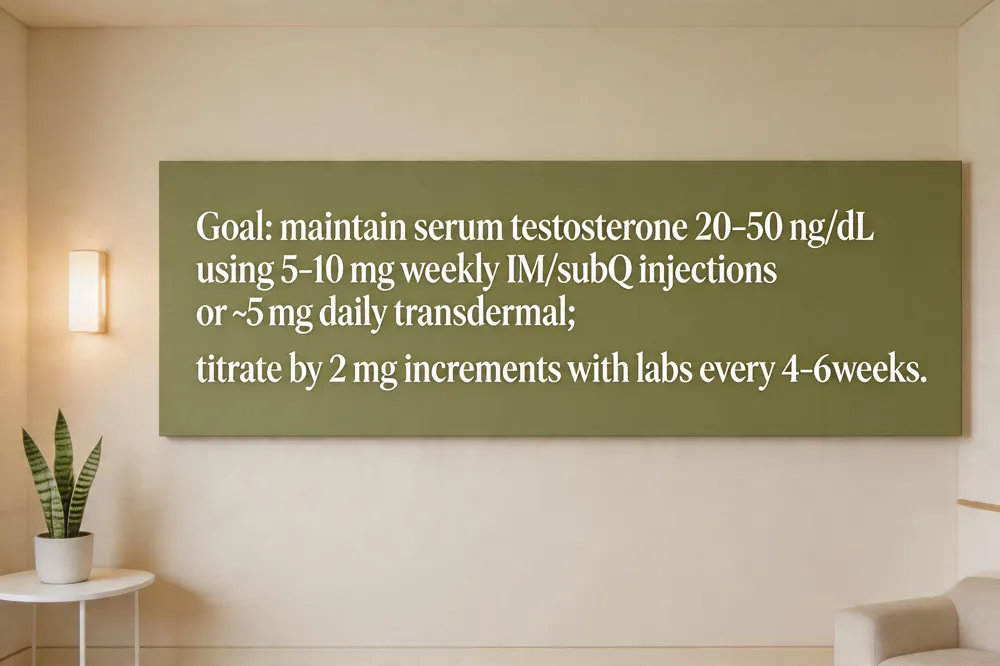 Target serum range: Professional societies (Endocrine Society, Brazilian Society of Endocrinology) recommend maintaining adult women’s testosterone between 20‑50 ng/dL (low‑normal female range). Regular labs (baseline, 4‑6 weeks, then every 6‑12 months) keep levels within this window and detect early masculinization.
Common delivery routes: The safest, most controllable options are transdermal gel/patch and subcutaneous pellets (≈5 mg daily) and low‑dose subcutaneous pellets. Oral testosterone is avoided because of liver metabolism; injectable formulations provide an alternative when gels are unsuitable.
Injection dosing strategies: Initiate with 5‑10 mg of testosterone administered once weekly, either intramuscularly or subcutaneously. Doses may be split into two smaller injections if preferred. Follow a “start low, go slow” protocol, adjusting by 2‑mg increments only after reviewing serum levels and clinical response (libido, mood, energy, skin changes).
Low dose testosterone for females: Low‑dose testosterone therapy for women is typically prescribed to bring serum testosterone into the upper‑normal female range, helping to address symptoms such as reduced libido, low energy, and mood swings. The most common protocols include a transdermal gel/patch and subcutaneous pellets delivering about 5 mg daily or a small intramuscular injection of 5–10 mg given once a week, both of which allow for steady, low‑level exposure. Treatment is usually started after a thorough hormone evaluation and is monitored with periodic blood tests to keep levels within the desired range and to watch for side‑effects like acne, excess hair growth, or changes in lipid profiles. When carefully managed, low‑dose testosterone can also improve skin thickness and elasticity, which may be of interest to patients seeking both medical and cosmetic skin benefits.
How much testosterone should a woman inject per week? A typical starting dose for women is a low‑dose testosterone regimen of 5 – 10 mg of testosterone administered once per week, either subcutaneously or intramuscularly, and it can be split into two smaller injections if preferred. The exact amount should be individualized based on the patient’s symptoms, age, baseline hormone levels, and how she responds to therapy. After initiating treatment, serum testosterone levels and clinical outcomes (energy, mood, libido, and any side effects) are monitored every 4–6 weeks to guide dose adjustments. Most clinicians follow a “start low, go slow” approach, increasing the dose by 2‑mg increments only if needed and if labs remain within the female physiological range. Ongoing follow‑up with a qualified provider ensures safe, effective therapy while minimizing the risk of masculinizing side effects.
Topical Testosterone Cream: Skin‑Related Side Effects and Prescribing Hesitancy
 Low‑dose transdermal testosterone is the most common formulation for women because it delivers a steady serum level while avoiding first‑pass liver metabolism.
Common cutaneous reactions – The most frequent skin‑related effects are acne, oily or seborrheic skin, localized irritation at the application site, and increased hair growth (hirsutism) on the face, chest, or abdomen. Darkening of the skin or mild erythema may also occur, especially with frequent re‑application.
Systemic effects from transdermal absorption – When serum testosterone rises above the physiologic female range, systemic signs can appear: scalp hair thinning, voice deepening, mild mood changes (irritability or aggression), and subtle shifts in muscle tone or fat distribution. These effects are dose‑dependent and usually reverse after dose reduction or cessation.
Why clinicians may be reluctant to prescribe – Testosterone is not FDA‑approved for women; off‑label use demands careful baseline labs, regular monitoring, and informed consent. The therapeutic window is narrow, and excess levels increase the risk of acne, hirsutism, cardiovascular events, liver enzyme elevations, and potential stimulation of hormone‑sensitive cancers. Limited long‑term safety data and the need for specialist oversight make many physicians prefer alternative treatments unless a clear indication such as hypoactive sexual desire disorder exists.
Q: What are the side effects of a female taking testosterone cream?
A: Skin‑related effects (acne, oily skin, localized irritation, hirsutism) and systemic effects (scalp hair thinning, voice deepening, mood changes) can occur, typically dose‑dependent and reversible with dosage adjustment.
Q: Why won’t doctors prescribe testosterone to women?
A: Because the hormone has a narrow safe range, off‑label status, limited long‑term evidence, and potential serious risks (cardiovascular, liver, cancer), many clinicians reserve it for carefully selected patients under specialist supervision.
Systemic Benefits of Testosterone in Women
 Testosterone, even at low physiologic doses, can positively influence several systemic domains in women.
Energy, mood, and cognition – Supplementation often improves vitality, sleep quality, and overall mood, reducing depressive or anxious symptoms while sharpening concentration and memory.
Musculoskeletal health – By increasing lean muscle mass and enhancing bone density, testosterone helps preserve strength, reduce fall risk, and mitigate osteoporosis, especially in post‑menopausal women.
Metabolic impact and A1c – Low testosterone is linked to insulin resistance and higher visceral fat, which can elevate hemoglobin A1c. Restoring normal levels improves insulin sensitivity, may lower fasting glucose, and help maintain healthier A1c values.
Addressed questions
- What are the benefits of a female taking testosterone? Therapeutic testosterone boosts energy, mood, and cognition, lean muscle, bone density, skin elasticity, libido, and may favorably modify lipid profiles.
- Can low testosterone affect A1c? Yes; deficiency can raise A1c via insulin resistance, while replacement can improve glucose regulation and lower A1c.
Safety First: Choosing the Best Delivery Method and Recognizing Low‑Dose Side Effects
 Transdermal gels or creams are the preferred testosterone delivery method for women because they provide steady, physiologic serum levels while avoiding first‑pass liver metabolism and the dose spikes seen with oral or injectable forms. A typical regimen uses a 2 % gel (≈5 mg daily) applied to clean, dry skin on the lower abdomen or thigh; the site should be covered and hands washed to prevent transfer. Baseline labs—total and free testosterone, estradiol, SHBG, lipid panel, liver enzymes, and a complete blood count—are obtained before starting therapy, with follow‑up testing at 4–6 weeks and then every 3–6 months to keep levels within the female reference range (20‑50 ng/dL). Low‑dose testosterone most commonly causes mild acne, oily skin, and modest hirsutism; less frequent effects include voice deepening, clitoral enlargement, menstrual irregularities, and subtle lipid or liver‑enzyme changes. Any new skin, hair, or menstrual symptoms should prompt a dose review and possible referral to a dermatologist.
Dermatology’s Role in Managing Hormone‑Related Skin Changes
 Low‑dose testosterone therapy can provoke acne, oily skin, and hirsutism, and hair loss in women. Dermatologists address these effects first with topical retinoids, benzoyl peroxide or azelaic acid to control follicular keratinization and sebum production, while recommending gentle cleansing and non‑comedogenic moisturizers. For hirsutism, laser hair removal or long‑pulse alexandrite devices provide targeted reduction without systemic hormone alteration. When androgenic alopecia appears, topical minoxidil and low‑dose oral anti‑androgens (e.g., spironolactone) can stabilize hair shafts, and platelet‑rich plasma injections may enhance density. Successful management hinges on close coordination with endocrinologists or menopause specialists: dermatologists receive baseline hormone panels, monitor serum testosterone trends, and adjust skin‑focused therapies in response to dose changes. Regular interdisciplinary reviews—typically every 3–6 months—ensure that symptom relief is balanced against the risk of virilization, allowing patients to benefit from testosterone while maintaining optimal skin health.
Is Testosterone Therapy Right for You?
When considering low‑dose testosterone, start by reviewing your symptoms (libido, mood, bone health, muscle strength) and confirming a documented deficiency with serum testosterone levels. Discuss any history of hormone‑sensitive cancers, cardiovascular disease, liver dysfunction, or clotting disorders, as these are contraindications. Agree on a personalized monitoring plan: baseline labs (total and free testosterone, lipid panel, liver enzymes, SHBG) followed by repeat testing at 4–6 weeks, then every 3–6 months to keep levels within the physiologic female range (≈20‑50 ng/dL). Monitor clinical response and side effects such as acne, hirsutism, voice changes, or menstrual irregularities. Balancing benefits—improved sexual desire, mood, bone density—against risks,cardiovascular events, liver issues, potential virilization—requires shared decision‑making and ongoing adjustment of dose under a qualified clinician’s supervision.