Understanding Vaginal Dryness
Vaginal dryness, also called atrophic vaginitis or genitourinary syndrome of menopause, is the loss of normal lubrication and thinning of the vaginal epithelium, typically due to reduced estrogen levels. It affects more than 50 % of post‑menopausal women and up to 30 % of pre‑menopausal women, with prevalence rising sharply after menopause, breastfeeding, or certain medical treatments. The condition produces burning, itching, soreness, painful intercourse (dyspareunia), and urinary irritation, which can lead to chronic discomfort, relationship strain, anxiety, and decreased overall quality of life. Early recognition and appropriate non‑hormonal or hormonal therapies, combined with lifestyle adjustments, are essential to restore comfort and preserve sexual and urinary health.
First‑Line Care: Moisturizers and Lubricants
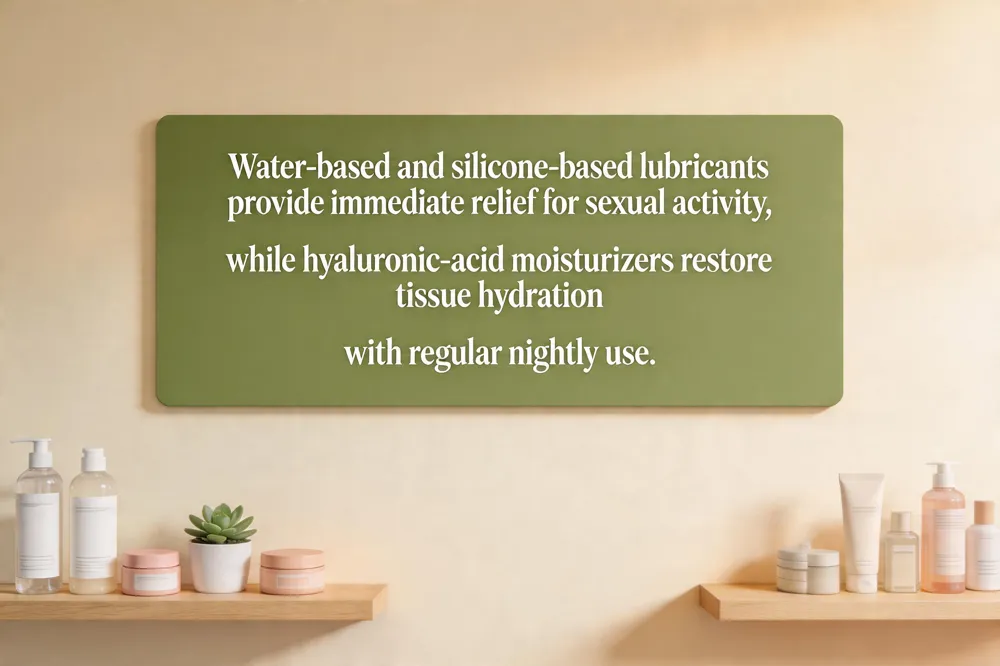 Vaginal dryness is most often due to reduced estrogen levels, leading to thin, less elastic mucosa. First‑line non‑hormonal care includes water‑based lubricants (e.g., Astroglide, K‑Y Jelly) that are latex‑condom compatible, easy to clean, and need re‑application during longer sessions. Silicone‑based lubricants (e.g., Überlube, Swiss Navy Premium) last longer, provide a smoother glide, and are also condom‑safe, though they should not be used with silicone toys. Hyaluronic‑acid moisturizers (e.g., Revivee, CVS Hyaluronic‑acid gel) are applied internally 2–3 times per week; they absorb into the tissue, restoring hydration and elasticity over time. For optimal benefit, moisturizers are used nightly or every few days, while lubricants are applied just before sexual activity. Product safety with condoms is essential: water‑based and silicone‑based lubricants do not degrade latex, whereas oil‑based products should be avoided.
What is the main cause of dryness? Dry skin, or xerosis, is most often caused by a disrupted skin‑barrier that loses its natural moisturizing factors. Environmental factors such as low humidity, cold or windy weather, and frequent hot showers strip away lipids and water from the epidermis. Lifestyle habits—including the use of harsh soaps, over‑cleansing, and prolonged exposure to air‑conditioning or heating—further deplete the skin’s protective oils. Underlying medical conditions like eczema, psoriasis, diabetes, thyroid disorders, or certain medications can impair barrier function and exacerbate dryness. Addressing both the external irritants and any internal health issues is essential for restoring hydrated, healthy skin.
Lifestyle Modifications and Pelvic Health
 Maintaining optimal vaginal health begins with simple lifestyle choices. Adequate hydration supports mucosal moisture and overall tissue elasticity, so drinking plenty of water daily is essential. Women should avoid scented soaps, douches, bubble baths, and other harsh cleansers, as these can disrupt the natural flora and irritate the delicate epithelium. Wearing breathable 100 % cotton underwear and avoiding tight synthetic garments reduces friction and moisture trapping, which can exacerbate dryness and inflammation. Regular sexual activity—or solo stimulation—promotes blood flow to the vaginal mucosa, helping to preserve natural lubrication and tissue resilience. For women experiencing narrowing or pain on insertion, the use of vaginal dilators 3–4 times per week for 5–10 minutes with a compatible lubricant can gently stretch tight tissue and improve comfort. Finally, pelvic‑floor physical therapy, which includes targeted exercises and manual techniques, reduces muscle guarding, enhances pelvic blood flow, and can alleviate burning or dyspareunia. Together, these evidence‑based strategies complement medical treatments and empower women to manage vaginal dryness effectively.
When OTC Isn't Enough: Prescription Options
 For women whose vaginal dryness persists despite regular use of moisturizers and lubricants, prescription therapies provide stronger, longer‑lasting relief. Low‑dose vaginal estrogen—available as creams, tablets (e.g., Vagifem® estradiol inserts or or rings) delivers estradiol directly to the mucosa, thickening the epithelium, restoring pH, and improving natural lubrication with minimal systemic absorption. Selective estrogen‑receptor modulators (SERMs) such as oral ospemifene act like estrogen in vaginal tissue while antagonizing it elsewhere, reducing dyspareunia without the need for local hormone application. DHEA inserts (prasterone) are converted in vaginal cells to estrogen and testosterone, offering another non‑systemic option for moderate‑to‑severe atrophy. For patients who prefer non‑hormonal approaches, laser or radio‑frequency vaginal rejuvenation stimulates collagen remodeling and tissue elasticity, though long‑term safety data remain limited. When genital symptoms coexist with systemic menopausal complaints (hot flashes, mood changes), systemic hormone therapy—transdermal patches, gels, or oral preparations may be considered after a thorough risk‑benefit assessment. All prescription options should be initiated under clinician supervision, with attention to contraindications such as estrogen‑sensitive cancers, unexplained bleeding, or thromboembolic risk.
Tailoring Treatment and Recognizing Warning Signs
 Breast‑cancer survivors and estrogen‑sensitive conditions
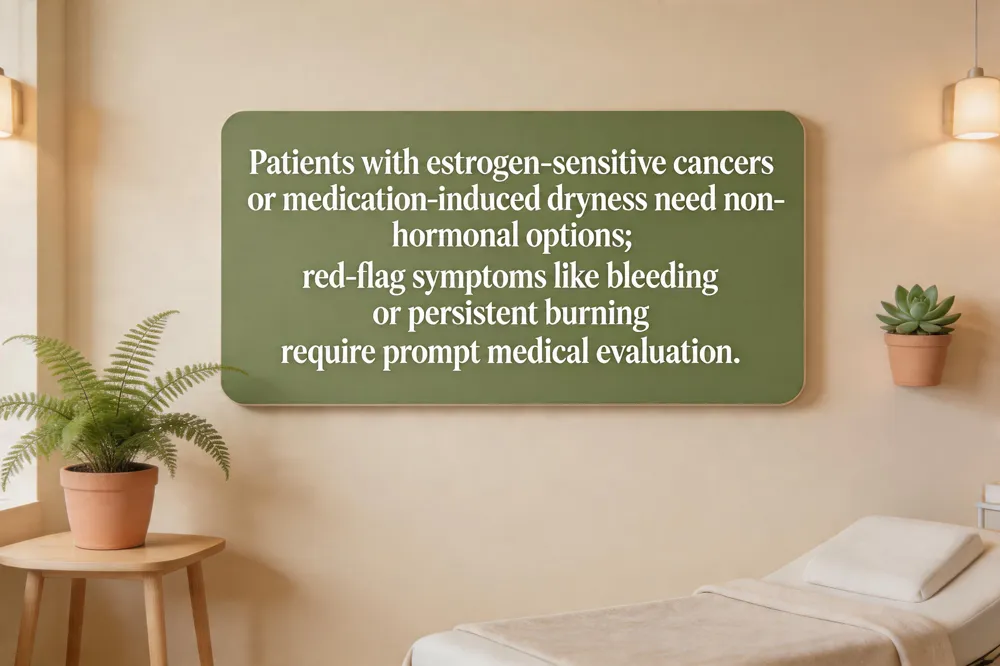
Women with a history of estrogen‑dependent breast cancer, endometrial cancer, or unexplained vaginal bleeding should avoid estrogen‑containing products unless cleared by their oncologist. Non‑hormonal moisturizers (e.g., hyaluronic‑acid gels) and water‑based lubricants are first‑line options. If symptoms persist, a low‑dose vaginal estrogen may be considered only after specialist consultation and risk‑benefit analysis.
Medications that worsen dryness
Certain drugs reduce vaginal lubrication: selective serotonin‑reuptake inhibitors (SSRIs), antihistamines, decongestants, and some chemotherapy agents. Clinicians should review the medication list and, when possible, switch to alternatives or add a moisturizer/lubricant regimen to offset the side effect.
Red‑flag symptoms requiring prompt evaluation
Red‑flag symptoms that require prompt medical evaluation include bleeding after intercourse, persistent burning not relieved by moisturizers, recurrent urinary‑tract infections, severe pain, foul discharge, or pelvic pain. Immediate medical assessment is essential to rule out infection, malignancy, or severe atrophy.
When to transition from OTC to prescription therapy
If OTC moisturizers and lubricants used consistently for 2‑3 months fail to relieve dryness or dyspareunia, or if the patient experiences any red‑flag symptom, escalation to prescription options—low‑dose vaginal estrogen, SERMs (e.g., ospemifene), or DHEA inserts—should be discussed with a qualified clinician.
Personalized Care at Dermatology Associates, PC
 Dermatology Associates, PC conducts a comprehensive skin‑and‑vaginal health assessment that evaluates medical history, hormonal status, and local factors such as irritants or infection. By integrating dermatology expertise with gynecologic care, the team can differentiate between dermatologic conditions (e.g., lichen sclerosus) and estrogen‑related atrophy, ensuring the most appropriate therapy. Patients receive individualized education on selecting fragrance‑free moisturizers, low‑osmolality lubricants, and proper application timing—whether for daily comfort or sexual activity. A structured follow‑up schedule, typically every 3–6 months, monitors symptom relief, product tolerance, and any emerging safety concerns, allowing timely adjustments to achieve optimal vaginal health and overall well‑being.
Key Takeaways
Begin with over‑the‑counter options: apply a non‑hormonal vaginal moisturizer (e.g., hyaluronic‑acid or polycarbophil based) 2–3 times weekly for baseline hydration, and use a water‑based or silicone‑based lubricant as needed for sexual activity. If symptoms persist, move to prescription therapies—low‑dose local estrogen (cream, tablet, or ring) or a non‑estrogenic prescription such as ospemifene or DHEA inserts—after a clinician confirms there are no contraindications. Lifestyle measures amplify benefits: stay well‑hydrated, wear cotton underwear, avoid scented soaps, douches, and tight synthetic garments, and engage in regular gentle vaginal activity or pelvic‑floor physical therapy to improve blood flow and tissue elasticity. Finally, treatment should be individualized through collaborative decision‑making among the patient, gynecologist, and, when appropriate, dermatologist or oncologist, ensuring safety, symptom relief, and quality of life.