Understanding Mohs Surgery
Mohs micrographic surgery (MMS) is a tissue‑conserving, layer‑by‑layer removal of skin cancer where each excised slice is examined under a microscope in real time until clear margins are confirmed. The technique was pioneered in the 1930s by Dr. Frederic Mohs, who introduced a chemical fixation method; it was later refined in the 1970s with rapid frozen‑section processing, allowing same‑day treatment. During the procedure, the surgeon maps the visible tumor, injects local anesthesia, and removes a thin, beveled margin. The specimen is frozen, sectioned horizontally, stained, and inspected for residual cancer cells. Additional layers are taken only from positive areas, preserving healthy tissue and achieving cure rates up to 99 % for primary basal and squamous cell carcinomas.
Fundamentals of Mohs Surgery
 What is Mohs surgery?
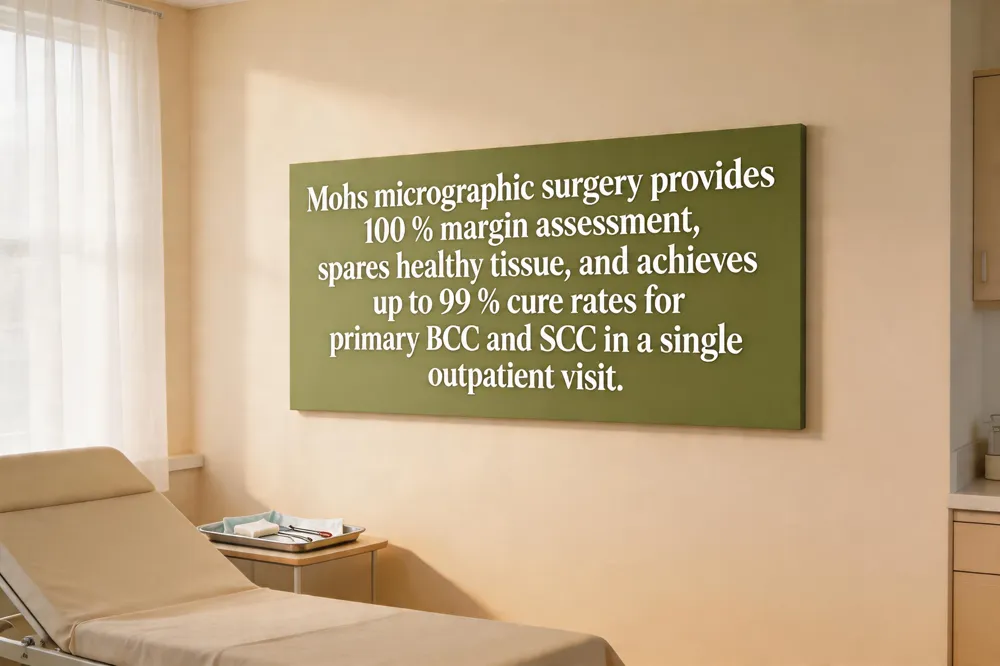
Mohs micrographic surgery (MMS) is a precise, outpatient technique for removing high‑risk skin cancers, most commonly basal cell carcinoma (BCC) and squamous cell carcinoma (SCC). The surgeon removes the visible tumor and then excises thin, bevel‑cut layers of tissue around it. Each layer is frozen, sectioned horizontally, stained (usually with hematoxylin‑eosin), and examined under a microscope in an on‑site laboratory. 100 % of the peripheral and deep margins are evaluated in real time; additional layers are taken only where cancer cells are detected until clear margins are confirmed. Because the tissue is examined intra‑operatively, healthy skin is spared, resulting in smaller defects, superior cosmetic outcomes, and cure rates up to 99 % for primary BCC and SCC. The procedure is performed under local anesthesia in a single outpatient visit, with immediate reconstruction (primary closure, flaps, grafts, or secondary intention) once margins are clear.
Why is it called Mohs surgery?
The technique is named after Dr. Frederic E. Mohs, who pioneered the tissue‑conserving, microscopically controlled method in the 1930s. Dr. Mohs originally used a zinc‑chloride “chemosurgery” approach to fix and excise skin cancer, then mapped and examined the specimens under a microscope to ensure complete removal. As his method proved highly effective—offering the highest cure rates while preserving healthy tissue—the procedure became widely known by his surname. Over time, the name evolved to “Mohs micrographic surgery,” reflecting both the historical origin and the core use of microscopic margin assessment.
Skin Cancers Treated with Mohs
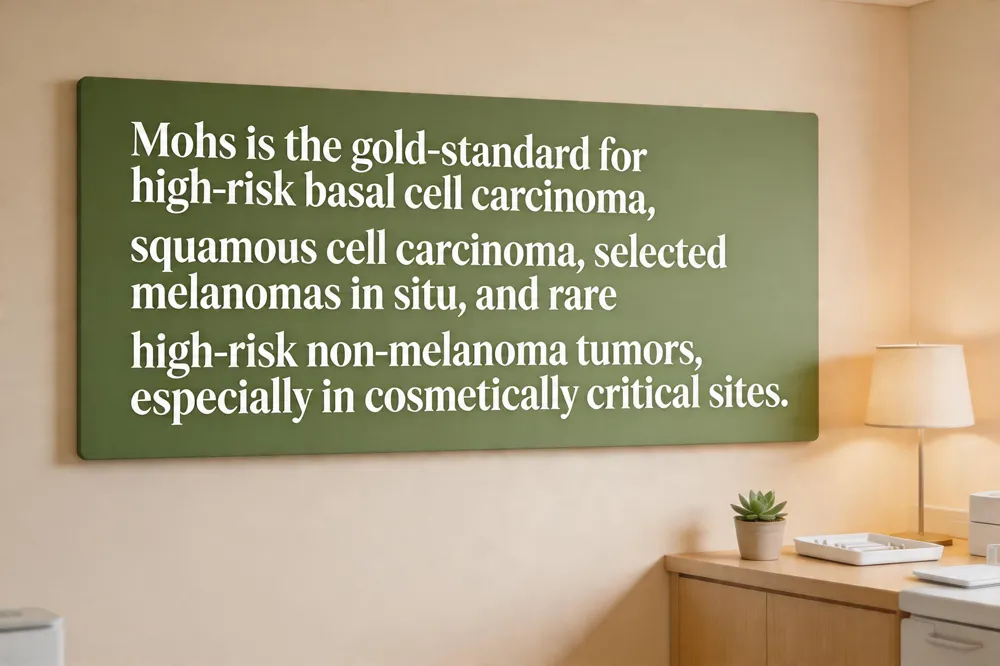 Mohs micrographic surgery is the gold‑standard treatment for the two most common cutaneous malignancies—basal cell carcinoma (BCC) and squamous cell carcinoma (SCC). It is especially indicated for primary lesions that are larger than 1 cm, display aggressive histologic subtypes (e.g., morpheaform, infiltrative, micronodular), or are located in the facial “H‑zone” (nose, eyelids, lips, ears) where tissue preservation is critical. Recurrent BCC or SCC, tumors with ill‑defined borders, perineural involvement, or those arising in immunosuppressed patients (e.g., organ‑transplant recipients, Gorlin syndrome) also merit Mohs. Beyond keratinocyte cancers, Mohs is appropriate for high‑risk, cosmetically sensitive melanomas in situ (lentigo maligna) and selected thin invasive melanomas when adjunct immunohistochemistry is used. Rare but high‑risk non‑melanoma tumors—dermatofibrosarcoma protuberans, microcystic adnexal carcinoma, sebaceous carcinoma, extramammary Paget disease, and atypical fibroxanthoma—can be treated with Mohs, although evidence is primarily retrospective. The technique’s 100 % margin assessment yields cure rates up to 99 % for primary BCC/SCC while sparing healthy tissue, making it the preferred option whenever maximal oncologic clearance and optimal cosmetic outcome are required.
Patient Eligibility and Indications
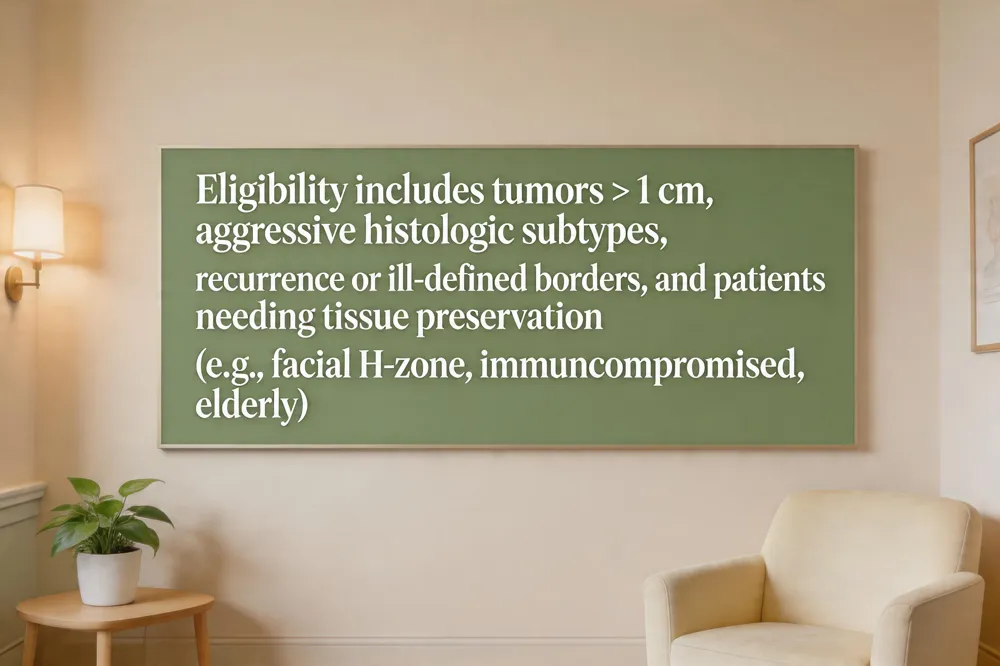 Mohs micrographic surgery is reserved for skin cancers that pose a high risk of recurrence, have aggressive histology, or occur in cosmetically or functionally critical sites. The primary criteria that qualify a patient include: (1) basal‑cell carcinoma (BCC) or squamous‑cell carcinoma (SCC) larger than 1 cm, especially when located in the facial “H‑zone” (nose, eyelids, lips, ears) or other areas requiring tissue preservation (hands, feet, genitals, nail units); (2) aggressive histologic subtypes such as infiltrative, morpheaform, micronodular, basosquamous BCC, or poorly differentiated SCC with perineural involvement; (3) recurrent or incompletely excised lesions after prior surgery or radiation; (4) tumors with ill‑defined borders or rapid growth; and (5) patients in whom tissue‑sparing, single‑day, local‑anesthesia procedures are advantageous, such as the immunocompromised, organ‑transplant recipients, individuals with Gorlin syndrome, or elderly patients with comorbidities.
High‑risk features that prompt Mohs include perineural invasion, deep subcutaneous involvement, and a history of multiple skin cancers. Special populations—immunosuppressed patients, those with genetic predispositions (e.g., Gorlin syndrome), and patients who cannot tolerate extensive surgery—benefit from the precise margin control and maximal tissue conservation that Mohs provides. In summary, a patient qualifies for Mohs when tumor size, location, histology, recurrence risk, or patient health status make it the most effective, cosmetically favorable option.
Procedure Walk‑through and Logistics
 Typical sessions last about 3 to 4 hours, though small, straightforward lesions may be completed in under 2 hours. Larger or high‑risk tumors can require a full‑day visit, especially when multiple stages are needed. Patients should wear warm, loose‑fitting clothing, bring their insurance card, a medication list, a phone or reading material, and arrange for transportation home. Local anesthesia ensures no pain during the operation; most patients feel only mild pressure. Post‑operative discomfort is usually mild and managed with acetaminophen or ibuprofen. Common side effects include swelling, bruising, temporary numbness or tingling, light tenderness, and a small scar that may be pink for several weeks. Infection is rare but should be reported promptly.
Comparisons with Other Treatments
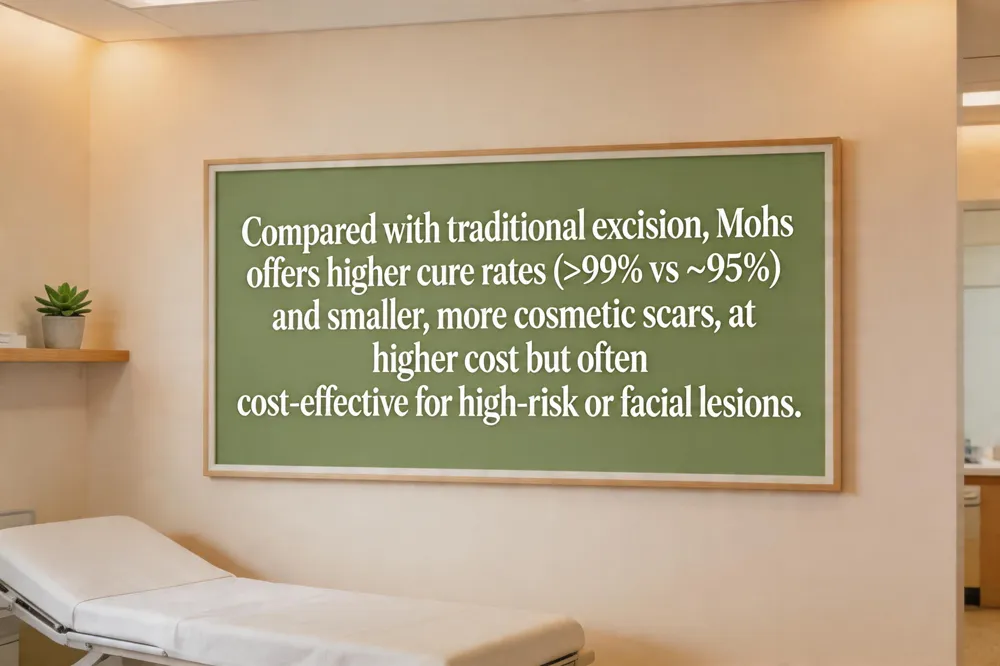 How does Mohs surgery compare to traditional excision for basal cell carcinoma? Mohs micrographic surgery yields >99 % cure rates by removing tumor in 1–2 mm layers and examining 100 % of margins, sparing healthy tissue and producing smaller, cosmetically superior scars on the face, ears, and eyelids. Traditional wide local excision uses a preset 4‑mm margin, achieving ~95 % cure but often removes more normal skin and results in larger defects; it is quicker and suitable for low‑risk, non‑critical sites.
How does Mohs surgery compare to traditional excision for melanoma? For invasive melanoma, wide local excision with a 1‑cm margin remains the standard. Mohs is reserved for melanoma in situ or lentigo maligna on cosmetically sensitive areas, offering tissue preservation and better aesthetics, but it is not routinely used for deeper, invasive lesions where larger margins are required.
What are the cost considerations for Mohs surgery versus excision? Mohs typically costs $2,400‑$3,500 (including reconstruction) due to longer operative time and frozen‑section pathology, whereas standard excision is less expensive (~$2,600) but may incur additional procedures if margins are positive. Insurance often covers both; Mohs may be more cost‑effective for large, facial, or high‑risk tumors that would otherwise need repeat surgery.
How does Radiation therapy compare to Mohs surgery for facial skin cancer? Radiation provides a non‑invasive, scar‑minimizing option requiring multiple sessions, but it lacks real‑time margin control and can cause pigment changes. Mohs offers near‑100 % cure, immediate reconstruction, and superior functional and cosmetic outcomes, making it preferred for larger, poorly defined, or anatomically critical facial lesions.
What are alternative non‑surgical treatments to Mohs surgery? Options include image‑guided superficial radiation, topical 5‑fluorouracil or imiquimod, photodynamic therapy, cryotherapy, laser ablation, curettage with electrodesiccation, and systemic agents (e.g., vismodegib, immunotherapy) for select low‑risk or superficial tumors.
Practical Considerations and Patient Choices
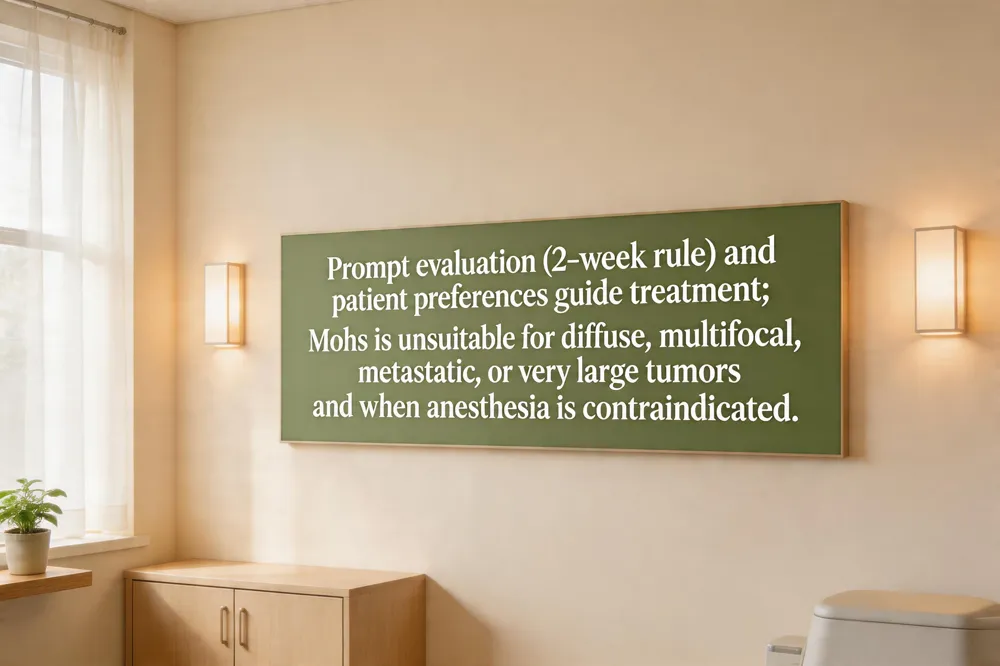 The "2‑week rule" in the United States urges that patients with suspicious or high‑risk skin lesions be evaluated by a dermatologist within two weeks of referral. Prompt assessment improves outcomes, especially for melanoma and aggressive basal or squamous cell carcinomas. After successful Mohs micrographic surgery, life expectancy mirrors normal age‑adjusted expectations; a study of patients ≥ 90 years showed a median survival of 36.9 months, indicating no additional mortality risk from the procedure. Prospective patients can view before‑and‑after photographs of Mohs results on our clinic’s website, which demonstrate minimal scarring and excellent cosmetic reconstruction across facial and functional sites. Mohs is inappropriate for diffuse, multifocal lesions, metastatic disease, very large or deeply invasive tumors that require wider margins, or when anesthesia contraindications exist. If you prefer an alternative, discuss options such as curettage, cryotherapy, topical immunotherapy, photodynamic therapy, or superficial radiation with your dermatologist; each offers varying cure rates, cosmetic outcomes, and treatment schedules tailored to your preferences and clinical scenario.
Putting It All Together
Mohs is truly needed for high‑risk basal or squamous cell cancers—large, recurrent, aggressive, or located in cosmetically critical zones such as the face, ears, or genitalia. Dermatology Associates, PC employs fellowship‑trained Mohs surgeons, ensuring expert care. Choose the treatment that best fits your goals and health.