Welcome to Morpheus8 Scar Care at Dermatology Associates, PC
Morpheus8 is a fractional radiofrequency (RF) microneedling system that merges precise microneedling with controlled RF heat to stimulate deep collagen and elastin production. The handheld device creates micro‑channels up to 4 mm deep, allowing dermal remodeling that traditional microneedling cannot achieve.
For acne‑scar remodeling, Morpheus8 targets the dermis where atrophic scar tissue resides. The combined mechanical injury and thermal effect contracts existing collagen fibers while prompting new collagen synthesis, gradually filling boxcar, ice‑pick, and rolling depressions. Clinical data show scar‑reduction improvements of 30‑70 % after a series of 3‑4 sessions spaced 4‑6 weeks apart.
A key advantage is safety across Fitzpatrick skin types. Because RF energy is delivered below the epidermis, the risk of post‑inflammatory hyperpigmentation is markedly lower than with ablative lasers, making Morpheus8 suitable for lighter and darker complexions alike.
Before scheduling, patients should discontinue NSAIDs, blood‑thinners, and potent actives (retinoids, glycolic acid) at least 10 days prior, and avoid sun exposure and self‑tanners for four weeks. A topical numbing cream is applied on the day of treatment to enhance comfort. A brief consultation will assess scar severity, medical history, and any contraindications (e.g., active acne, recent isotretinoin, implanted devices) to tailor depth and energy settings for optimal results.
How Morpheus8 Works – Microneedling Meets Radiofrequency
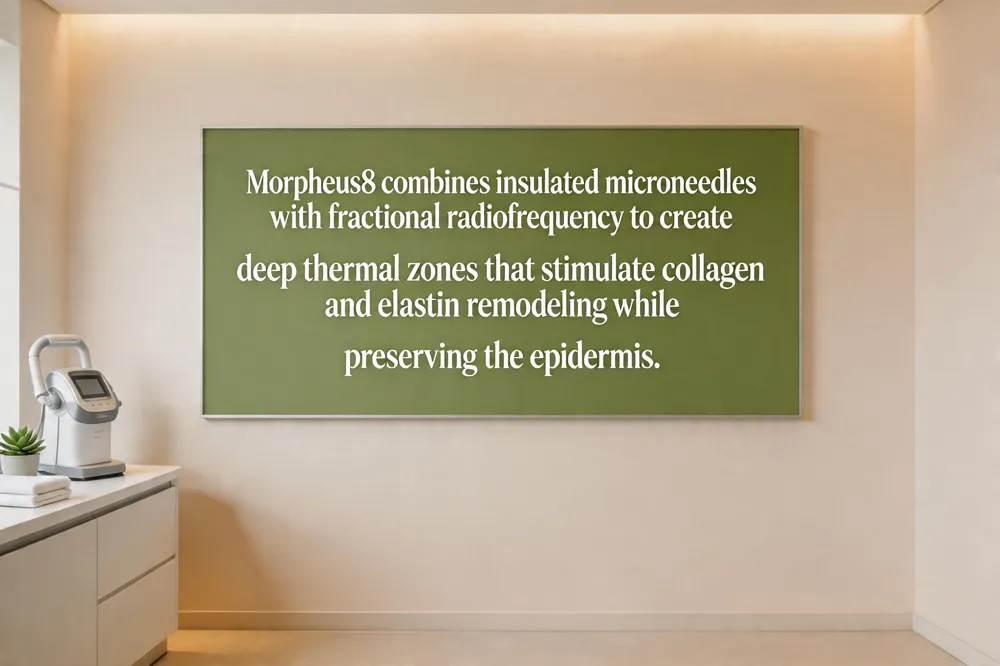 Morpheus8 is a fractional skin‑remodeling system that unites two proven technologies—microneedling and radiofrequency (RF) energy to revitalize the dermis from within. First, the device’s insulated, ultra‑thin needles create precise micro‑channels that penetrate the epidermis and reach depths of 0.5 – 4 mm, depending on the patient’s scar type and skin tone. These micro‑injuries trigger the body’s natural wound‑healing cascade, recruiting fibroblasts to produce new collagen and elastin. While the needles are in place, a controlled RF current is delivered through each micro‑pin, heating the deeper dermal layers without damaging the surface epithelium. This fractional RF thermal zone causes immediate collagen fiber contraction and stimulates neocollagenesis, enhancing tissue tightening and scar remodeling. Because both needle depth and RF intensity are individually adjustable, clinicians can tailor each session to the specific configuration of acne‑scar depressions—whether ice‑pick, boxcar, or rolling—while minimizing the risk of pigment alteration in darker Fitzpatrick skins. The combined effect is a smoother, firmer complexion with reduced scar visibility, typically evident within weeks and continuing to improve for up to six months as the newly‑formed collagen matures.
CO2 Laser vs. Morpheus8 – Which Is Better for Acne Scars?
 Mechanistic differences vs CO2‑laser resurfacing ablates the epidermis and part of the dermis, vaporising tissue to create a new skin surface. Morpheus8, by contrast, fuses microneedling with fractional radio‑frequency (RF) energy; insulated needles create micro‑channels while RF heat penetrates up to 4 mm deep, stimulating collagen and elastin remodeling without destroying the epidermis.
Recovery expectations: CO2 laser typically produces moderate to severe erythema, crusting, and a downtime of 7‑14 days, with a higher likelihood of swelling and temporary pigment changes. Morpheus8 results in mild redness, swelling, and tiny scabs that usually resolve within 1‑3 days; most patients return to work within 24‑48 hours and resume makeup after 48‑72 hours.
Suitability for various Fitzpatrick skin types: Because the CO2 laser removes melanin‑containing epidermal cells, it carries a significant risk of post‑inflammatory hyperpigmentation in Fitzpatrick III‑VI skin. Morpheus8’s RF energy is delivered beneath the epidermis, making it safe for a wide range of skin tones and reducing hyperpigmentation risk.
Clinical scenarios where each shines: CO2 laser is ideal for very deep, refractory acne scars where aggressive resurfacing is required and patients have lighter skin tones (I‑II) who can tolerate longer downtime. Morpheus8 excels in treating mild‑to‑moderate atrophic scars (ice‑pick, boxcar, rolling) across all skin types, offering gradual collagen remodeling, skin tightening, and minimal downtime. It also helps control active acne by shrinking sebaceous glands.
Answer to the key question: Both modalities improve acne scars, but they differ in mechanism and recovery. CO2 laser provides dramatic resurfacing with longer downtime and higher hyperpigmentation risk, especially in darker skin. Morpheus8 combines microneedling with fractional RF, delivering collagen remodeling with less redness, swelling, and a shorter recovery (2‑5 days). For most patients seeking a balance of efficacy, safety, and minimal downtime—particularly those with Fitzpatrick III‑VI—Morpheus8 is often the preferred choice. CO2 laser may be reserved for very deep, stubborn scars when a more aggressive approach is justified.
Recovery Timeline – What to Expect After a Morpheus8 Facial
 Morpheus8 blends microneedling with radiofrequency energy to trigger deep collagen and elastin production. Because the procedure is minimally invasive, downtime is short, but patients should be aware of the healing milestones.
Immediate post‑procedure sensations – Most people feel a warm, prickling sensation during treatment and notice mild redness and a sun‑burn‑like glow afterward. This is normal and usually subsides within the first 24–48 hours.
Day‑by‑day healing milestones
- Day 1: Redness and slight swelling are most pronounced; the skin may feel tight.
- Days 2‑3: Redness begins to fade and swelling diminishes.
- Days 4‑7: Any residual pinkness disappears; the skin may feel dry or flaky as the outer layer renews.
- Weeks 2‑4: Collagen remodeling continues; subtle improvements in texture, firmness, and pore size become noticeable.
- Weeks 3‑6: Most patients see smoother skin and reduced acne‑scar depth; full tightening continues to develop.
- 3‑4 months: Peak collagen maturity yields the final aesthetic result, with further fine‑tuning up to six months.
Guidelines for safe return to daily activities – Patients can usually resume work and light activities within 24–48 hours. Avoid strenuous exercise, saunas, hot tubs, and excessive sweating for the first 48‑72 hours. Keep the area clean, apply a fragrance‑free moisturizer, and protect with broad‑spectrum SPF 30+ sunscreen daily. Makeup can be reapplied after 48 hours, and active skincare actives (retinoids, exfoliants) should be paused for at least a week.
Following these steps supports optimal healing and maximizes the long‑term benefits of Morpheus8.
Common Side Effects and Practical Management Strategies
 After a Morpheus8 session, most patients experience only mild, short‑lived reactions. The most frequently reported side effects are:
- Transient redness, swelling, and pinpoint bruising – a sun‑burn‑like flush that peaks within the first 24 hours and fades within 3–7 days.
- Tightness and a mild sunburn‑like sensation – caused by the controlled RF heat and microneedle channels, typically noticeable for 1–3 days.
Self‑care measures to minimize discomfort
- Apply a cool compress (10‑15 minutes) during the first 24 hours to calm redness and swelling.
- Use a fragrance‑free, hydrating moisturizer or a hyaluronic‑acid serum to support barrier repair and reduce tightness.
- Avoid heat exposure (saunas, hot tubs, vigorous exercise) for at least 48 hours and keep the treated area out of direct sunlight; wear a broad‑brimmed hat and apply a broad‑spectrum SPF 30+ sunscreen.
- Refrain from makeup, exfoliants, retinoids, and other active skincare for the first 48‑72 hours; resume gentle cleansing only after 2‑3 hours post‑procedure.
When to seek professional follow‑up
- Persistent redness, swelling, or pain lasting beyond 7 days.
- Signs of infection (increased warmth, pus, fever).
- Unexpected hyperpigmentation or severe bruising. If any of these occur, contact your provider promptly; a short course of topical steroids, oral anti‑inflammatories, or antibiotics may be prescribed to ensure safe healing.
Overall, these side effects are predictable, self‑limited, and easily managed with proper after‑care, allowing most patients to resume normal activities within 24‑48 hours.
Treatment Regimen – Sessions, Deep Scars, and Age Considerations
 Morpheus8 is a fractional microneedling‑radiofrequency system that remodels acne‑scar tissue by stimulating deep collagen and elastin production. Typical number of sessions for noticeable improvement – Most patients achieve a visible reduction in scar depth after 3‑4 treatments spaced 4‑6 weeks apart. Milder or newer scars may respond after 2‑3 sessions, while older, deeper lesions often need 5‑6 sessions for optimal fading. The exact regimen is tailored to scar type (boxcar, rolling, ice‑pick), skin thickness, and individual healing response, and is refined during the initial consultation.
Special approach for deep ice‑pick scars – Morpheus8 can reach the mid‑dermis (up to 3‑4 mm) and deliver controlled RF heat that contracts existing collagen and initiates new fiber growth. For the narrowest, deepest ice‑pick tracts, the best outcomes are frequently achieved by combining Morpheus8 with adjunctive procedures such as subcision, punch excision, or a fractional laser to release the scar tract before RF microneedling. At Dermatology Associates, PC, practitioners customize needle depth and energy settings for each scar, typically performing 3‑4 spaced sessions and monitoring progress over 3‑6 months as collagen remodels.
Age range and eligibility criteria – Morpheus8 is appropriate for adults ≥ 18 years with good overall health and sufficient skin elasticity. Younger adults often use it for early‑aging prevention, while patients in their 40s‑60s can still benefit from scar reduction and tightening, though results may be more modest in older skin. Contra‑indications include active acne, recent isotretinoin use, pregnancy, and certain medical conditions. A personalized consultation at Dermatology Associates, PC determines candidacy, creates a customized treatment plan, and outlines post‑procedure care to maximize safety and outcomes.
Post‑Procedure Skin‑Care Routine and Lifestyle Guidelines
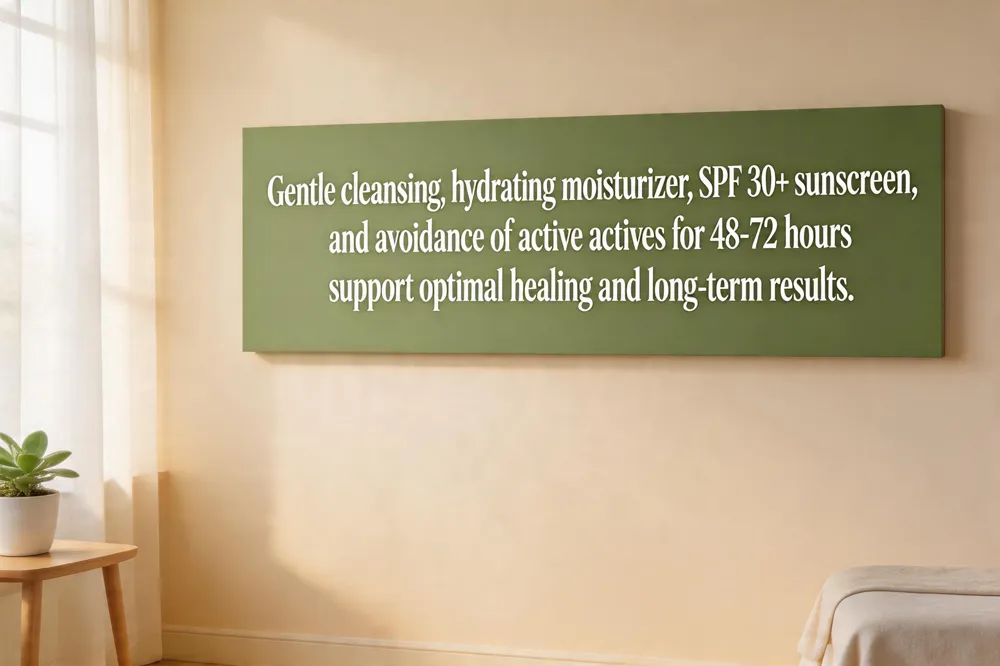 [Gentle cleansing] and moisturization – After Morpheus8, wash the treated area with a mild, fragrance‑free cleanser and lukewarm water, pat dry, and apply a thin layer of a soothing, non‑comedogenic moisturizer (e.g., hyaluronic‑acid‑based). Keep the skin hydrated internally by drinking plenty of water.
Sunscreen and sun‑avoidance strategies – Apply a broad‑spectrum physical sunscreen with SPF 30 or higher every morning and re‑apply every two hours when outdoors. Continue sun protection for at least one to two weeks and avoid direct UV exposure, especially during the first week.
Skincare products to pause and re‑introduce – For the first 48–72 hours, avoid retinoids, benzoyl peroxide, glycolic or salicylic acids, and other strong exfoliants. Heavy makeup, harsh cleansers, and abrasive scrubs should also be omitted. After the first week, gentle antioxidant serums (niacinamide, vitamin C) can be re‑introduced if tolerated.
Lifestyle habits for optimal healing – Refrain from alcohol, caffeine, spicy foods, and smoking for the first 48 hours to reduce swelling. Skip intense exercise, saunas, hot tubs, and excessive heat for at least 24–48 hours. Keep the skin moisturized, stay well‑hydrated, and avoid picking at any scabs.
What post‑procedure skin‑care routine is recommended? – Gentle cleansing, a thin, soothing moisturizer, SPF 30+ sunscreen, and avoidance of active actives and heavy makeup for the initial 48–72 hours, followed by gradual re‑introduction of gentle serums.
What should patients avoid during the first 48 hours? – Alcohol, caffeine, hot beverages, spicy or high‑salt foods, smoking, intense exercise, saunas, hot tubs, makeup, and any retinoid‑ or acid‑containing products.
When can patients expect final results? – Initial improvement appears within the first week, with noticeable firmness and scar fading by 3–6 weeks. Maximal collagen remodeling and final skin tightening typically occur 3–4 months after the last session.
Your Path to Smoother, More Radiant Skin
Morpheus8’s unique blend of microneedling and fractional radio‑frequency delivers deep, controlled micro‑injuries that trigger robust collagen and elastin production. This dual action remodels the dermis, filling in atrophic acne scars—whether ice‑pick, boxcar, or rolling—while simultaneously tightening surrounding tissue for a smoother, firmer complexion. Clinical data show up to a 50‑70 % reduction in scar depth after a series of three to four sessions spaced four to six weeks apart, with continued improvement for three to six months as new collagen matures.
At Dermatology Associates, PC we tailor each Morpheus8 protocol to the individual’s skin type, scar severity, and aesthetic goals. Our board‑certified dermatologists assess Fitzpatrick tone, scar topology, and medical history to select the optimal needle depth (0.5‑4 mm) and radio‑frequency intensity, ensuring maximum efficacy with minimal risk. Personalized after‑care plans—including gentle cleansing, hydration, and strict sunscreen use—are provided to support healing and preserve results.
We invite you to schedule a comprehensive consultation to discuss how Morpheus8 can address your specific scar concerns. Our practice is committed to safety, using FDA‑cleared technology and evidence‑based techniques, and we continuously monitor outcomes to guarantee the highest standard of care.